Domus Dei · The House of God
The Cathedral
“I rejoiced at the things that were said to me: We shall go into the house of the Lord.” (Psalm 121:1, Douay-Rheims; Psalm 122:1 in newer Bibles) Tap any gold number to learn what it is and what it means.
The Nave
From the front doors up to the altar rail · numbers 1–20
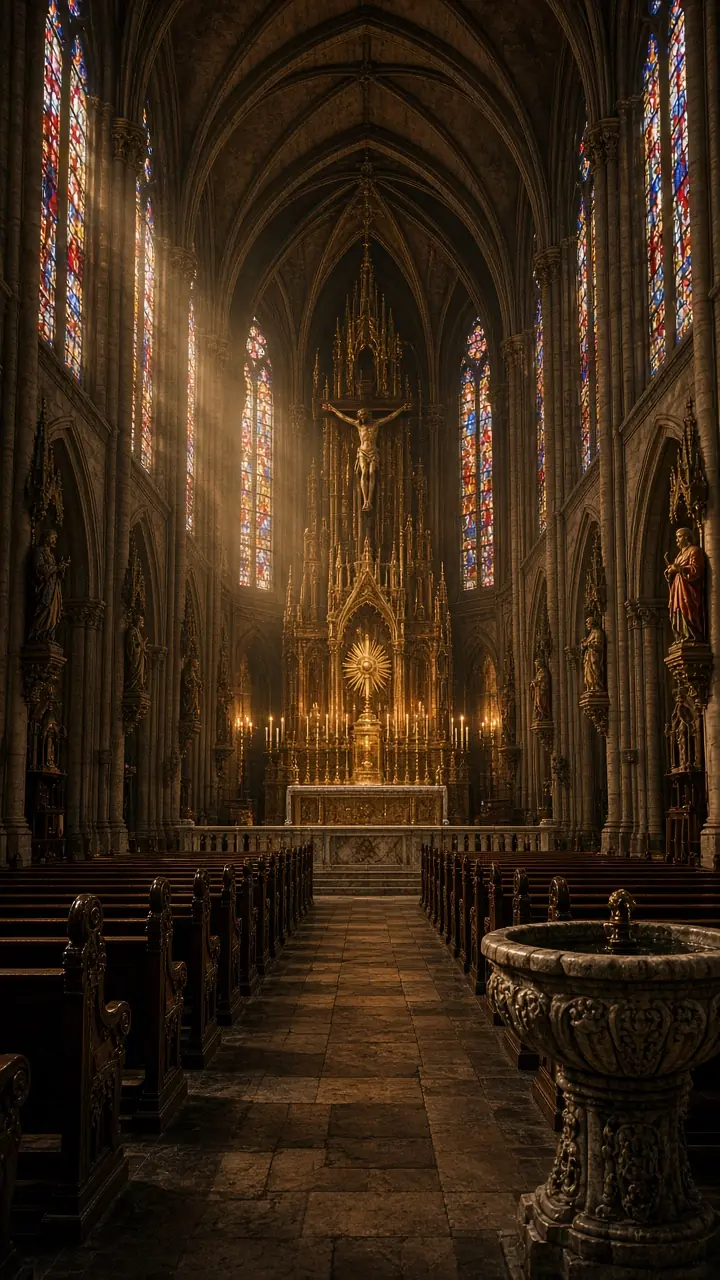
The Sanctuary
The holy place around the altar · numbers 21–37
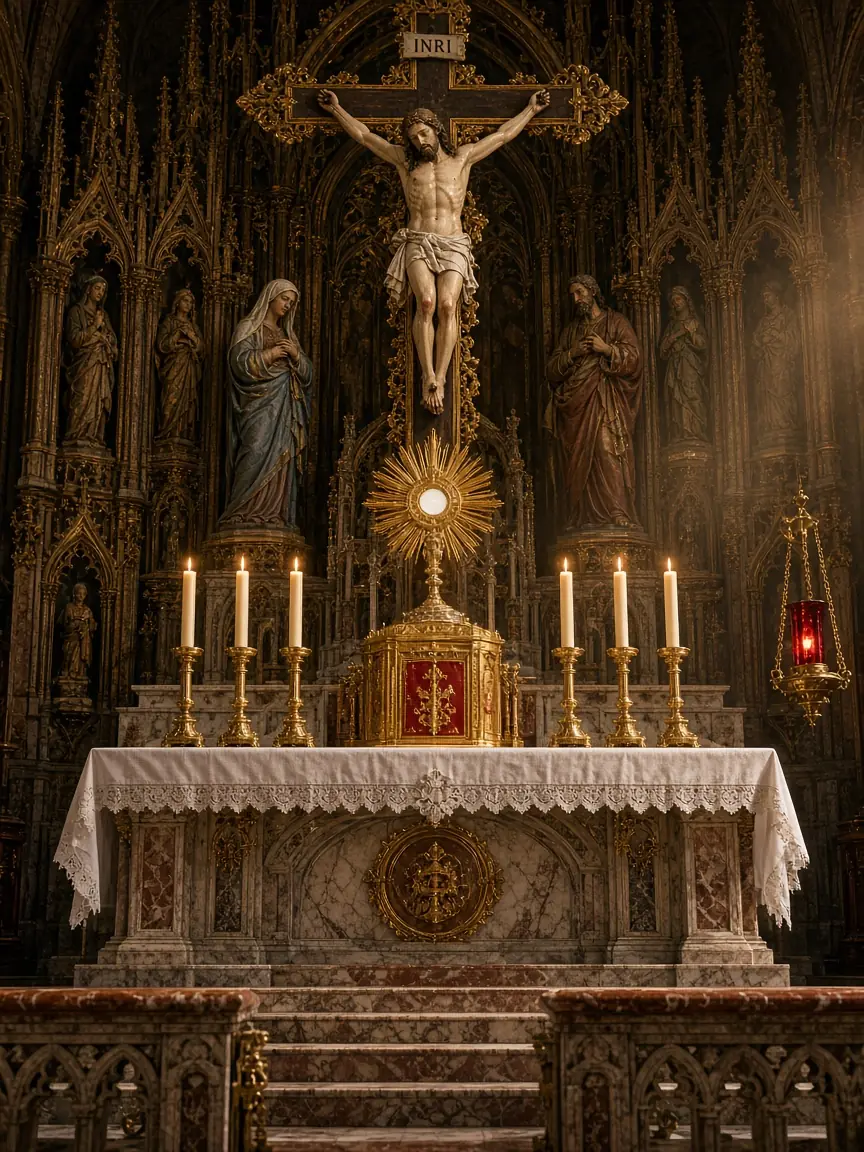
The numbers are placed by hand, so they are close but not exact. A few things, like the confessionals and the sacristy, are off to the side.
Floor Plan
Seen from above. Tap a number.
Part A · Coming In
1The Great Doors and the Narthex (entry hall)
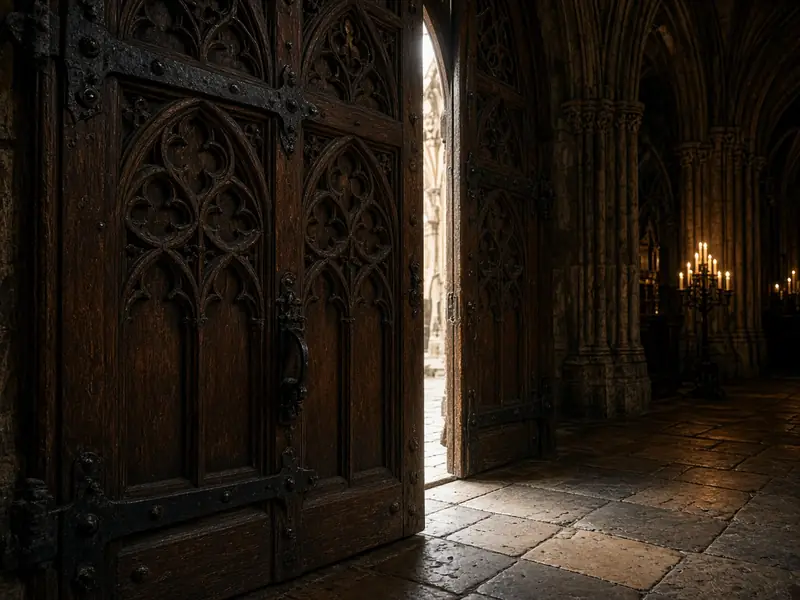
The big front doors stand for Jesus, who said, “I am the door.” Going through them means leaving the noisy, sinful world behind and stepping toward heaven, our Father’s house. The narthex is the entry hall just inside. It is a place to get quiet before you go in.
Source: John 10:9; CCC 1186
2Holy Water Font
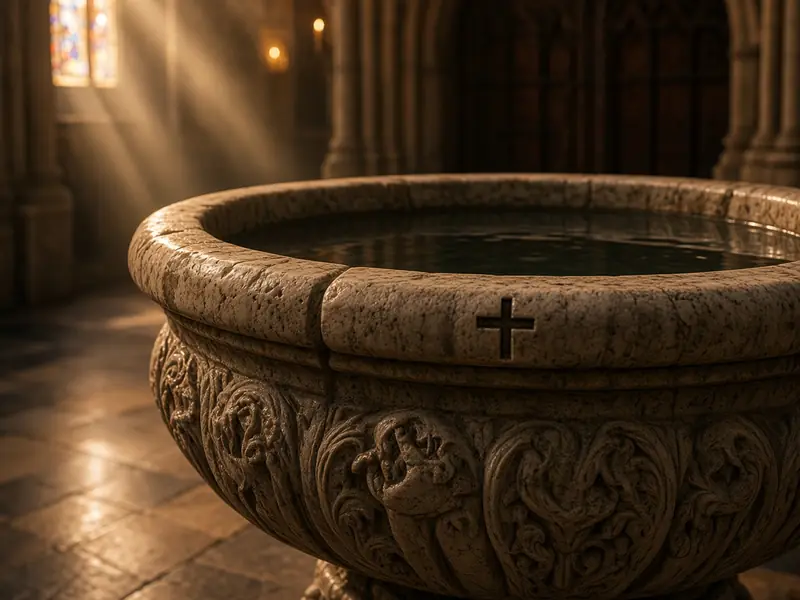
A stone bowl of holy water by the door. Holy water is a sacramental: a sacred sign, instituted by the Church, that resembles the sacraments. It does not give grace the way the sacraments do. Through the Church’s prayer, it helps prepare our hearts to receive God’s grace. We dip our fingers in it and make the Sign of the Cross. This reminds us of our Baptism, when we were washed clean and became children of God.
Source: CCC 1185, 1667–1670
3Baptismal Font
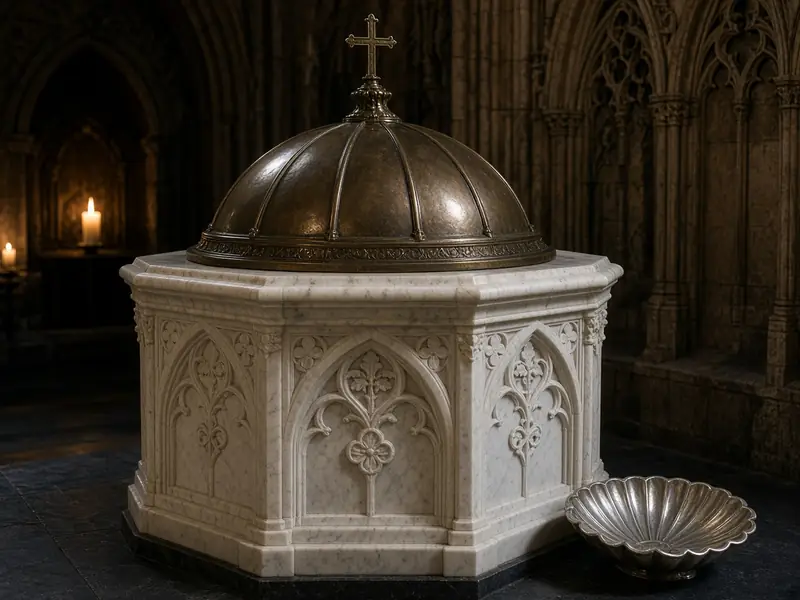
The large bowl, often near the entrance, where people are baptized. It is near the door because Baptism is the door into the Church and into the Christian life. Many old fonts have eight sides. Eight stands for the “eighth day,” the day Jesus rose from the dead and the start of new life.
Source: CCC 1185, 1213
4The Nave
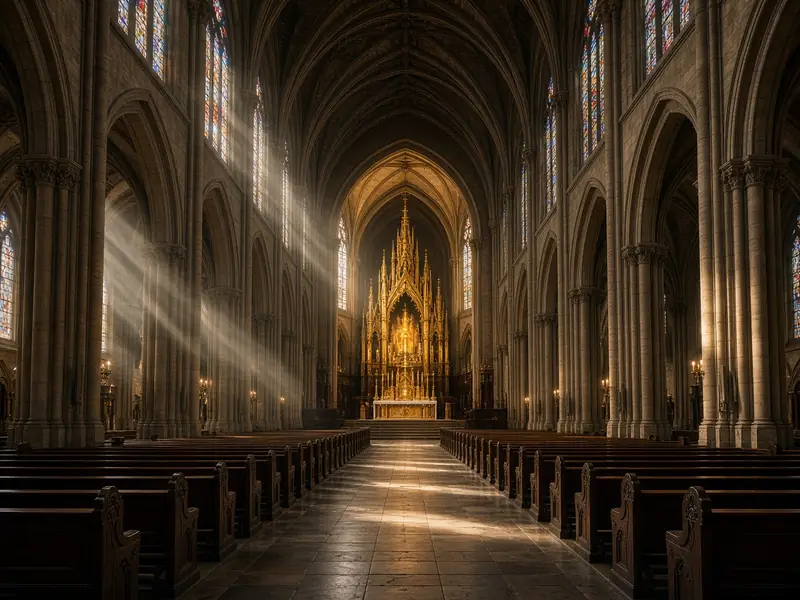
The long main hall where the people sit. The word comes from the Latin *navis*, which means “ship.” The Church is like Noah’s Ark, carrying God’s people safely through the storms of life to heaven. Many old churches are built in the shape of a cross.
Source: CCC 845, 1180
5Pews
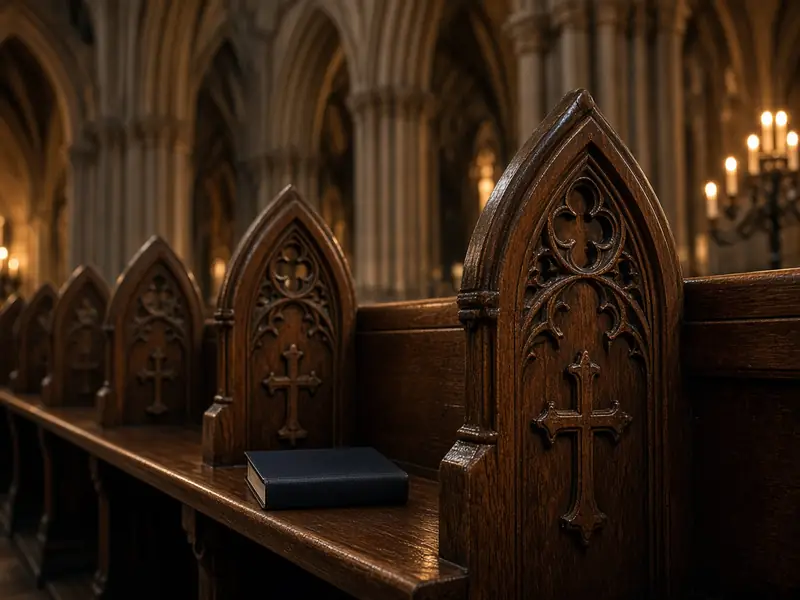
The wooden benches where the people sit together. We are not alone. We are one family of God, praying as one body.
Source: CCC 1179, 1 Peter 2:5
6Kneelers
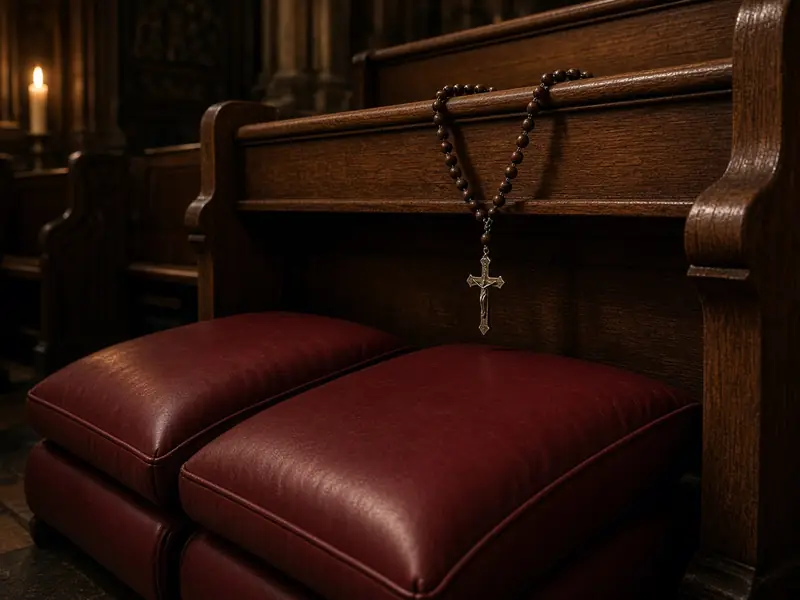
The padded boards in front of the pews. We kneel to show that God is great and that we are humble before Him. We kneel most of all when the bread and wine become the Body and Blood of Jesus.
Source: GIRM 43; Philippians 2:10
7Pillars and Arches
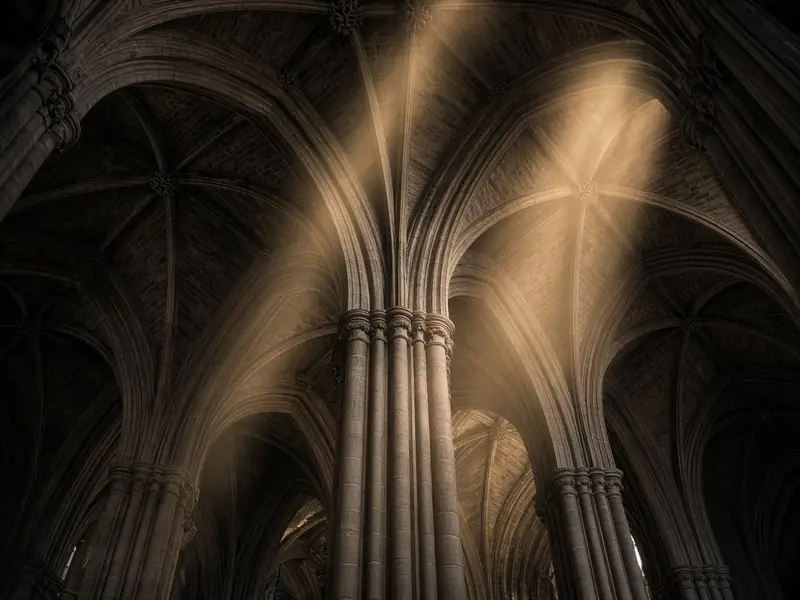
The tall stone columns hold up the roof and lift our eyes upward toward heaven. In old teaching, the pillars stand for the Apostles and saints, who hold up the Church by their faith. We are “living stones” too.
Source: Galatians 2:9; 1 Peter 2:5
8Stained Glass Windows
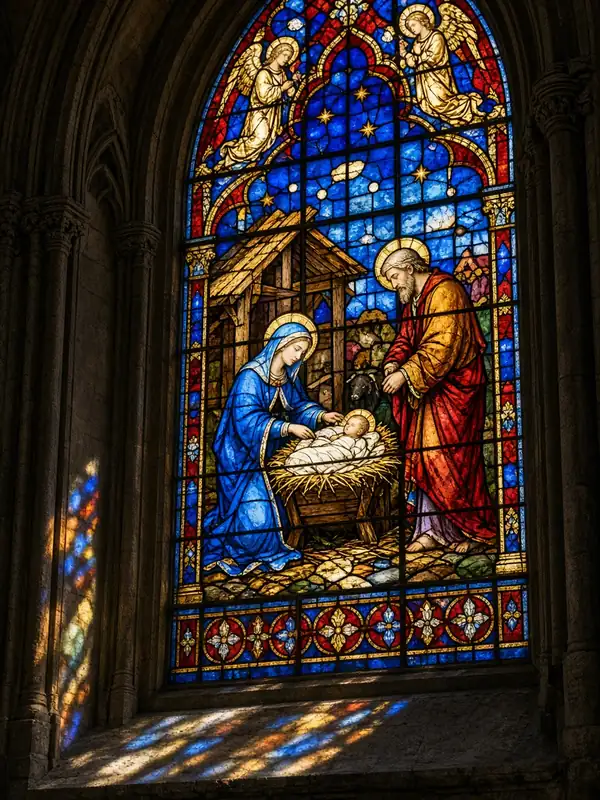
Colored glass pictures of Jesus, Mary and the saints. Long ago many people could not read, so the windows told the stories of the Bible in pictures. When the sun shines through, it reminds us that God’s light shines through His saints.
Source: CCC 1160, 2132
9Rose Window
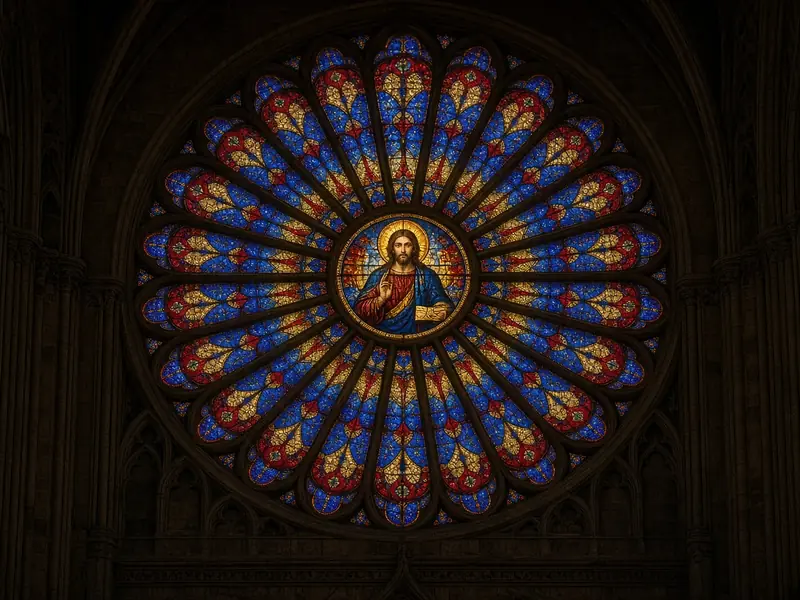
The big round window, often over the front doors or at the ends of the church. It looks like a flower or a wheel. It often shows Mary, or Jesus in glory, in the center, with saints and angels all around. The circle reminds us of heaven and of God, who has no beginning and no end.
Source: Catholic Encyclopedia, “Rose Window”
10Organ and Choir Loft
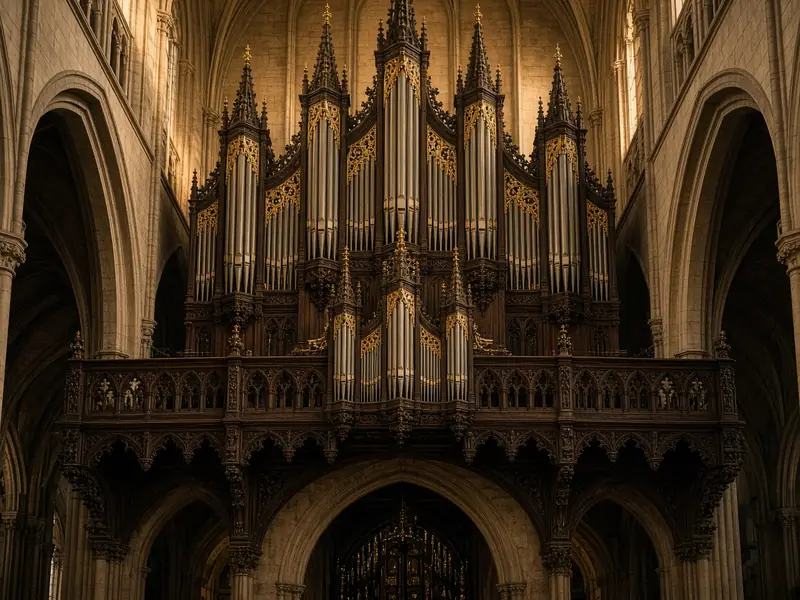
The balcony at the back where the choir sings and the pipe organ plays. The Church says the pipe organ is to be held “in high esteem” because it lifts hearts up to God. Singing is praying twice.
Source: Sacrosanctum Concilium 120; CCC 1156–1157
11Confessionals
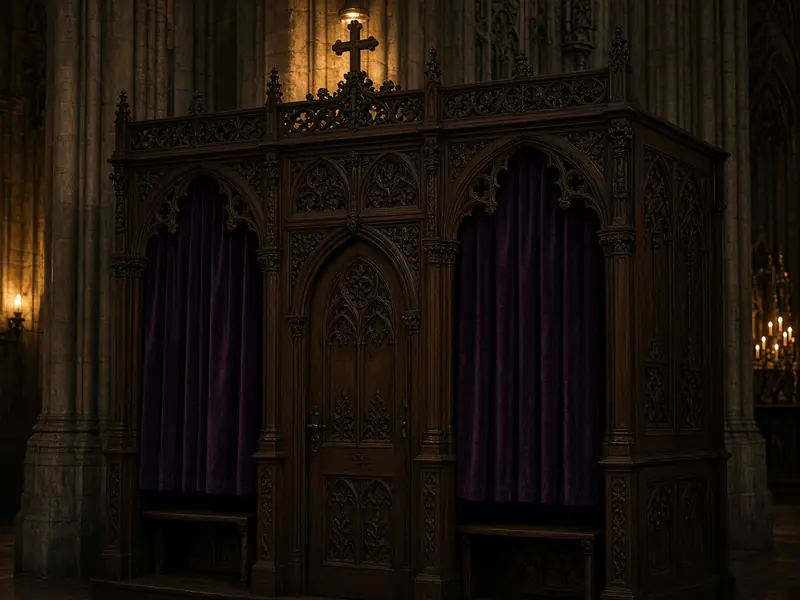
Small rooms or booths along the side walls. Here you tell your sins to a priest and receive God’s forgiveness in the Sacrament of Confession. The priest acts in the person of Jesus, and he can never tell anyone what you said.
Source: CCC 1185, 1422, 1467
12Stations of the Cross
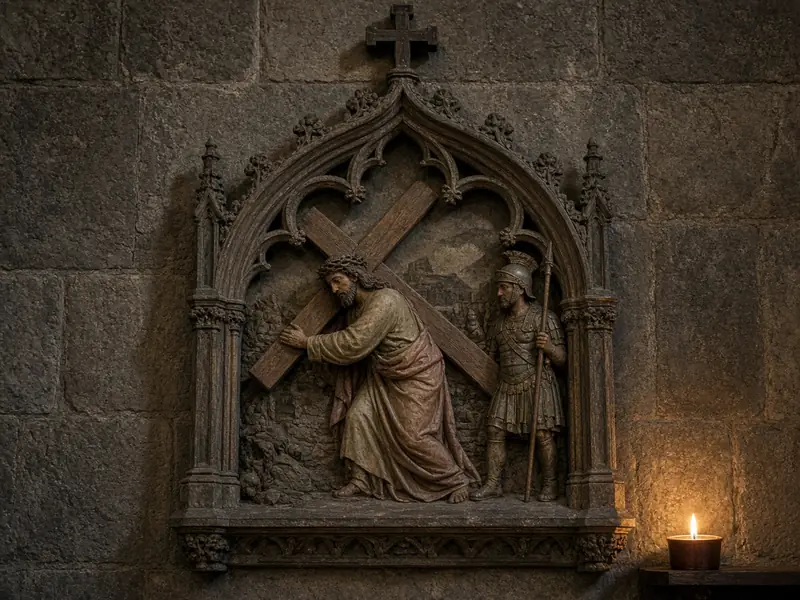
Fourteen pictures or carvings around the walls. They show Jesus’ last walk carrying His cross, from being condemned to being laid in the tomb. People walk from one to the next and pray, especially on Fridays and during Lent.
Source: CCC 1674
13Statues of the Saints
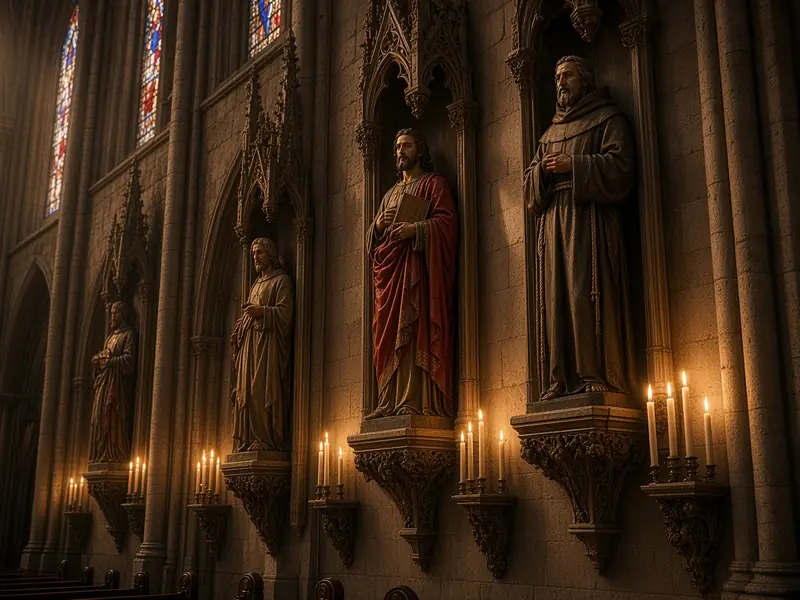
Statues of Mary, Joseph, the Apostles and other saints. We do not worship statues. They remind us of real holy people who are now with God and who pray for us, like a family photo of our family in heaven.
Source: CCC 1161, 2132
14Vigil Candles (votive candles)
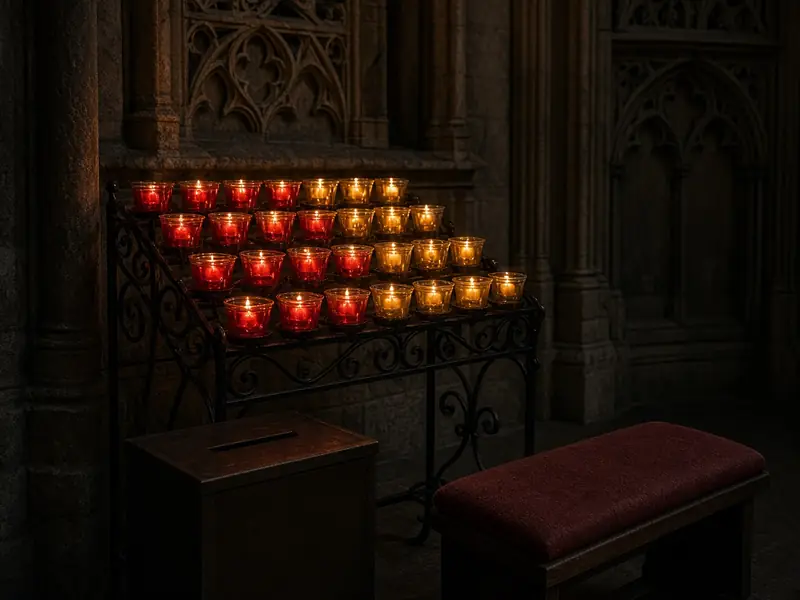
Rows of small candles in front of a statue or altar. People light one when they ask for a prayer. The flame keeps “praying” after you leave. It stands for our prayer rising up to God and for Jesus, the Light of the World.
Source: John 8:12
15Mary’s Side Altar
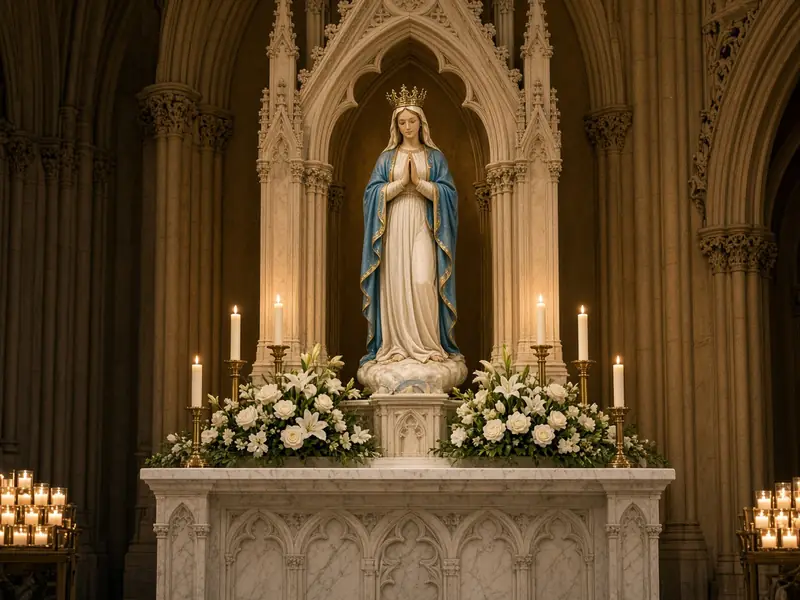
A smaller altar with a statue of the Blessed Virgin Mary. By tradition, though not by rule, it stands on the left as you face the main altar, so Mary is at her Son’s right hand. Mary is the Mother of Jesus and our Mother too. We ask her to pray for us, because she always leads us to her Son.
Source: CCC 971, 2677; John 19:27; GIRM 318; Aleteia (2017), “Why do churches have Mary on the left and Joseph on the right?”; The Catholic Travel Guide, “The Sanctuary of a Catholic Church”
16St. Joseph’s Side Altar
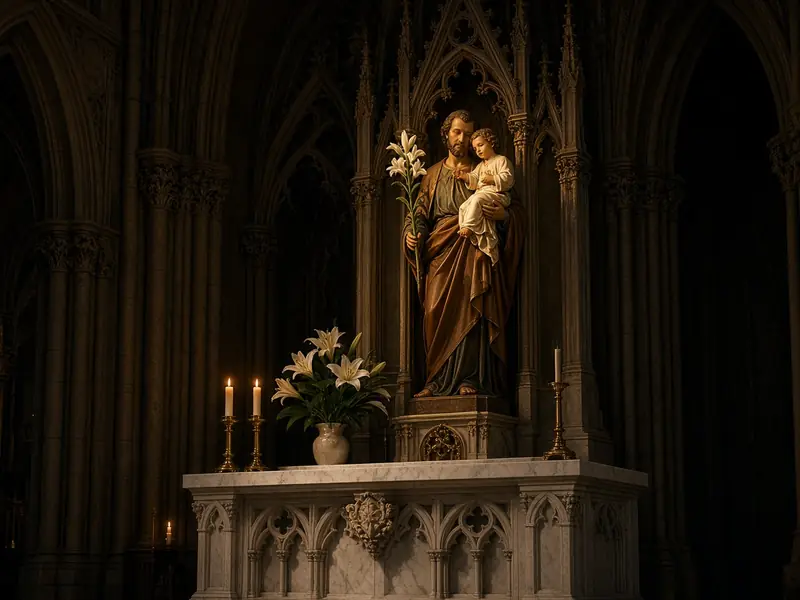
A smaller altar for St. Joseph, the husband of Mary and the protector of Jesus. By tradition, though not by rule, it stands on the right as you face the main altar. He is the Patron of the whole Church and of a happy death.
Source: Pope Pius IX, Quemadmodum Deus (December 8, 1870); CCC 1014; GIRM 318; Aleteia (2017), “Why do churches have Mary on the left and Joseph on the right?”; The Catholic Travel Guide, “The Sanctuary of a Catholic Church”
17The Pulpit
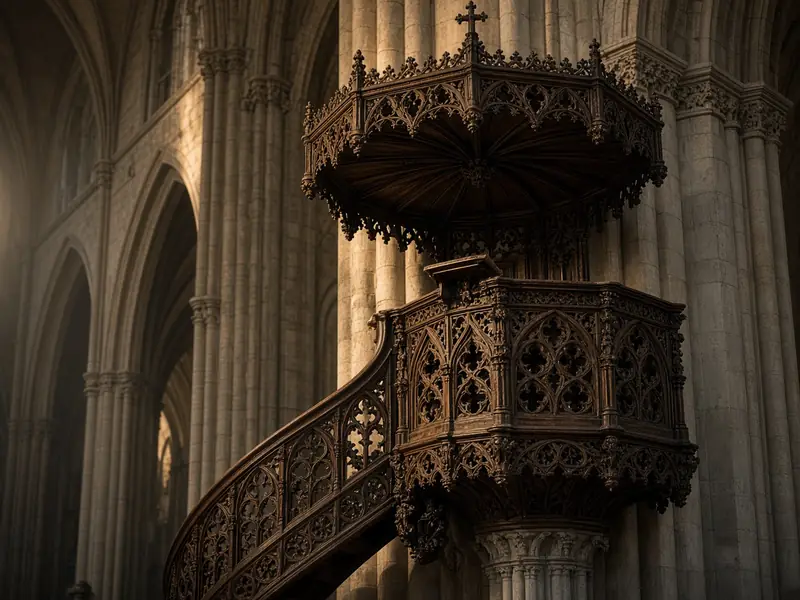
In old churches, a raised, carved stand, often up a little staircase on a pillar, with a wooden roof over it. The priest climbed up to preach so everyone could hear him before there were microphones. The roof (sounding board) helped carry his voice.
Source: Catholic Encyclopedia, “Pulpit”
18The Ambo (reading stand)
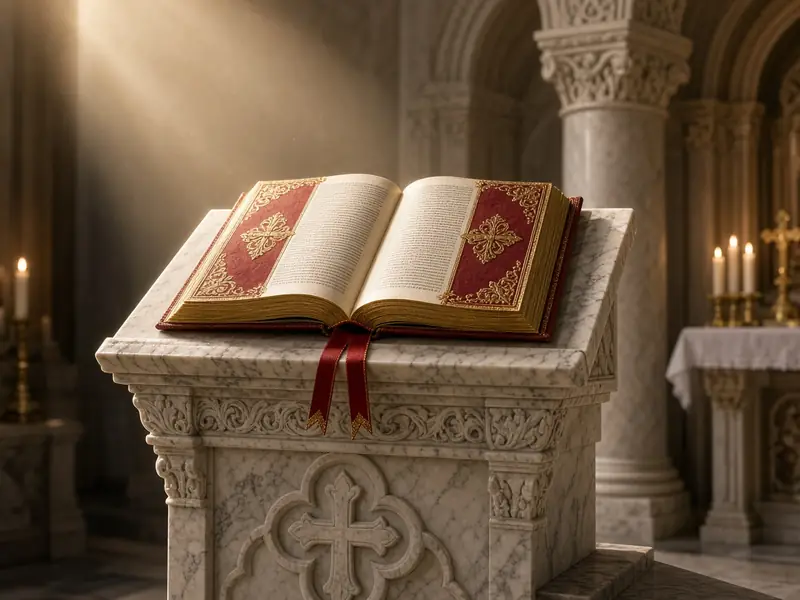
The stand where the Bible readings and the Gospel are read at Mass. It is a place of honor because God speaks to us when the Scriptures are read. A smaller stand, the lectern, may be used for songs and notices.
Source: CCC 1184; GIRM 309
19Paschal Candle (Easter candle)
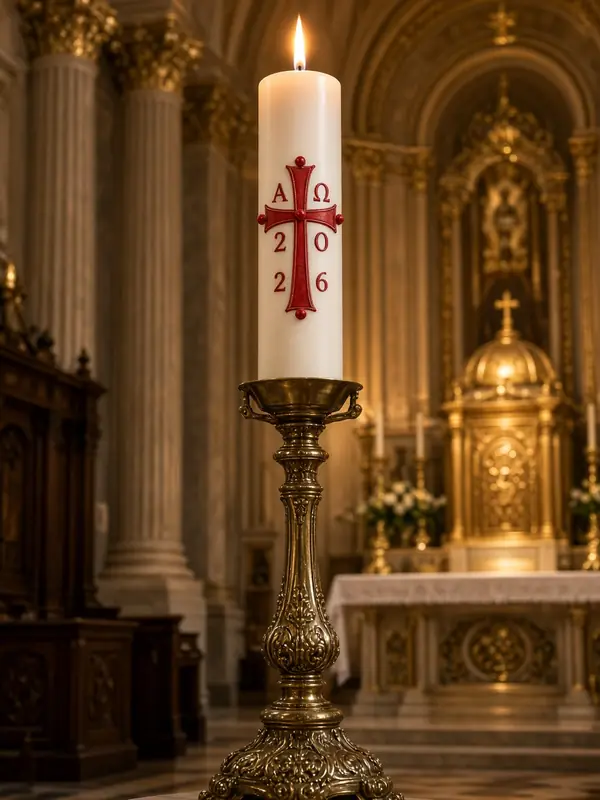
A very tall candle lit first at the Easter Vigil. It stands for the risen Jesus, the Light of the World. It has a cross, the Greek letters Alpha and Omega (the beginning and the end), and the year on it. It is lit during the Easter season, at baptisms and at funerals.
Source: Roman Missal, Easter Vigil
20Altar Rail (Communion rail) and Rood Screen
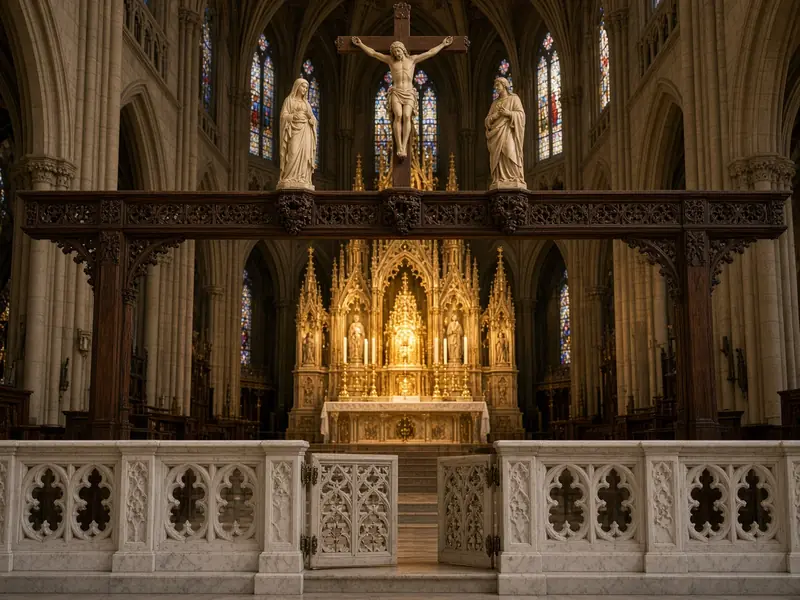
The low railing between the people and the sanctuary. In many old churches people knelt here to receive Holy Communion. Some very old churches also had a tall carved screen here with a large cross on top, called the “rood” (an old word for cross). It marks the step from earth toward heaven.
Source: Catholic Encyclopedia, “Altar Rail” and “Rood”
Part B · The Sanctuary
21The Sanctuary
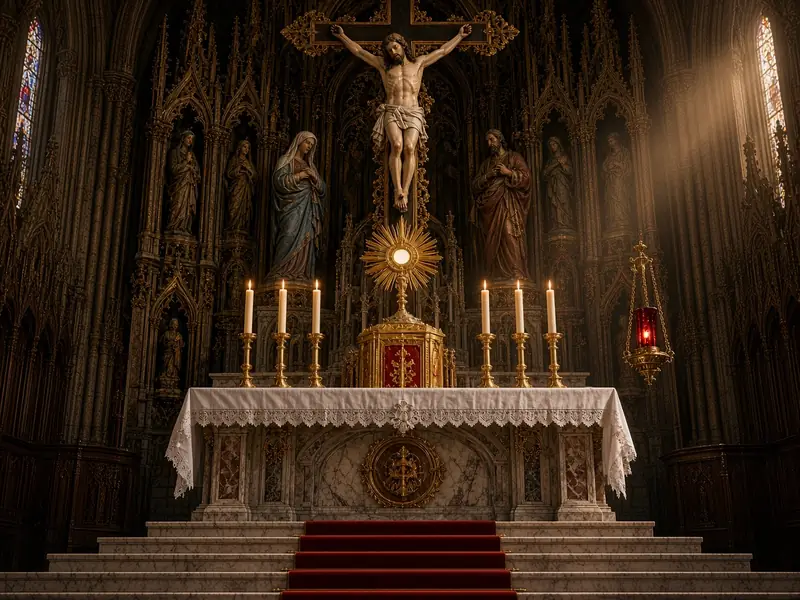
The raised area around the altar, often up several steps. “Sanctuary” means “holy place.” It reminds us of the Holy of Holies in the Temple of the Old Testament. Here the priest offers the Holy Sacrifice of the Mass.
Source: GIRM 295; Hebrews 9:3
22The Cathedra (the bishop’s chair)
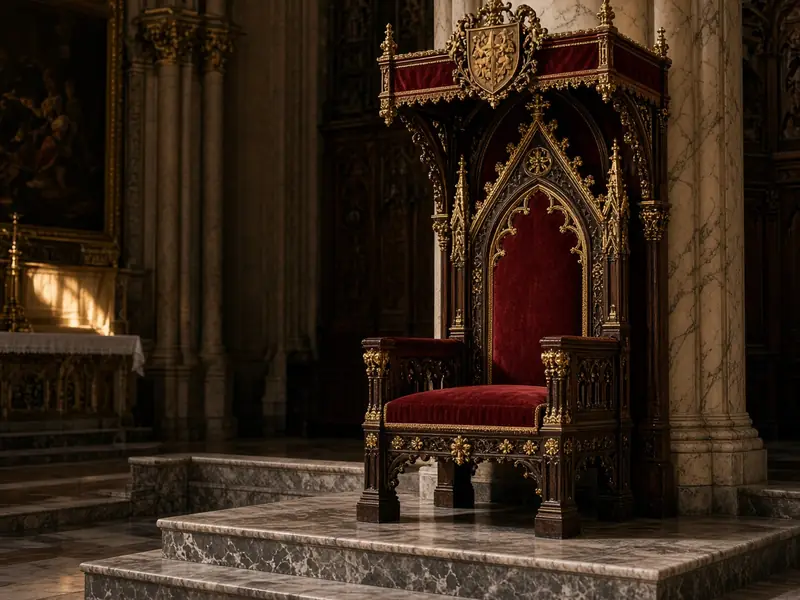
A special chair for the bishop. A church is called a “cathedral” because the bishop’s chair is there. The word comes from *cathedra*, which means “chair” in Latin. It stands for the bishop’s job to teach, lead and care for his people as a successor of the Apostles.
Source: CCC 1184; GIRM 310
23Credence Table
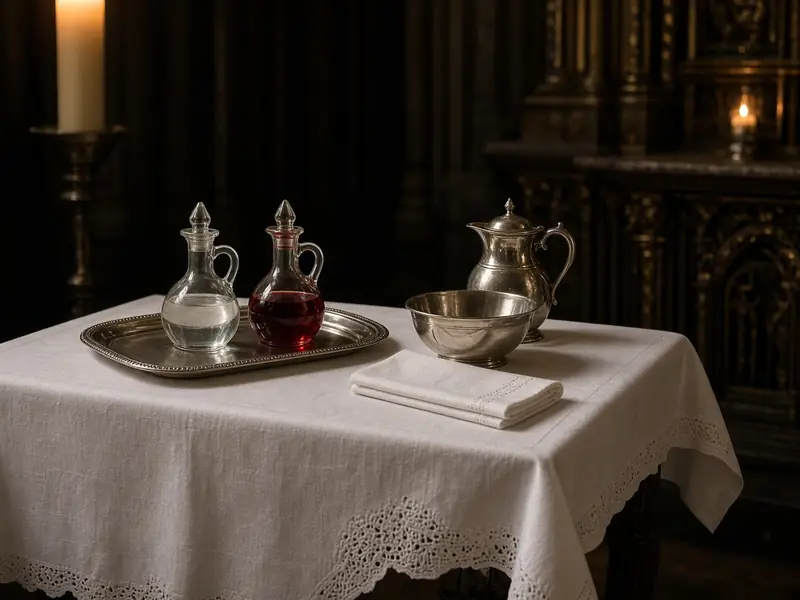
A small side table near the altar. It holds the things needed for Mass: the chalice, the water and wine cruets, and the bowl and towel for washing the priest’s hands.
Source: GIRM 118
24The Ambry (holy oils)
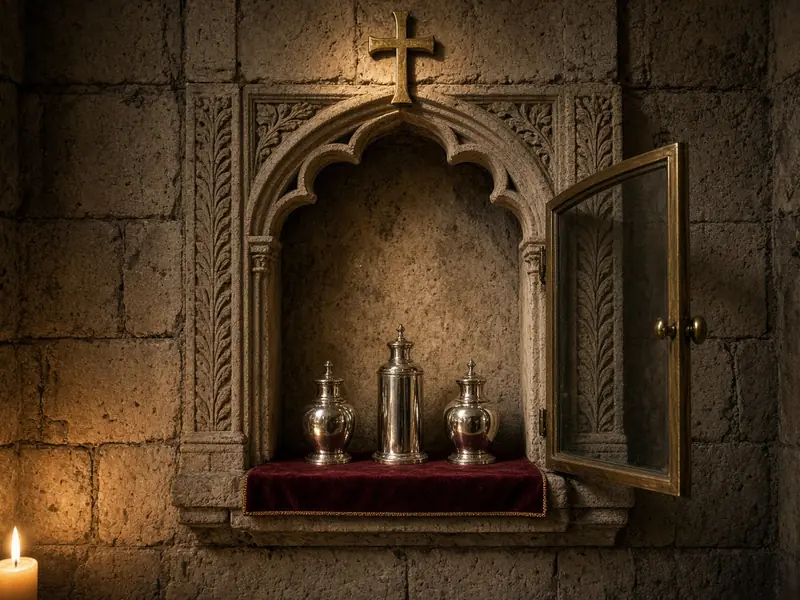
A small cabinet in the wall that holds the three holy oils. Each year at the Chrism Mass the bishop blesses the Oil of Catechumens and the Oil of the Sick and consecrates the Sacred Chrism. Sacred Chrism is used for Baptism, Confirmation and Holy Orders, the Oil of Catechumens for those preparing for Baptism, and the Oil of the Sick for the Anointing of the Sick.
Source: CCC 1183, 1241, 1294, 1297, 1513
25The High Altar
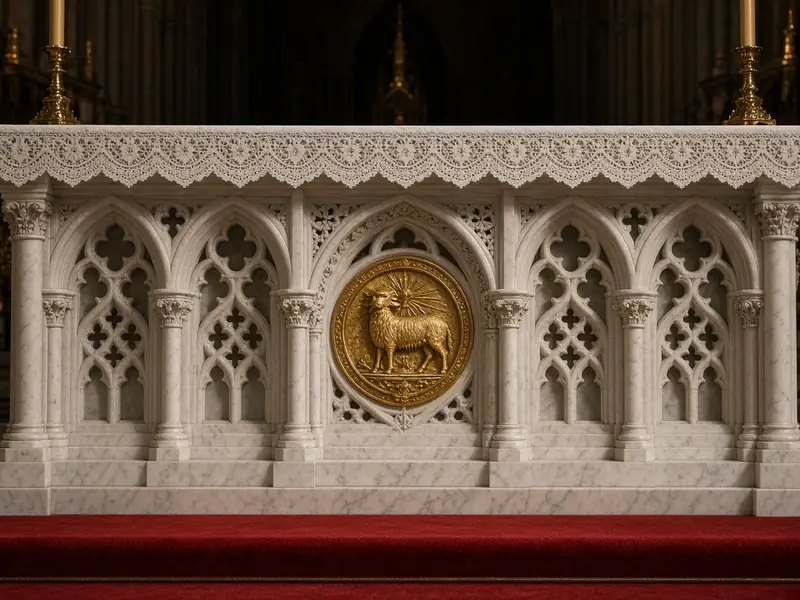
The most important thing in the church. The altar is the place of Jesus’ Sacrifice on the Cross, made present at every Mass. It is also the Lord’s Table, where He feeds us with Himself. That is why the priest kisses it and we bow to it. In old churches the priest and people all faced the same way at the altar, toward the Lord.
Source: CCC 1182, 1383; GIRM 296, 298
26The Altar Stone and Relics
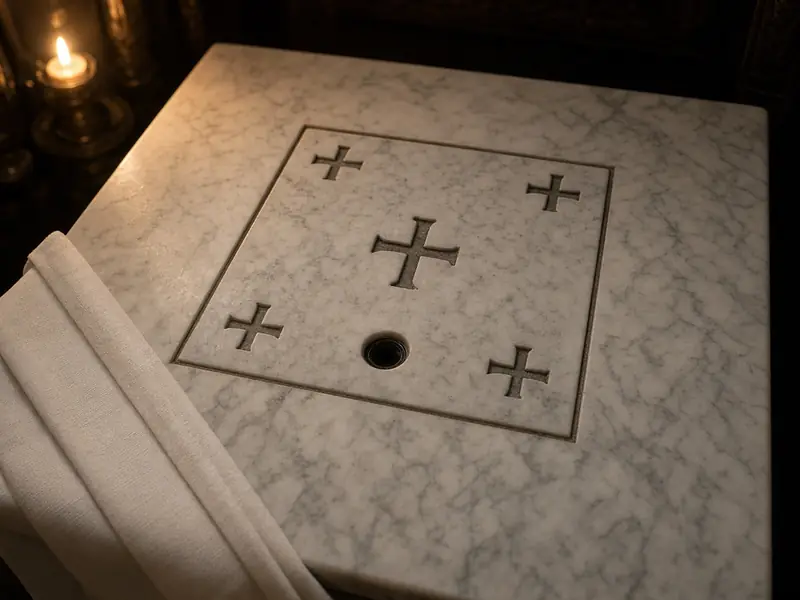
Inside or under many altars are relics, small pieces of the bodies of saints, often martyrs. In older altars they are sealed inside a blessed stone slab called the altar stone. In the early Church, Mass was said over the tombs of martyrs. It reminds us that the saints gave their lives for Jesus and share in His sacrifice.
Source: GIRM 302; CIC 1237 §2; Revelation 6:9; Catholic Encyclopedia, “Altar (in Liturgy)”
27Altar Cloths
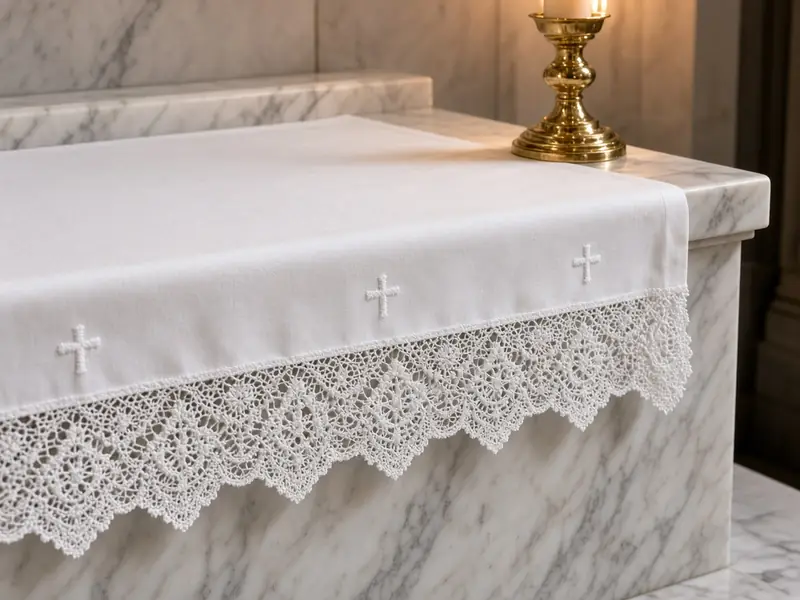
At least one white cloth covers the altar out of respect for the Lord’s table. Many old altars have three. On top, under the chalice, is a small square cloth called the corporal. Its name comes from *corpus*, “body,” because the Body of Christ rests on it.
Source: GIRM 117, 304
28Altar Candles
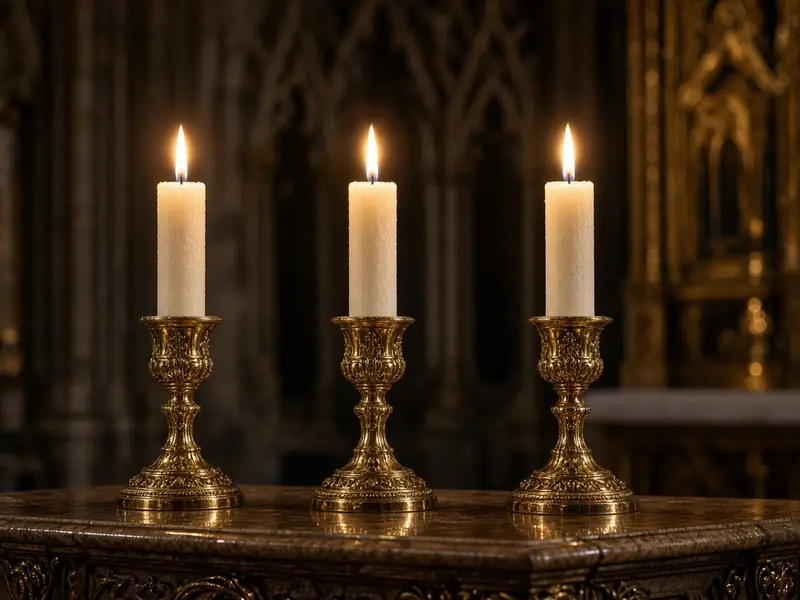
Candles are lit on or near the altar at every Mass. There are two, four or six, and seven when the bishop of the diocese says Mass. They show honor and joy and remind us that Jesus is the Light of the World. Altar candles are traditionally made mostly of beeswax.
Source: GIRM 117, 307
29Chalice and Paten
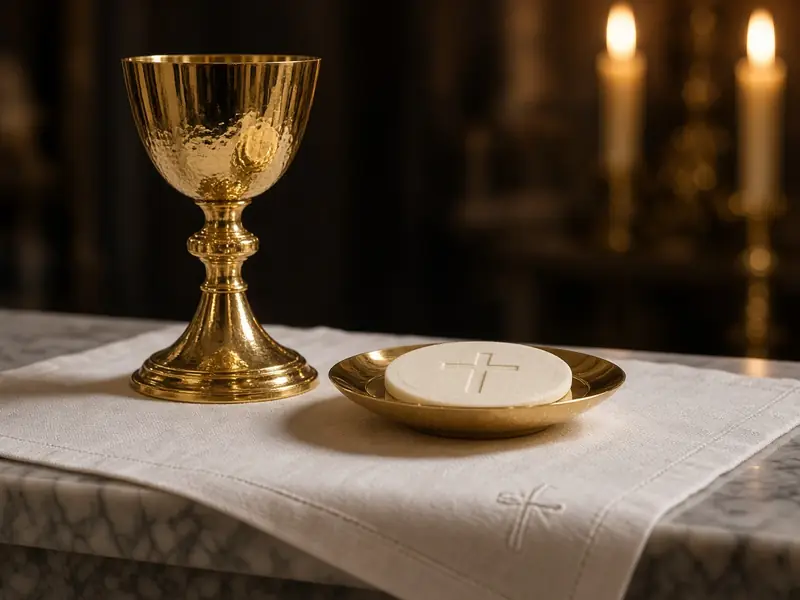
The chalice is the gold or silver cup that holds the wine that becomes the Precious Blood of Jesus. The paten is the small plate that holds the Host that becomes His Body. They are blessed and used only for Mass.
Source: GIRM 327–333
30The Tabernacle
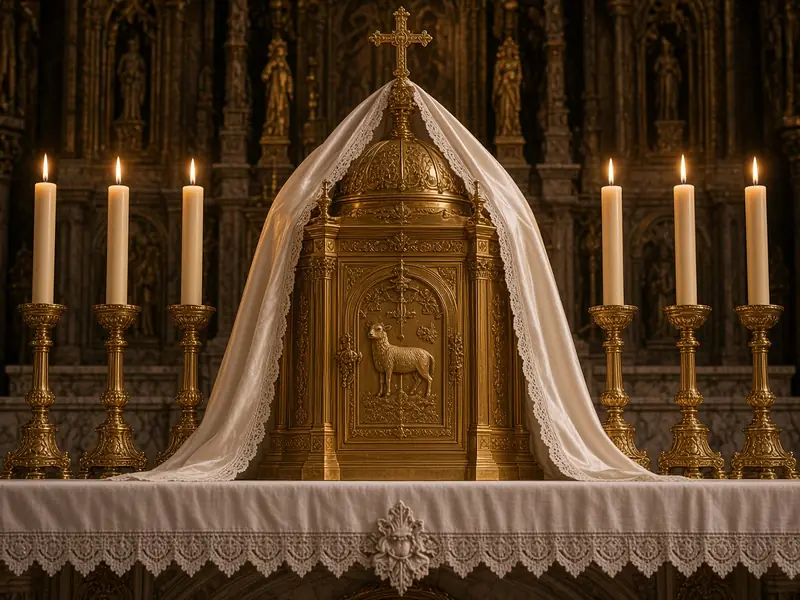
The gold box, often on or behind the altar, with a light always burning near it. Inside are consecrated Hosts: Jesus Himself, really present, kept for the sick and for us to adore. That is why we genuflect (touch our right knee to the floor) toward it.
Source: CCC 1183, 1379; GIRM 274, 314
31Sanctuary Lamp
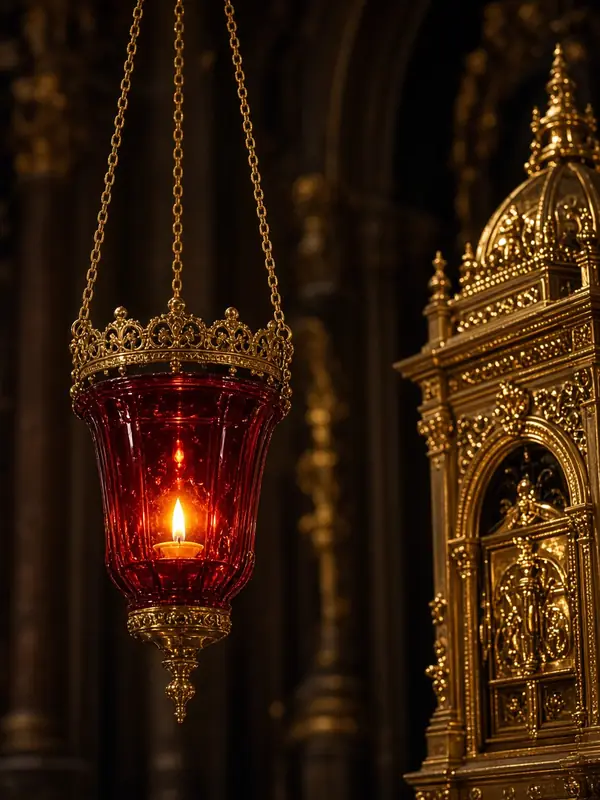
A lamp, often in red glass by custom, that burns day and night near the tabernacle. When it is lit, it tells you: “Jesus is here.”
Source: GIRM 316; CIC 940
32The Monstrance and the Eucharist
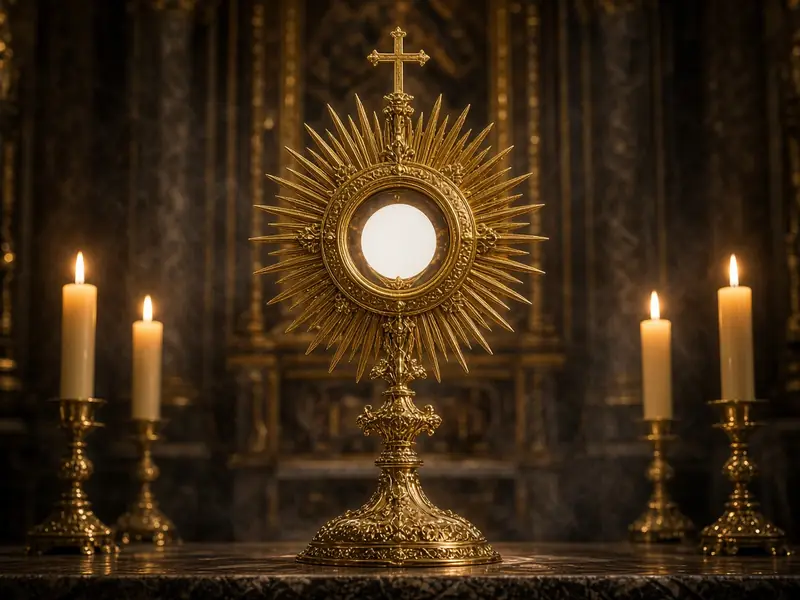
The golden “sunburst” holder in the center of the altar. In its middle, behind glass, is the Eucharist, a consecrated Host. It looks like bread, but it is truly Jesus: His Body, Blood, Soul and Divinity. The name comes from the Latin *monstrare*, “to show.” It is used for Adoration and Benediction, when we kneel and simply worship Him.
Source: CCC 1374, 1378; John 6:51
33The Great Crucifix
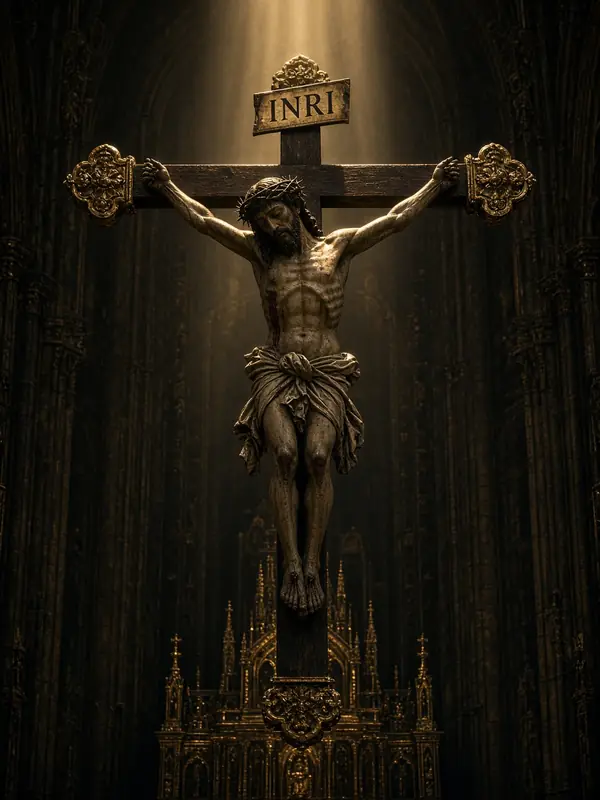
A crucifix is a cross with the body of Jesus on it. It hangs high over the altar so we never forget the price of our salvation: Jesus died for us out of love. Often Mary and St. John stand at its foot, as they did at Calvary. The sign above His head, “INRI,” is Latin for “Jesus of Nazareth, King of the Jews.”
Source: GIRM 308; John 19:19, 25–27
34The Reredos (the carved wall behind the altar)
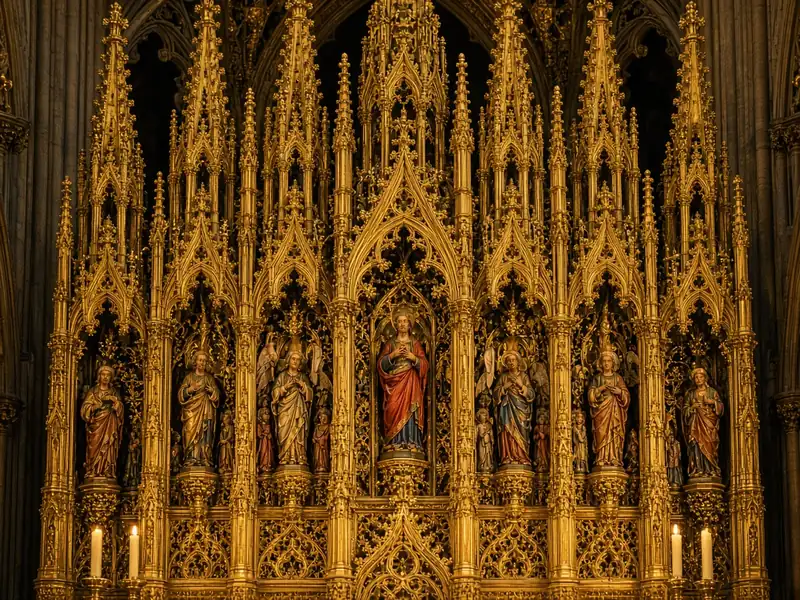
The tall carved and painted wall behind the high altar, full of saints and angels. It is like a window into heaven, where the saints and angels worship God around His throne, and at Mass we join them.
Source: Revelation 4–5; CCC 1090
35Incense and the Thurible
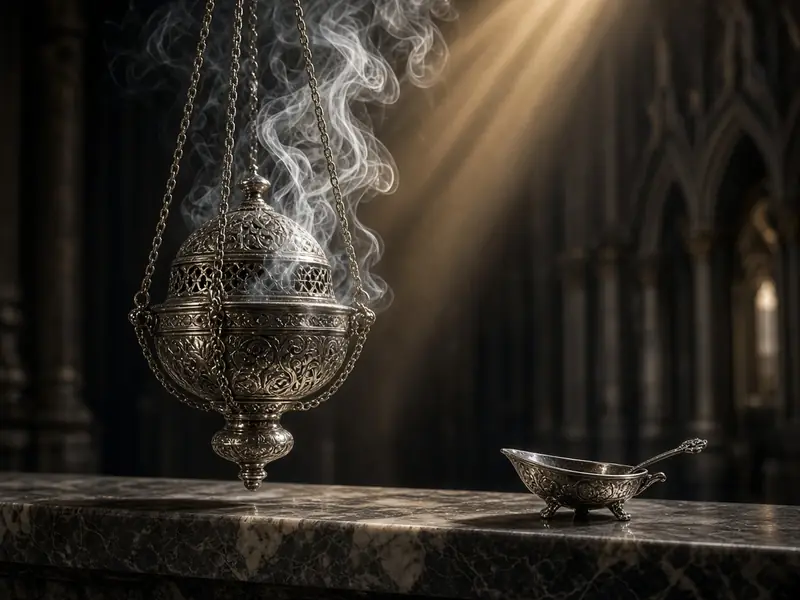
The thurible is the metal pot on chains that holds burning incense. The sweet smoke rises like our prayers rising to God. It is used to honor the altar, the Gospel book, the Eucharist and the people.
Source: Psalm 141:2; Revelation 8:3–4; GIRM 276
36Altar Bells
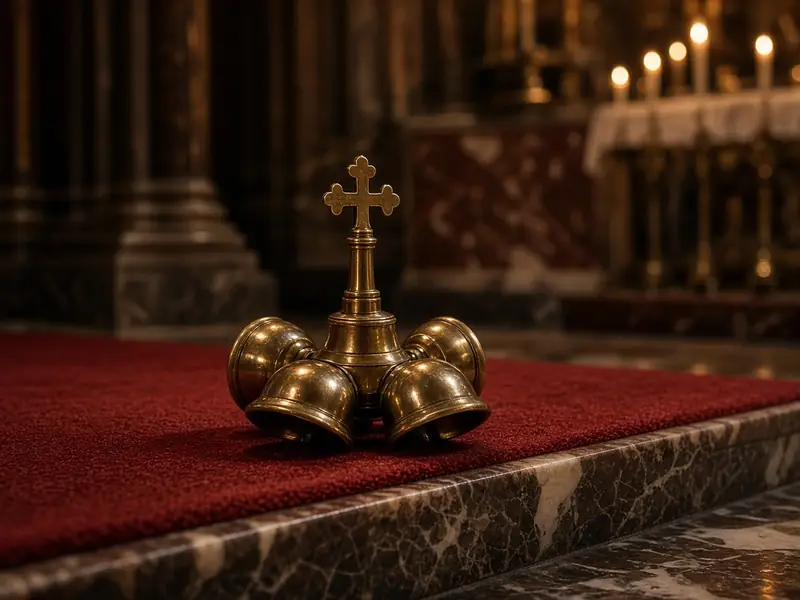
Small bells rung by the altar server at the most holy moment of Mass, when the priest lifts up the Host and the Chalice. They say: “Look up, Jesus is here!”
Source: GIRM 150
37The Sacristy (door)
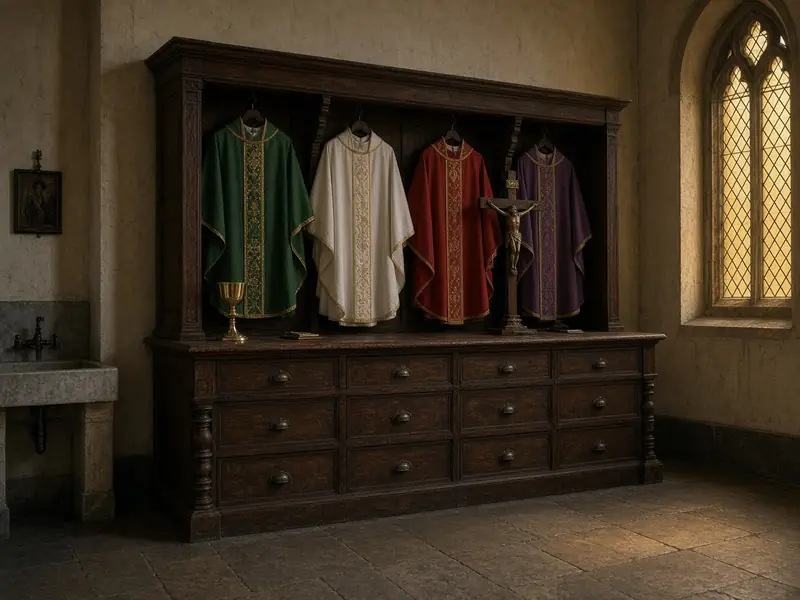
The room beside the sanctuary where the priest puts on his vestments and the sacred things are kept and prepared. The colors of the vestments change with the seasons: white for joy, red for the Holy Spirit and martyrs, green for Ordinary Time, and purple for Advent and Lent.
Source: GIRM 346; Catholic Encyclopedia, “Sacristy”
Before You Leave
Before you leave, kneel for a moment toward the tabernacle. Jesus is here, and He waits for you.
✠ Go to the Prayer Doors Pray before the Blessed Sacrament → Deep Prayer