Successores Petri
The Hall of Popes
Tap to open the doors. A voice reads Matthew 16:18.
And I say also unto thee,Et ego dico tibi
That thou art Peter,quia tu es Petrus,
and upon this rock I will build my church;et super hanc petram aedificabo ecclesiam meam,
and the gates of hell shall not prevail against it.et portae inferi non praevalebunt adversus eam.
Matthew 16:18 · King James Version · Vulgate
St. Peter, Apostle · the first Pope
Another door
The Hall of Popes
Every pope of the Catholic Church, in the Vatican’s own order, from St. Peter to Leo XIV. 267 in all. Walk from ancient Rome to today.
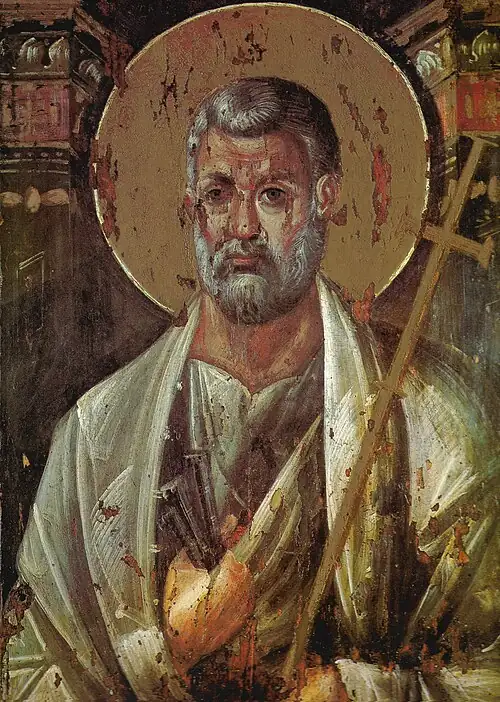
The first pope greets you
St. Peter, Apostle
“Thou art Peter, and upon this rock I will build my church; and the gates of hell shall not prevail against it.” Matthew 16:18
Tu es Petrus, et super hanc petram aedificabo ecclesiam meam, et portae inferi non praevalebunt adversus eam.
No. 1St. PeterSanctus PETRVSc. 30 – c. 64
Simon, son of Jonah, a fisherman from Bethsaida in Galilee, called by Jesus to be an apostle.
Jesus gave him the keys of the Kingdom (Matthew 16:18–19); tradition holds he was martyred in Rome under Nero and buried on the Vatican Hill.
Vulgate Tu es Petrus, et super hanc petram aedificabo Ecclesiam meam “You are Peter, and upon this rock I will build my Church (Matthew 16:18, Vulgate)”
Image: Saint_Peter-Sinai_(6th_Century)_Crop.jpg, Unknown author · Public domain
Nos. 1–32
Early Church · Ancient Rome
The catacombs and the Rome of the apostles
No. 2St. LinusSanctus LINVSc. 64 – c. 76
From Tuscia.
He is generally regarded as the second bishop of Rome, after Saint Peter.
Image: Menologion_of_Basil_II_-_Patrobulus,_Hermas,_Li…, Authors of Menologion of Basil II (circ… · Public domain
No. 3St. AnacletusSanctus ANACLETVSc. 76 – c. 88
From Rome.
Anacletus served between c. AD 80 and his death, c. AD 92.
Image: Anaklet.jpg, Unknown author · Public domain
No. 4St. Clement ISanctus CLEMENSc. 88 – c. 97
From Rome.
He is considered to be the first of the Apostolic Fathers of the Church.
Image: Clement_I_in_Basilica_di_Sant’Apollinare_Nuovo.…, Mentnafunangann · CC BY-SA 4.0
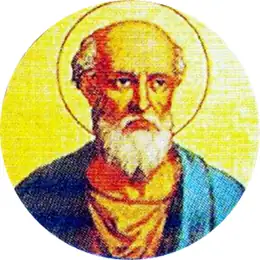
No. 5St. EvaristusSanctus EVARISTVSc. 97 – c. 105
From Greece.
He was also known as Aristus and is venerated as a saint in the Catholic Church, Eastern Orthodox Church, and Oriental Orthodoxy.
Image: 5-St.Evaristus.jpg, Unknown author · Public domain
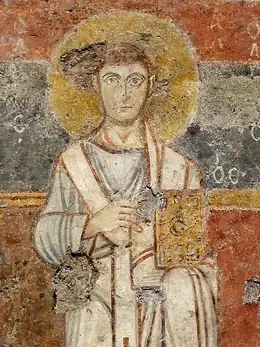
No. 6St. Alexander ISanctus ALEXANDERc. 105 – c. 115
From Rome.
Some believe he suffered martyrdom under the Roman emperor Trajan or Hadrian.
Image: Sanctus_Alexander_Papa_Sancta_Maria_Antiqua(cro…, Alekjds · CC BY-SA 4.0
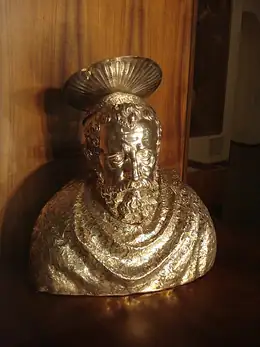
No. 7St. Sixtus ISanctus XYSTVSc. 115 – c. 125
From Rome.
The Liber Pontificalis credits him with ruling that only sacred ministers may touch the sacred vessels of the altar; he led the Church for about ten years.
Image: Bista-relikvijar_pape_sv._Siksta_I._iz_1596._-_…, Silverije · CC BY-SA 3.0
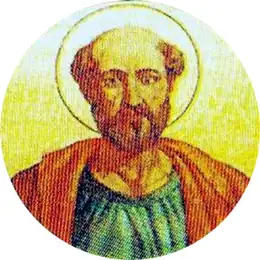
No. 8St. TelesphorusSanctus TELESPHORVSc. 125 – c. 136
From Greece.
Telesphorus is traditionally considered the eighth Bishop of Rome in succession after Peter.
Image: 8-St.Telesphrous.jpg, Unknown author · Public domain
No. 9St. HyginusSanctus HYGINVSc. 136 – c. 140
From Greece.
Tradition holds that during his papacy he determined the various prerogatives of the clergy and defined the grades of the ecclesiastical hierarchy.
Image: 9-St.Hyginus.jpg, Unknown author · Public domain
No. 10St. Pius ISanctus PIVSc. 140 – c. 155
From Aquileia.
He is considered to have opposed both the Valentinians and Gnostics during his papacy.
Image: 10-St.Pius I.jpg, Unknown author · Public domain
No. 11St. AnicetusSanctus ANICETVSc. 155 – 166/7
From Emesa (Syria).
Anicetus actively opposed Gnosticism and Marcionism.
Image: 11-St.Anicetus.jpg, Unknown author · Public domain
No. 12St. SoterSanctus SOTER166/7 – 174/5
From Fondi.
He was born in Fundi, in the Lazio region of Italy.
Image: 12-St.Soter.jpg, Unknown author · Public domain
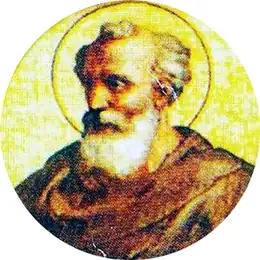
No. 13St. EleutheriusSanctus ELEVTHERIVS174/5 – 189
From Nicopolis (Epirus).
He is venerated as a saint in the Catholic Church.
Image: 13-St.Eleuterus.jpg, Unknown author · Public domain
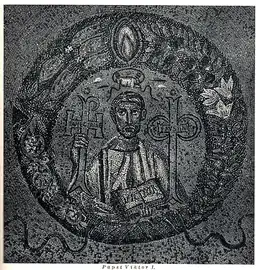
No. 14St. Victor ISanctus VICTOR189 – 198/9
From Africa.
The dates of his tenure are uncertain, but one source states he became pope in 189 and gives the year of his death as 199.
Image: Victor-I_pope-pic.jpg, Von Seppelt-Löffler · CC BY 3.0
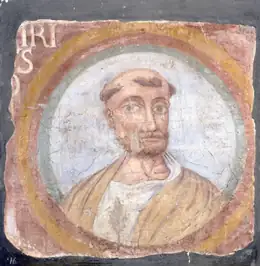
No. 15St. ZephyrinusSanctus ZEPHYRINVS198/9 – 20 December 217
From Rome.
He led the Church for about eighteen years, through the persecution under Emperor Septimius Severus, and is remembered for defending the divinity of Christ against heresies.
Image: Fresco_of_Pope_Zephyrinus_-_Basilica_of_Saint_P…, Unknown author; Photo taken by Arnaldo … · Public domain
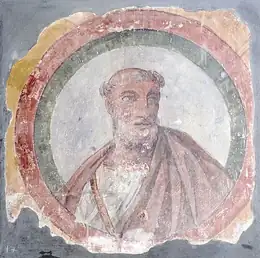
No. 16St. Callixtus ISanctus CALLISTVS218 – 14 October 222
He lived during the reigns of the Roman emperors Elagabalus and Alexander Severus.
Image: Fresco_of_Pope_Callixtus_I_-_Basilica_of_Saint_…, Unknown author; Photo taken by Arnaldo … · Public domain
No. 17St. Urban ISanctus VRBANVS222 – 19 May 230
From Rome.
He was born in Rome and succeeded Callixtus I, who had been martyred.
Image: 17-St.Urban I.jpg, Unknown author · Public domain
No. 18St. PontianSanctus PONTIANVS21 July 230 – 28 September 235
From Rome.
In 235, during the persecution of Christians in the reign of the Emperor Maximinus Thrax, Pontian was arrested and sent to the island of Sardinia.
Image: 18-St.Pontian.jpg, Unknown author · Public domain
No. 19St. AnterusSanctus ANTERVS21 November 235 – 3 January 236
From Greece.
He reigned only about forty days and was buried in the papal crypt of the Catacomb of St. Callixtus in Rome, where his tomb was found in 1854.
Image: 19-St.Anterus.jpg, Unknown author · Public domain
No. 20St. FabianSanctus FABIANVS10 January 236 – 20 January 250
From Rome.
A dove is said to have descended on his head to mark him as the Holy Spirit’s unexpected choice to become the next pope.
Image: 20-St.Fabian.jpg, Unknown author · Public domain
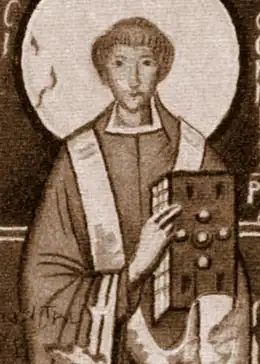
No. 21St. CorneliusSanctus CORNELIVSMarch 251 – June 253
From Rome.
He agreed with Cyprian of Carthage that those who had lapsed could be restored to communion after varying forms of Reinitiation and Penance.
Image: Cornelius-2_(cropped).jpg, Von Seppelt-Löffler · Public domain
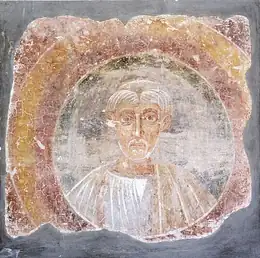
No. 22St. Lucius ISanctus LUCIVS25 June 253 – 5 March 254
From Rome.
He was banished soon after his consecration, but gained permission to return.
Image: Fresco_of_Pope_Lucius_I_-_Basilica_of_Saint_Pau…, Unknown author; Photo taken by Arnaldo … · Public domain
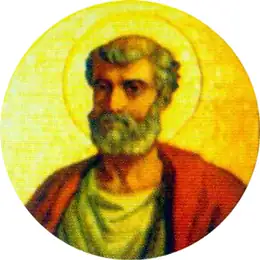
No. 23St. Stephen ISanctus STEPHANVS12 March 254 – 2 August 257
From Rome.
He was later canonized as a saint and some accounts say he was killed while celebrating Mass.
Image: 23-St.Stephen I.jpg, Unknown author · Public domain
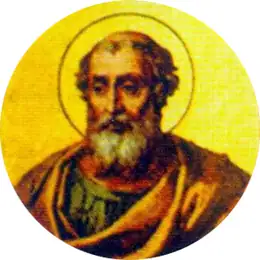
No. 24St. Sixtus IISanctus XYSTVS Secundus31 August 257 – 6 August 258
From Greece.
He was killed along with seven deacons, including Lawrence of Rome, during the persecution of Christians by the Emperor Valerian.
Image: 24-St.Sixtus II.jpg, Unknown author · Public domain
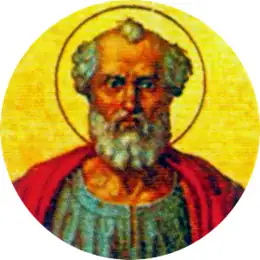
No. 25St. DionysiusSanctus DIONYSIVS22 July 259 – 27 December 268
His pontificate oversaw the transition from Valerian’s persecutions to the toleration issued by Gallienus in 260.
Image: 25-St.Dionysius.jpg, Unknown author · Public domain
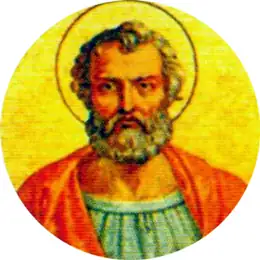
No. 26St. Felix ISanctus FELIX5 January 269 – 30 December 274
From Rome.
Born in Rome, he succeeded Pope Dionysius and is noted for his theological contributions, particularly a significant dogmatic letter addressing the unity of Christ’s person.
Image: 26-St.Felix I.jpg, Unknown author · Public domain
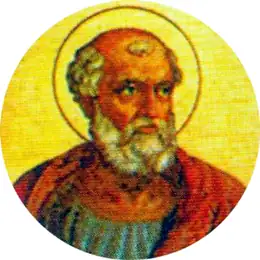
No. 27St. EutychianSanctus EVTYCHIANVS4 January 275 – 7 December 283
From Luni.
Eutychian’s original epitaph was discovered in the catacomb of Callixtus, but almost nothing more is known of him.
Image: 27-St.Eutychian.jpg, Unknown author · Public domain
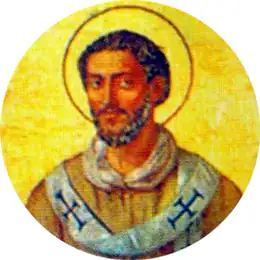
No. 28St. CaiusSanctus CAIVS17 December 283 – 22 April 296
From Dalmatia.
Little information on Caius is available except that given by the Liber Pontificalis, which relies on a legendary account of the martyrdom of Susanna of Rome for its information.
Image: 28-St.Caius.jpg, Unknown author · Public domain
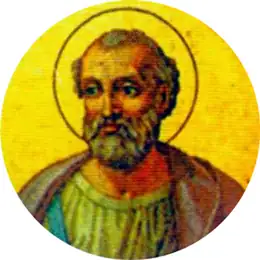
No. 29St. MarcellinusSanctus MARCELLINVS30 June 296 – 25 October 304
From Rome.
Some sources claim he may have renounced Christianity during Emperor Diocletian’s persecution of Christians – which might explain why he is omitted from lists of martyrs.
Image: 29-St.Marcellinus.jpg, Unknown author · Public domain
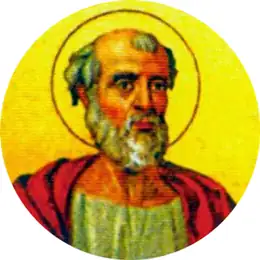
No. 30St. Marcellus ISanctus MARCELLVS27 May 308 – 16 January 309
From Rome.
He succeeded Marcellinus after a considerable interval.
Image: 30-St.Marcellus I.jpg, Unknown author · Public domain
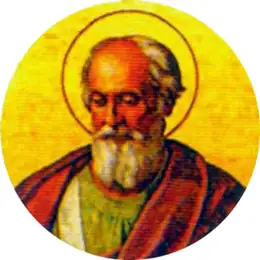
No. 31St. EusebiusSanctus EVSEBIVS18 April 309 – 17 August 310
From Greece.
He held that Christians who had given up the faith under persecution could return after doing penance; Emperor Maxentius exiled him to Sicily, where he died.
Image: 31-St.Eusebius.jpg, Unknown author · Public domain
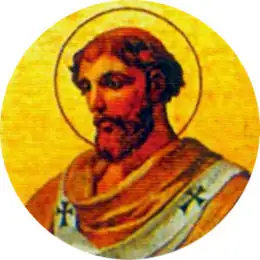
No. 32St. Miltiades (Melchiades)Sanctus MILTIADES2 July 311 – 10 January 314
From Africa.
It was during his pontificate that Emperor Constantine the Great issued the Edict of Milan, giving Christianity legal status within the Roman Empire.
Image: 32-St.Miltiades.jpg, Unknown author · Public domain
Nos. 33–63
Constantinian Basilicas
After 313, the Church builds in the open
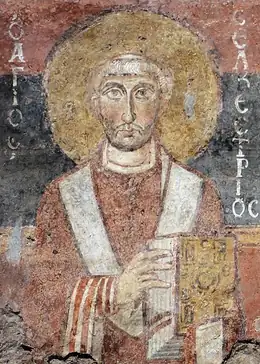
No. 33St. Sylvester ISanctus SILVESTER31 January 314 – 31 December 335
From Rome.
He filled the See of Rome at an important era in the history of the Western Church, though very little is known of his life.
Image: Età_di_paolo_I,_storie_di_noè,_di_giuseppe_e_cr…, User:Sailko · CC BY 3.0
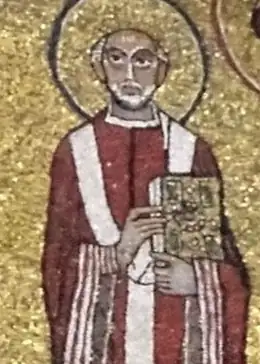
No. 34St. MarkSanctus MARCVS18 January 336 – 7 October 336
From Rome.
Little is known of Mark’s early life.
Image: Basilica_of_San_Marco_apse_mosaic_detail_(cropp…, Unknown artist · CC BY-SA 4.0
No. 35St. Julius ISanctus IVLIVS6 February 337 – 12 April 352
From Rome.
He was appealed to by Athanasius when the latter was deposed from his position as patriarch by Arian bishops, Julius then supported Athanasius and condemned his deposition as unjust.
Image: 35-St.Julius I.jpg, Unknown author · Public domain
No. 36LiberiusLIBERIVS17 May 352 – 24 September 366
From Romano.
Liberius is mentioned in the Greek Menology, the Eastern equivalent to the martyrologies of the Western Church and a measure of sainthood prior to the institution of the formal Western processes of canonization.
Image: 36-St.Liberius.jpg, Unknown author · Public domain
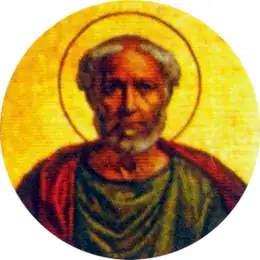
No. 37St. Damasus ISanctus DAMASVS1 October 366 – 11 December 384
From Rome.
He presided over the Council of Rome of 382, which established the canon, or official list, of sacred scripture.
Image: 37-St.Damasus I.jpg, Unknown author · Public domain
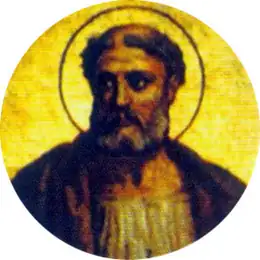
No. 38St. SiriciusSanctus SIRICIVS17 December 384 – 26 November 399
From Rome.
In response to inquiries from Bishop Himerius of Tarragona, Siricius issued the Directa decretal, containing decrees of baptism, church discipline and other matters.
Image: 38-St.Siricius.jpg, Unknown author · Public domain
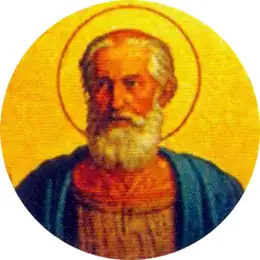
No. 39St. Anastasius ISanctus ANASTASIVS27 November 399 – 19 December 401
From Rome.
Anastasius was born in Rome, and was the son of Maximus.
Image: 39-St.Anastasius I.jpg, Unknown author · Public domain
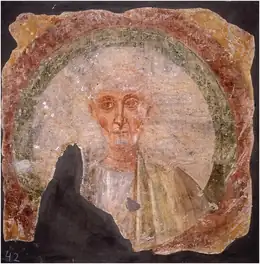
No. 40St. Innocent ISanctus INNOCENTIVS21 December 401 – 12 March 417
From Albano.
From the beginning of his papacy, he was seen as the general arbitrator of ecclesiastical disputes in both the East and the West.
Image: Fresco_of_Pope_Innocent_I_-_Basilica_of_Saint_P…, Unknown author · Public domain
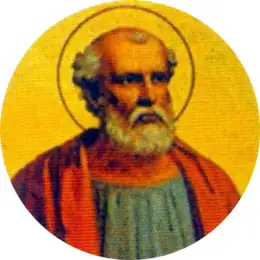
No. 41St. ZosimusSanctus ZOSIMVS18 March 417 – 26 December 418
From Greece.
Zosimus took a decided part in the protracted dispute in Gaul as to the jurisdiction of the See of Arles over that of Vienne, giving energetic decisions in favour of the former, but without settling the controversy.
Image: 41-St.Zosimus.jpg, Unknown author · Public domain
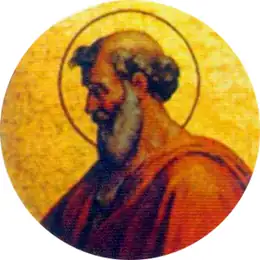
No. 42St. Boniface ISanctus BONIFACIVS28 December 418 – 4 September 422
From Rome.
His election was disputed by the supporters of Eulalius until the dispute was settled by Emperor Honorius.
Image: 42-St.Boniface I.jpg, Unknown author · Public domain
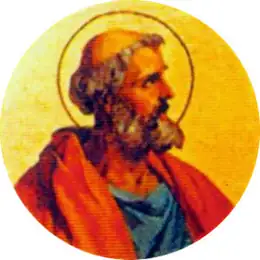
No. 43St. Celestine ISanctus COELESTINVS10 September 422 – 27 July 432
From Campania.
Celestine’s pontificate was largely spent combatting various teachings deemed heretical.
Image: 43-St.Celestine I.jpg, Unknown author · Public domain
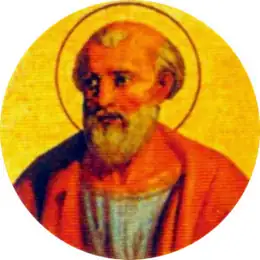
No. 44St. Sixtus IIISanctus XYSTVS Tertius31 July 432 – 18 August 440
From Rome.
His ascension to the papacy is associated with a period of increased construction in the city of Rome.
Image: 44-St.Sixtus III.jpg, Unknown author · Public domain
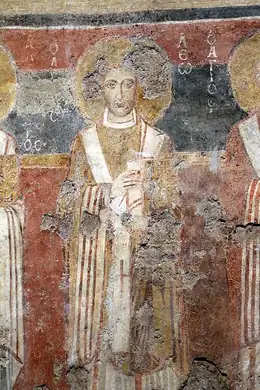
No. 45St. Leo I “the Great”Sanctus LEO MAGNVS29 September 440 – 10 November 461
From Tuscia.
He is perhaps best known for meeting Attila the Hun in 452 and persuading him to turn back from his invasion of Italy, though how large a part his personal authority played is debated by scholars.
Image: Età_di_paolo_I,_storie_di_noè,_di_giuseppe_e_cr…, Sailko · CC BY 3.0
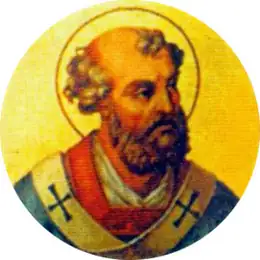
No. 46St. HilariusSanctus HILARIVS19 November 461 – 29 February 468
From Sardinia.
In 449, Hilarius served as a legate for Pope Leo I at the Second Council of Ephesus.
Image: 46-St.Hilarius.jpg, Unknown author · Public domain
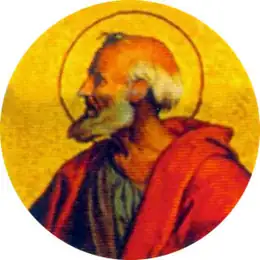
No. 47St. SimpliciusSanctus SIMPLICIVS3 March 468 – 10 March 483
From Tivoli.
He combated the Eutychian heresy, ended the practice of consecrating bishops only in December, and sought to offset the effects of Germanic invasions.
Image: 47-St.Simplicius.jpg, Unknown author · Public domain
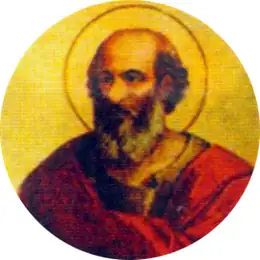
No. 48St. Felix IIISanctus FELIX Tertius13 March 483 – 1 March 492
From Rome.
His repudiation of the Henotikon is considered the beginning of the Acacian schism.
Image: 48-St.Felix III.jpg, Unknown author · Public domain
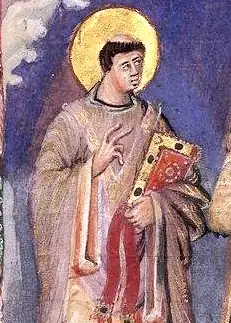
No. 49St. Gelasius ISanctus GELASIVS1 March 492 – 21 November 496
From Africa.
Gelasius was a prolific author whose style placed him on the cusp between Late Antiquity and the Early Middle Ages.
Image: Couronnement_d’un_prince_-_Sacramentaire_de_Cha…, anonymous · Public domain
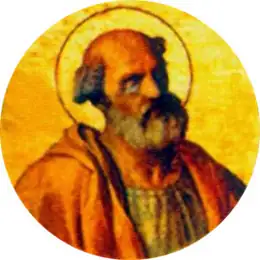
No. 50Anastasius IIANASTASIVS Secundus24 November 496 – 19 November 498
From Rome.
He was an important figure in trying to end the Acacian schism, but his efforts resulted in the Laurentian schism, which followed his death.
Image: 50-Anastasius II.jpg, Unknown author · Public domain
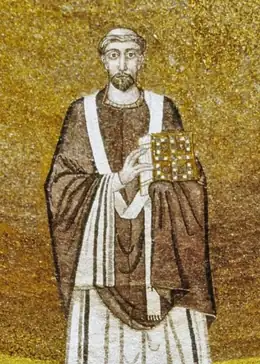
No. 51St. SymmachusSanctus SYMMACHVS22 November 498 – 19 July 514
From Sardinia.
His tenure was marked by a serious schism over who was elected pope by a majority of the Roman clergy.
Image: Pope_Symmachus_–_apse_mosaic_of_Sant’Agnese_fuo…, Unknown author · Public domain
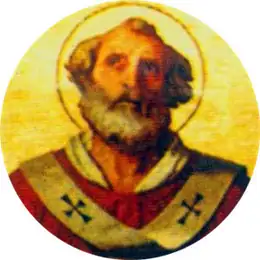
No. 52St. HormisdasSanctus HORMISDAS20 July 514 – 6 August 523
His papacy was dominated by the Acacian schism, started in 484 by Acacius of Constantinople’s efforts to placate the non-Chalcedonians.
Image: 52-St.Hormisdas.jpg, Unknown author · Public domain
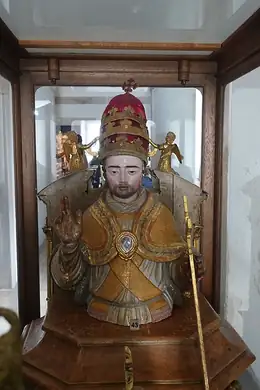
No. 53St. John ISanctus IOANNES13 August 523 – 18 May 526
From Tuscia.
Pope John I played a pivotal role in standardizing how the Western Church calculated the date of Easter, with the help of the monk Dionysius Exiguus, in 525.
Image: Busto_relicário_do_Papa_São_João_I.jpg, Joseolgon · CC BY-SA 4.0
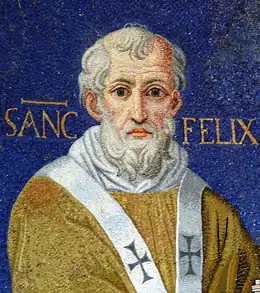
No. 54St. Felix IVSanctus FELIX Quartus12 July 526 – 22 September 530
From Samnium.
He was the chosen candidate of Ostrogoth King Theodoric the Great, who had imprisoned Felix’s predecessor, John I.
Image: Mosaic_of_Felix_IV_in_Santi_Cosma_e_Damiano,_Ro…, Unknown author. · Public domain
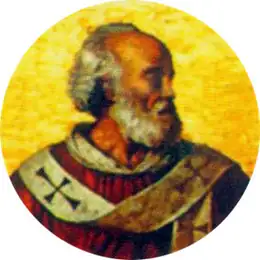
No. 55Boniface IIBONIFACIVS Secundus22 September 530 – 17 October 532
From Rome.
He ruled the Holy See from 22 September 530 until his death on 17 October 532.
Image: 55-Boniface II.jpg, Unknown author · Public domain
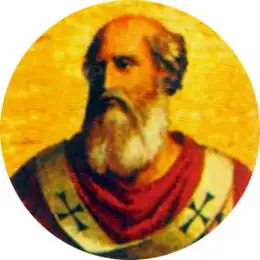
No. 56John IIIOANNES Secundus2 January 533 – 8 May 535
From Rome.
As a priest at St. Clement’s Basilica, he endowed that church with gifts and commissioned stone carvings for it.
Image: 56-John II.jpg, Unknown author · Public domain
No. 57St. Agapetus ISanctus AGAPITVS13 May 535 – 22 April 536
From Rome.
While in Constantinople, Agapetus also deposed the patriarch Anthimus I and personally consecrated his successor who is Menas of Constantinople.
Image: 57-St.Agapetus I.jpg, Unknown author · Public domain
No. 58St. SilveriusSanctus SILVERIVS8 June 536 – 11 March 537
From Frosinone.
His rapid rise to prominence from a deacon to the papacy coincided with the efforts of Ostrogothic king Theodahad, who intended to install a pro-Gothic candidate just before the Gothic War.
Image: 58-St.Silverius.jpg, Unknown author · Public domain
No. 59VigiliusVIGILIVS29 March 537 – 7 June 555
From Rome.
He is considered the first pope of the Byzantine papacy.
Image: 59-Vigilius.jpg, Unknown author · Public domain
No. 60Pelagius IPELAGIVS16 April 556 – 4 March 561
From Rome.
A former apocrisiarius to Constantinople, Pelagius I was elected pope as the candidate of Emperor Justinian I, a designation not well received in the Western Church.
Image: 60-Pelagius I.jpg, Unknown author · Public domain
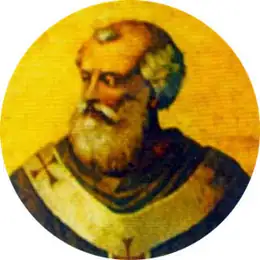
No. 61John IIIIOANNES Tertius17 July 561 – 13 July 574
From Rome.
He reigned nearly thirteen years during the Lombard invasion of Italy, and so few records survive that very little is known of his pontificate.
Image: 61-John III.jpg, Unknown author · Public domain
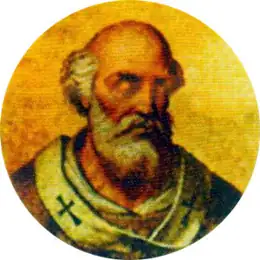
No. 62Benedict IBENEDICTVS2 June 575 – 30 July 579
From Rome.
His pontificate took place during the Lombard expansion in Italy and during famine in Rome and other parts of Byzantine Italy.
Image: 62-Benedict I.jpg, Unknown author · Public domain
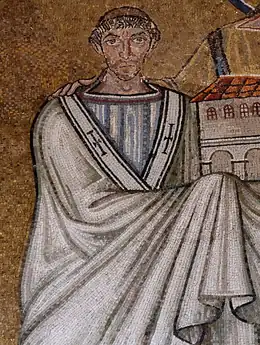
No. 63Pelagius IIPELAGIVS Secundus26 November 579 – 7 February 590
From Rome.
He died of the plague in Rome and was succeeded by Gregory the Great.
Image: San_Lorenzo_fuori_le_Mura_-_54018508984_(detail…, bradhostetler · CC BY-SA 2.0
Nos. 64–141
Early Middle Ages
Mosaic, gold, and the age of Gregory the Great
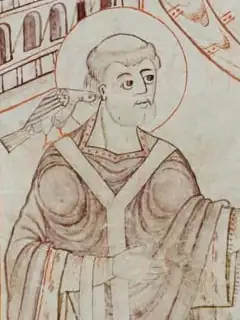
No. 64St. Gregory I “the Great”Sanctus GREGORIVS MAGNVS3 September 590 – 12 March 604
From Rome.
Gregory was originally from Rome, a Roman senator’s son, and himself the prefect of Rome at 30.
Image: Gregory_I_cropped.jpg, Gregory_I_-_Antiphonary_of_Hartker_of_S… · Public domain
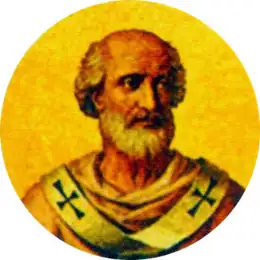
No. 65SabinianSABINIANVS13 September 604 – 22 February 606
From Blera, Tuscia.
His pontificate occurred during the Eastern Roman domination of the papacy.
Image: 65-Sabinian.jpg, Unknown author · Public domain
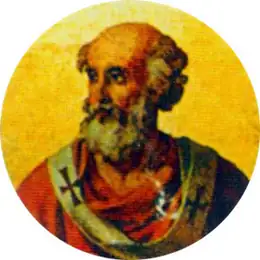
No. 66Boniface IIIBONIFACIVS Tertius19 February 607 – 12 November 607
From Rome.
Despite his short pontificate, he made a significant contribution to the Catholic Church.
Image: 66-Boniface III.jpg, Unknown author · Public domain
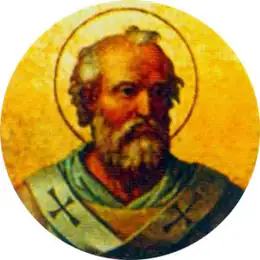
No. 67St. Boniface IVSanctus BONIFACIVS Quartus15 September 608 – 8 May 615
Born Bonifacius, O.S.B. in Marsican territory.
He was a member of the Benedictine order.
Image: 67-St.Boniface IV.jpg, Unknown author · Public domain
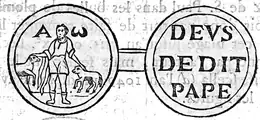
No. 68St. Adeodatus I (Deusdedit)Sanctus ADEODATVS13 November 615 – 8 November 618
Born Adeodatus (or Deusdedit) in Rome.
He was the first priest to be elected pope since John II in 533.
Image: SCeau_Deusdedit_pape_17108.jpg, Tassin & Toustain. pour le versement et… · Public domain
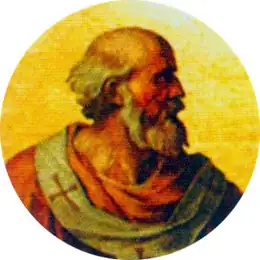
No. 69Boniface VBONIFACIVS Quintus23 December 619 – 25 October 625
From Naples.
He did much for the Christianisation of Anglo-Saxon England, and enacted the decree by which churches became places of sanctuary.
Image: 69-Boniface V.jpg, Unknown author · Public domain
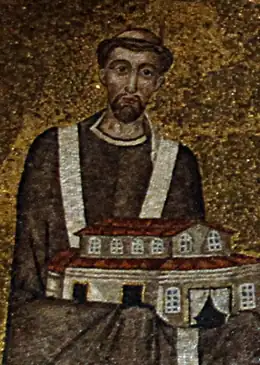
No. 70Honorius IHONORIVS27 October 625 – 12 October 638
From Campania.
He is most noted for his correspondence concerning Patriarch Sergius I of Constantinople, in which he engaged with the Monoenergism controversy and the associated Monothelite doctrines.
Image: Pope_Honorius_I_–_Apse_mosaic_of_Sant’Agnese_fu…, José Luiz · CC BY-SA 4.0
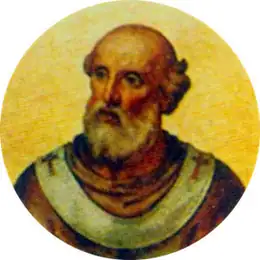
No. 71SeverinusSEVERINVS28 May 640 – 2 August 640
From Rome.
He was caught up in a power struggle with Byzantine Emperor Heraclius, who pressured him to accept Monothelitism.
Image: 71-Severinus.jpg, Unknown author · Public domain
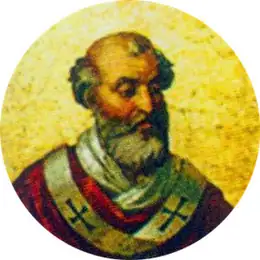
No. 72John IVIOANNES Quartus24 December 640 – 12 October 642
From Dalmatia.
His election followed a four-month vacancy.
Image: 72-John IV.jpg, Unknown author · Public domain
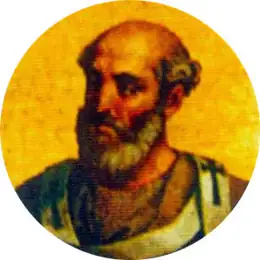
No. 73Theodore ITHEODORVS24 November 642 – 14 May 649
From Jerusalem.
His pontificate was dominated by the struggle with Monothelitism.
Image: 73-Theodore I.jpg, Unknown author · Public domain
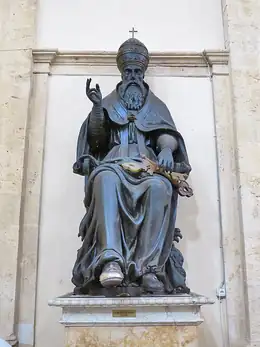
No. 74St. Martin ISanctus MARTINVS5 July 649 – 10 August 654
From Todi.
He had served as Pope Theodore I’s ambassador to Constantinople, and was elected to succeed him as pope.
Image: 14_Chiesa_di_Santa_Maria_della_Consolazione_(To…, Enric · CC BY-SA 4.0
No. 75St. Eugene ISanctus EVGENIVS10 August 654 – 2 June 657
From Rome.
He was chosen to become Pope after the deposition and banishment of Martin I by Emperor Constans II over the dispute about Monothelitism.
Image: PopeeugeneI.jpg · Public domain
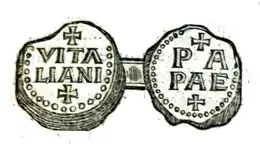
No. 76St. VitalianSanctus VITALIANVS30 July 657 – 27 January 672
From Segni.
His pontificate was marked by the dispute between the papacy and the imperial government in Constantinople over Monothelitism, which Rome condemned.
Image: Bulle_vitaliani_16976.jpg, Tassin et Toustain. G.Garitan pour le v… · Public domain
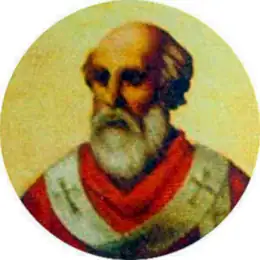
No. 77Adeodatus IIADEODATVS Secundus11 April 672 – 17 June 676
Born Adeodatus, O.S.B. in Rome.
He devoted much of his papacy to improving churches and fighting monothelitism.
Image: 77-Adeodatus II.jpg, Unknown author · Public domain
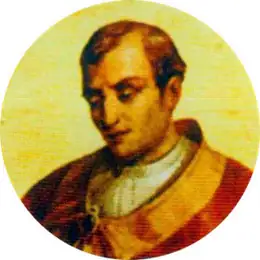
No. 78DonusDONVS2 November 676 – 11 April 678
From Rome.
Few details survive about him or his achievements beyond what is recorded in the Liber Pontificalis.
Image: 78-Donus.jpg, Unknown author · Public domain
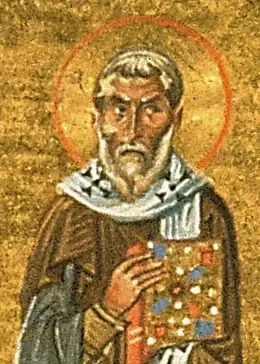
No. 79St. AgathoSanctus AGATHO27 June 678 – 10 January 681
From Sicily.
He heard the appeal of Wilfrid of York, who had been displaced from his see by the division of the archdiocese ordered by Theodore of Canterbury.
Image: Pope_Agatho_(Menologion_of_Basil_II)_-_cropped.…, Authors of Menologion of Basil II (circ… · Public domain
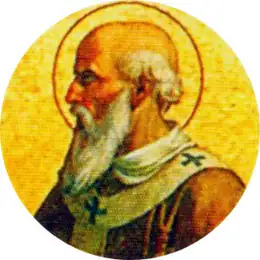
No. 80St. Leo IISanctus LEO Secundus17 August 682 – 3 July 683
From Sicily.
One of the popes of the Byzantine Papacy, he is described by a contemporary biographer as both just and learned.
Image: 80-St.Leo II.jpg, Unknown author · Public domain
No. 81St. Benedict IISanctus BENEDICTVS Secundus26 June 684 – 8 May 685
From Rome.
Trained from youth in Rome’s schola cantorum, he was known for his knowledge of Scripture, his singing, his humility and his love of the poor.
Image: 81-St.Benedict II.jpg, Unknown author · Public domain
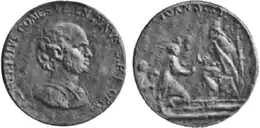
No. 82John VIOANNES Quintus23 July 685 – 2 August 686
From Syria.
He was the first pope of the Byzantine Papacy consecrated without prior imperial consent, and the first in a line of ten consecutive popes of Eastern origin.
Image: Rivista_italiana_di_numismatica_1891_p_189.jpg, Many · Public domain
No. 83CononCONON21 October 686 – 21 September 687
He had been put forward as a compromise candidate, there being a conflict between the two factions resident in Rome — the military and the clerical.
Image: 83-Conon.jpg, Unknown author · Public domain
No. 84St. Sergius ISanctus SERGIVS15 December 687 – 8 September 701
From Syria.
He was elected at a time when two rivals, Paschal and Theodore, were locked in a dispute about which of them should become pope.
Image: 84-St.Sergius I.jpg, Unknown author · Public domain
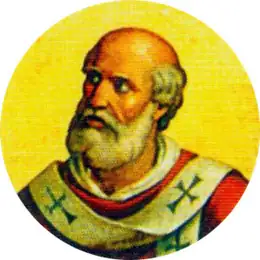
No. 85John VIIOANNES Sextus30 October 701 – 11 January 705
From Greece.
John VI was a Greek from Ephesus who reigned during the Byzantine Papacy.
Image: 85-John VI.jpg, Unknown author · Public domain
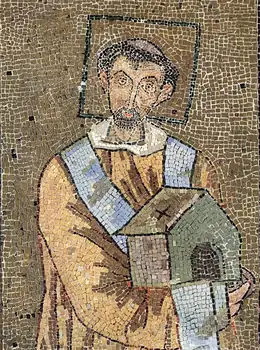
No. 86John VIIIOANNES Septimus1 March 705 – 18 October 707
From Greece.
He was an ethnic Greek, one of the Byzantine popes, but had better relations with the Lombards, who ruled much of Italy, than with Emperor Justinian II, who ruled the rest.
Image: Byzantinischer_Mosaizist_um_705_002.jpg, Byzantinischer Mosaizist um 705 · Public domain
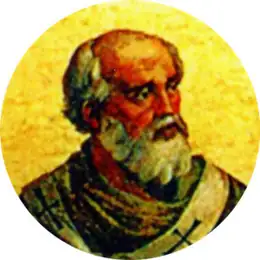
No. 87SisinniusSISINNIVS15 January 708 – 4 February 708
From Syria.
Besides being Syrian and his father being named John, little is known of Sisinnius’ early life or career.
Image: 87-Sisinnius.jpg, Unknown author · Public domain
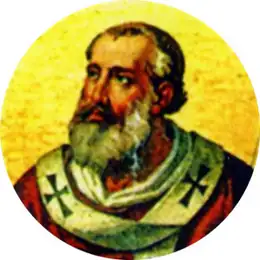
No. 88ConstantineCONSTANTINVS25 March 708 – 9 April 715
From Syria.
One of the last popes of the Byzantine Papacy, the defining moment of his pontificate was his 710/711 visit to Constantinople, where he compromised with Justinian II on the Trullan canons of the Quinisext Council.
Image: 88-Constantine.jpg, Unknown author · Public domain
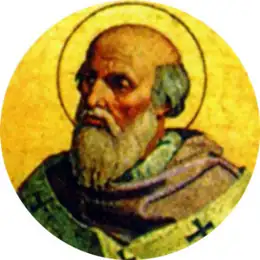
No. 89St. Gregory IISanctus GREGORIVS Secundus19 May 715 – 11 February 731
From Rome.
He sent Saint Boniface to preach the Gospel in Germany.
Image: 89-St.Gregory II.jpg, Unknown author · Public domain
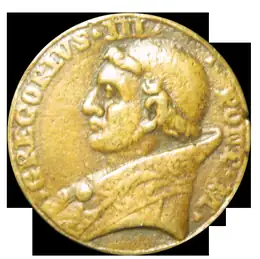
No. 90St. Gregory IIISanctus GREGORIVS Tertius18 March 731 – 28 November 741
From Syria.
His pontificate, like that of his predecessor, was disturbed by Byzantine iconoclasm and the advance of the Lombards, in which he invoked the intervention of Charles Martel, although ultimately in vain.
Image: 178-7866_IMG_-_Gregorius_III_AV.png, ASKI · CC BY-SA 3.0
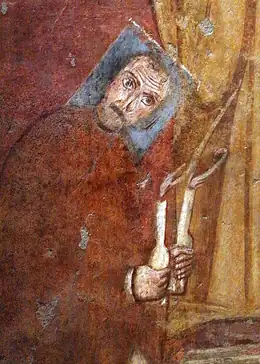
No. 91St. ZacharySanctus ZACHARIAS3 December 741 – 15 March 752
From Greece.
He was the last pope of the Byzantine Papacy.
Image: Età_di_papa_Zaccaria,_cappella_del_primicerius_…, Sailko · CC BY 3.0
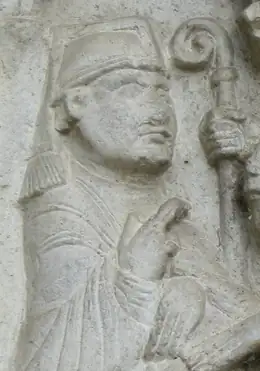
No. 92Stephen IISTEPHANVS Secundus26 March 752 – 26 April 757
From Rome.
Stephen II marks the historical delineation between the Byzantine Papacy and the Frankish Papacy.
Numbering note: a priest named Stephen was elected in 752 but died before consecration. The Vatican no longer counts him, so this Stephen is “II”. Some older lists call him Stephen III.
Image: Stephen_II_detail_Nonantola_Abbey.jpg, sailko · CC BY-SA 3.0
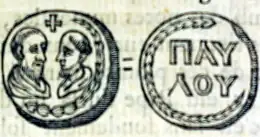
No. 93St. Paul ISanctus PAVLVS29 May 757 – 28 June 767
From Rome.
He first served as a Roman deacon and was frequently employed by his brother, Pope Stephen II, in negotiations with the Lombard kings.
Image: SCeau_Paul_I_pape_17109_(cropped).jpg, Tassin & Toustain. pour le versement et… · Public domain
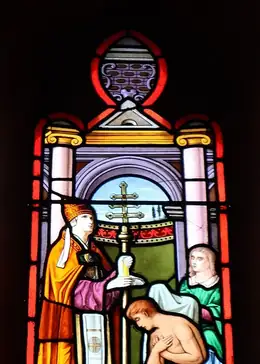
No. 94Stephen IIISTEPHANVS Tertius7 August 768 – 24 January 772
From Sicily.
Stephen was a Benedictine monk who worked in the Lateran Palace during the reign of Pope Zachary.
Image: Chantepie_(35)_Église_Saint-Martin_-_Intérieur_…, GO69 · CC BY-SA 4.0
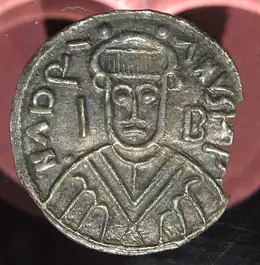
No. 95Adrian IHADRIANVS1 February 772 – 26 December 795
From Rome.
Adrian and his predecessors had to contend with periodic attempts by the Lombards to expand their holdings in Italy at the expense of the papacy.
Image: Zecca_di_roma,_denaro_di_adriano_I,_772-795,_in…, Francesco Bini · CC BY-SA 4.0
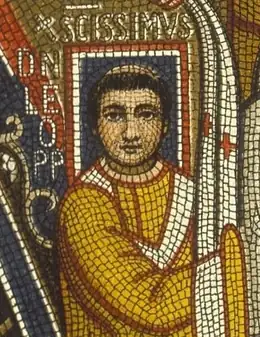
No. 96St. Leo IIISanctus LEO Tertius26 December 795 – 12 June 816
From Rome.
Protected by Charlemagne from the supporters of his predecessor, Adrian I, Leo subsequently strengthened Charlemagne’s position by crowning him emperor.
Image: Pope_Leo_III_portrait_–_Triclinium_Leoninum.jpg, Various: Original: Unknown author Resto… · Public domain
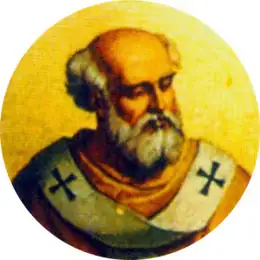
No. 97Stephen IVSTEPHANVS Quartus22 June 816 – 24 January 817
From Rome.
Stephen belonged to a noble Roman family.
Image: 97-Stephen IV.jpg, Unknown author · Public domain
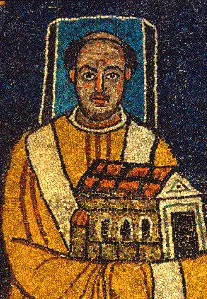
No. 98St. Paschal ISanctus PASCHALIS25 January 817 – 11 February 824
From Rome.
Paschal was a member of an aristocratic Roman family.
Image: Pope_Paschalis_I._in_apsis_mosaic_of_Santa_Pras… · Public domain
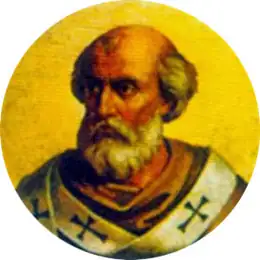
No. 99Eugene IIEVGENIVS Secundus6 June 824 – 27 August 827
From Rome.
A native of Rome, he was chosen by nobles to succeed Paschal I as pope despite the clergy and the people favoring Zinzinnus.
Image: 99-Eugene II.jpg, Unknown author · Public domain
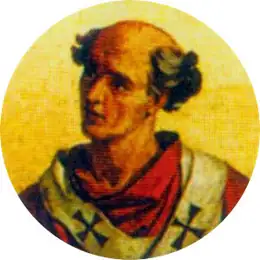
No. 100ValentineVALENTINVS31 August 827 – 10 October 827
From Rome.
He was a nobleman and elected by nobility, which later became the custom.
Image: 100-Valentine.jpg, Unknown author · Public domain
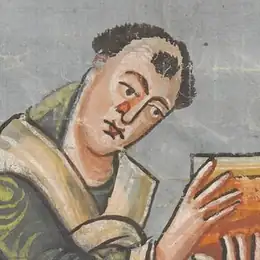
No. 101Gregory IVGREGORIVS Quartus20 December 827 – 25 January 844
From Rome.
His pontificate was notable for the papacy’s attempts to intervene in the quarrels between Emperor Louis the Pious and his sons.
Image: Gregory-IV_(cropped).jpg, Fulda · Public domain
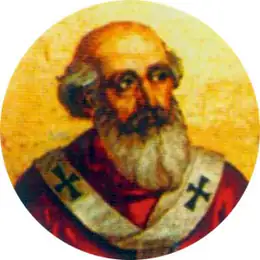
No. 102Sergius IISERGIVS Secundus25 January 844 – 27 January 847
From Rome.
Sergius II’s pontificate saw the Arab raid against Rome as well as the city’s redevelopment.
Image: 102-Sergius II.jpg, Unknown author · Public domain
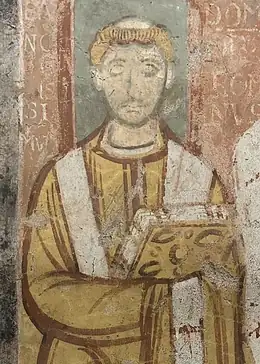
No. 103St. Leo IVSanctus LEO Quartus10 April 847 – 17 July 855
Born Leo, O.S.B. in Rome.
He is remembered for repairing Roman churches that had been damaged during the Arab raid against Rome, and for building the Leonine Wall around Vatican Hill to protect the city.
Image: PopeLeoIV_(cropped).jpg, PalauanLibertarian · CC BY 4.0
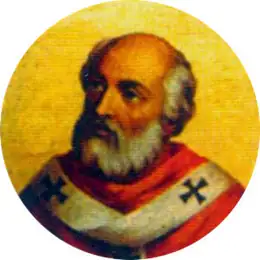
No. 104Benedict IIIBENEDICTVS Tertius29 September 855 – 17 April 858
From Rome.
A learned and ascetic Roman, he was briefly imprisoned when imperial envoys tried to force Anastasius into his place, but the clergy and people stayed loyal and he was consecrated.
Image: 104-Benedict III.jpg, Unknown author · Public domain
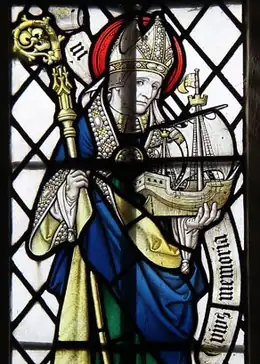
No. 105St. Nicholas I “the Great”Sanctus NICOLAVS MAGNVS24 April 858 – 13 November 867
From Rome.
Nicholas I asserted that the pope should have suzerainty over all Christians, even royalty, in matters of faith and morals.
Image: St_Nicholas,_Great_Wakering_-_Stained_glass_win…, John Salmon · CC BY 2.0
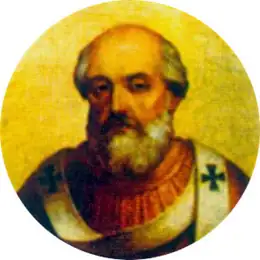
No. 106Adrian IIHADRIANVS Secundus14 December 867 – 14 December 872
From Rome.
He continued the policy of his predecessor, Nicholas I. Despite seeking good relations with Louis II of Italy, he was placed under surveillance, and his wife and daughters were killed by Louis’ supporters.
Image: 106-Adrian II.jpg, Unknown author · Public domain
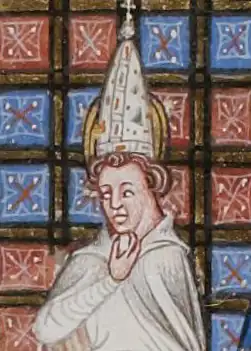
No. 107John VIIIIOANNES Octavus14 December 872 – 16 December 882
From Rome.
He is often considered one of the most able popes of the 9th century.
Image: Jan-VIII.jpg, AnonymousUnknown author · Public domain
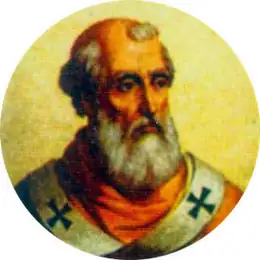
No. 108Marinus IMARINVS16 December 882 – 15 May 884
From Gallese.
Controversially at the time, he was already a bishop when he became pope, and had served as papal legate to Constantinople.
Image: 108-Marinus I.jpg, Unknown author · Public domain
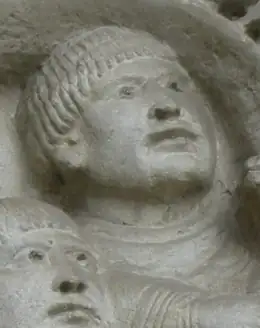
No. 109St. Adrian IIISanctus HADRIANVS Tertius17 May 884 – 8 July 885
From Rome.
He served for little more than a year, during which he worked to help the people of Italy in a very troubled time of famine and war.
Image: Adrian_III_detail_Nonantola_Abbey.jpg, sailko · CC BY-SA 3.0
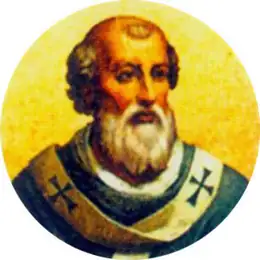
No. 110Stephen VSTEPHANVS QuintusSeptember 885 – 14 September 891
From Rome.
In his dealings with Photius I of Constantinople, as in his relations with the young Slavic Orthodox church, he pursued the policy of Pope Nicholas I.
Image: 110-Stephen V.jpg, Unknown author · Public domain
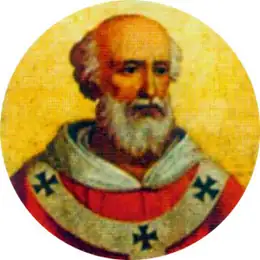
No. 111FormosusFORMOSVS6 October 891 – 4 April 896
From Bishop of Portus.
His reign as Pope was troubled, marked by interventions in power struggles over the Patriarchate of Constantinople, the Kingdom of West Francia, and the Holy Roman Empire.
Image: 111-Formosus.jpg, Unknown author · Public domain
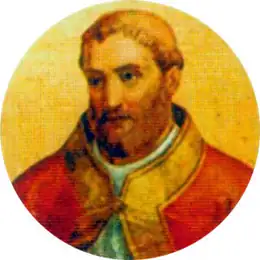
No. 112Boniface VIBONIFATIVS Sextus11 April 896 – 26 April 896
From Rome.
He was elected as a result of riots soon after the death of Pope Formosus on April 4.
Image: 112-Boniface VI.jpg, Unknown author · Public domain
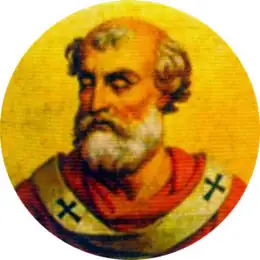
No. 113Stephen VISTEPHANVS22 May 896 – 14 August 897
From Rome.
He is best known for instigating the Cadaver Synod, which ultimately led to his downfall and death.
Image: 113-Stephen VI.jpg, Unknown author · Public domain
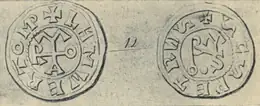
No. 114RomanusROMANVS14 August 897 – November 897
From Gallese.
His short reign occurred during a period of partisan strife in the Catholic Church, amid the violence and disorder in central Italy.
Image: Coin_of_Pope_Romanus.png, Horace Kinder Mann · Public domain
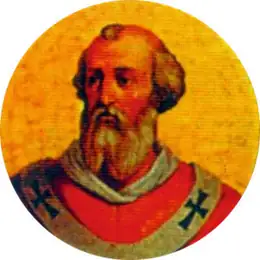
No. 115Theodore IITHEODORVS SecundusDecember 897 – 20 December 897
From Rome.
His short reign occurred during a period of partisan strife in the Catholic Church, which was entangled with a period of violence and disorder in central Italy.
Image: 115-Theodore II.jpg, Unknown author · Public domain
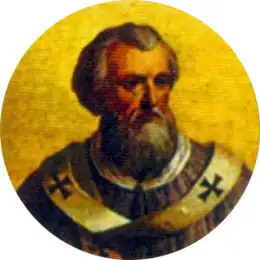
No. 116John IXIOANNES Nonus18 January 898 – 5 January 900
Born Ioannes, O.S.B. in Tivoli.
Image: 116-John IX.jpg, Unknown author · Public domain
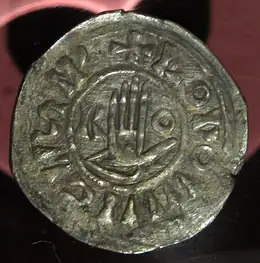
No. 117Benedict IVBENEDICTVS Quartus1 February 900 – 30 July 903
From Rome.
The tenth-century historian Flodoard, who nicknamed him “the Great”, commended his noble birth and public generosity.
Image: Zecca_di_roma,_denaro_di_benedetto_IV_con_ludov…, Francesco Bini · CC BY-SA 4.0
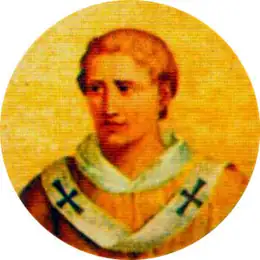
No. 118Leo VLEO Quintus30 July 903 – December 903
From Ardea.
He was pope immediately before the period known as the Saeculum obscurum, when popes wielded little temporal authority.
Image: 118-Leo V.jpg, Unknown author · Public domain
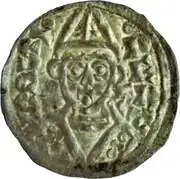
No. 119Sergius IIISERGIVS Tertius29 January 904 – 14 April 911
From Rome.
He was pope during a period of violence and disorder in central Italy, when warring aristocratic factions sought to use the material and military resources of the papacy.
Image: Denarius_of_Sergius_III.jpg, Museo Nazionale Romano · Public domain
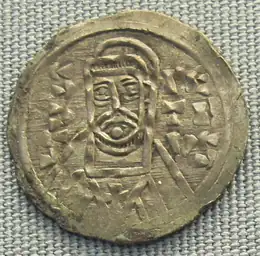
No. 120Anastasius IIIANASTASIVS Tertius14 April 911 – June 913
From Rome.
Under his reign, the Normans of Rollo were evangelized.
Image: Stato_della_chiesa,_denaro_di_anastasio_III,_91…, sailko · CC BY-SA 3.0
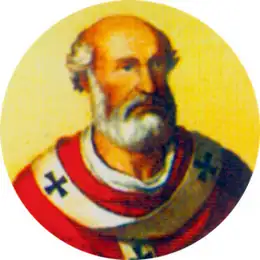
No. 121LandoLANDVS7 July 913 – 5 February 914
From Sabina.
His short pontificate fell during an obscure period in papal and Roman history, the so-called Saeculum obscurum.
Image: 121-Lando.jpg, Unknown author · Public domain
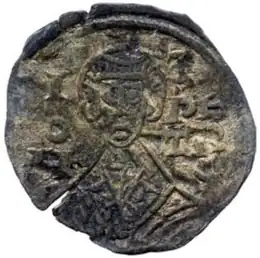
No. 122John XIOANNES DecimusMarch 914 – 28 May 928
From Tossignano (Imola).
A candidate of the counts of Tusculum, he attempted to unify Italy under the leadership of Berengar of Friuli, and was instrumental in the defeat of the Saracens at the Battle of Garigliano.
Image: Denarius_of_John_X.jpg, Unknown author · Public domain
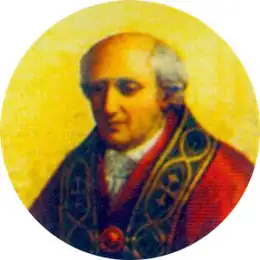
No. 123Leo VILEO Sextus28 May 928 – February 929
From Rome.
His pontificate occurred during the period known as the Saeculum obscurum.
Image: 123-Leo VI.jpg, Unknown author · Public domain
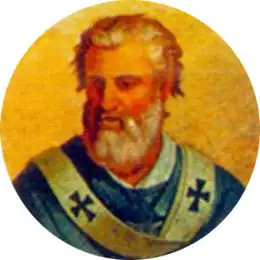
No. 124Stephen VIISTEPHANVS Septimus3 February 929 – 13 February 931
Born Stephanus de Gabrielli in Rome.
Image: 124-Stephen VII.jpg, Unknown author · Public domain
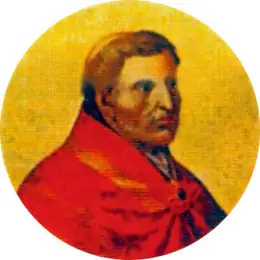
No. 125John XIIOANNES Undecimus15 March 931 – December 935
From Rome.
The true ruler of Rome at the time was his mother, Marozia, followed by his brother Duke Alberic II of Spoleto.
Image: 125-John XI.jpg, Unknown author · Public domain
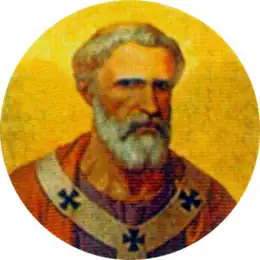
No. 126Leo VIILEO Septimus3 January 936 – 13 July 939
Born Leo, O.S.B. in Rome.
Most of his decrees granted privileges to monasteries, especially Cluny, and he called on Abbot Odo of Cluny to make peace between Alberic of Rome and King Hugh of Italy.
Image: 126-Leo VII.jpg, Unknown author · Public domain
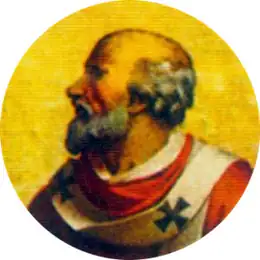
No. 127Stephen VIIISTEPHANVS Octavus14 July 939 – 30 October 942
From Rome.
A Roman cardinal-priest of Saints Silvester and Martin, he supported the Frankish King Louis IV and, by threat of excommunication, made the nobles stay loyal to him.
Image: 127-Stephen VIII.jpg, Unknown author · Public domain
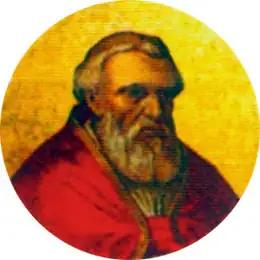
No. 128Marinus IIMARINVS Secundus30 October 942 – 1 May 946
From Rome.
He ruled during the Saeculum obscurum.
Image: 128-Marinus II.jpg, Unknown author · Public domain
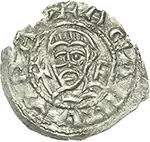
No. 129Agapetus IIAGAPITVS Secundus10 May 946 – 8 November 955
From Rome.
A nominee of the princeps of Rome, Alberic II of Spoleto, his pontificate occurred during the period known as the Saeculum obscurum.
Image: Monetadiagapitoiiconalberico.jpg, Leonardo Todisco Grande Memoria dell’ a… · Public domain
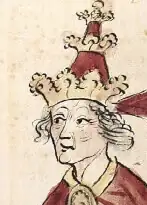
No. 130John XIIIOANNES Duodecimus955 – 964
From Counts of Tusculum.
Deposed by a synod in 963, he returned to Rome and held the office again until his death in May 964.
Image: Otto_I_begegnet_Papst_Johannes_XII_(cropped).jpg · Public domain
No. 131Leo VIIILEO Octavus963 – 965
From Rome.
An appointee of Holy Roman Emperor Otto I, Leo VIII’s pontificate occurred after the period known as the saeculum obscurum.
Numbering note: the Vatican lists Leo VIII before Benedict V. Some lists put them the other way round.
No portrait is known. Shown as a carved medallion.
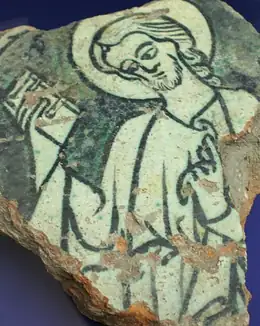
No. 132Benedict VBENEDICTVS Quintus964
From Rome.
A learned Roman cardinal-deacon called “Grammaticus”, he was elected by the Romans in 964 but was removed after about a month when Emperor Otto I besieged Rome.
Image: Scherbe_vom_Grab_Benedikt_V_(cropped).jpg, Michail Jungierek · CC BY-SA 3.0
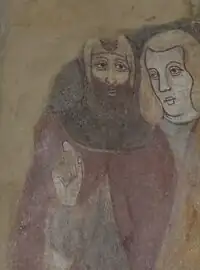
No. 133John XIIIIOANNES Tertius Decimus1 October 965 – 6 September 972
From Rome.
His pontificate was caught up in the continuing conflict between the Holy Roman emperor, Otto I, and the Roman nobility.
Image: Abbazia_di_San_Michele_Arcangelo_of_Schifanoia,…, Unknown author · Public domain
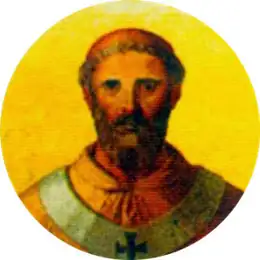
No. 134Benedict VIBENEDICTVS Sextus19 January 973 – 8 June 974
From Rome.
A Roman, son of Hildebrand and cardinal-deacon of St. Theodore, he waited months for Emperor Otto I’s approval before his consecration in January 973.
Image: 134-Benedict VI.jpg, Unknown author · Public domain
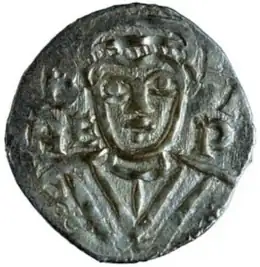
No. 135Benedict VIIBENEDICTVS SeptimusOctober 974 – 10 July 983
From Rome.
Formerly Bishop of Sutri, he worked to stop simony (the buying of church offices), held a synod at St. Peter’s in 981 that forbade it, and supported monastic life.
Image: Denarius_of_Benedict_VII.jpg, Unknown author · Public domain
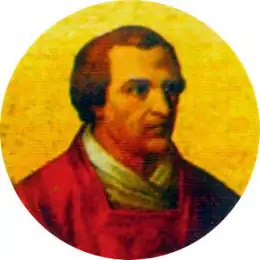
No. 136John XIVIOANNES Quartus DecimusDecember 983 – 20 August 984
Born Pietro Canepanova in Pavia.
Upon the death of Pope Benedict VII in July 983, Emperor Otto II nominated Canepanova to the papal throne after the abbot Maiolus of Cluny refused the office.
Image: 136-John XIV.jpg, Unknown author · Public domain
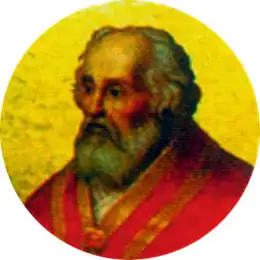
No. 137John XVIOANNES Quintus Decimus20 August 985 – 1 April 996
Born Giovanni di Gallina Alba in Rome.
A Roman by birth, he was the first pope who canonized a saint.
Image: 137-John XV.jpg, Unknown author · Public domain
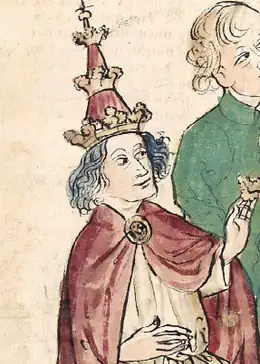
No. 138Gregory VGREGORIVS Quintus3 May 996 – 18 February 999
Born Bruno von Kärnten in Saxony.
A member of the Salian dynasty, he was made pope by his cousin, Emperor Otto III.
Image: Otto_III_wird_von_Papst_Gregor_V._zum_Kaiser_ge… · Public domain
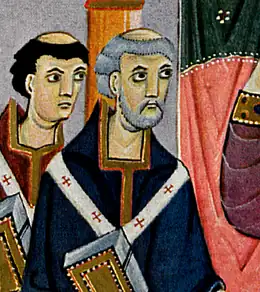
No. 139Sylvester IISILVESTER Secundus2 April 999 – 12 May 1003
Born Gerbert d’Aurillac, O.S.B. in Aquitaine.
He is said to be the first in Christian Europe to introduce the decimal numeral system using the Hindu–Arabic numeral system.
Image: Meister_der_Reichenauer_Schule_002_(cropped).jpg, Meister der Reichenauer Schule · Public domain
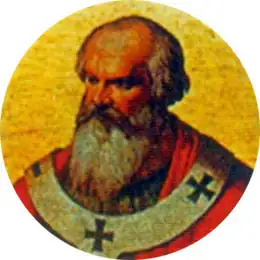
No. 140John XVIIIOANNES Septimus Decimus16 May 1003 – 6 November 1003
Born Giovanni Sicco in Rome.
He was one of the popes chosen and eclipsed by the patrician John II Crescentius.
Image: 140-John XVII.jpg, Unknown author · Public domain
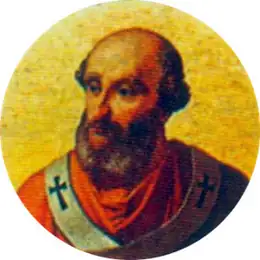
No. 141John XVIIIIOANNES Duodevicesimus25 December 1003 – 18 July 1009
Born Giovanni Fasano in Rome.
He wielded little temporal power, ruling during the struggle between John II Crescentius and Emperor Henry II for the control of Rome.
Image: 141-John XVIII.jpg, Unknown author · Public domain
Nos. 142–169
Romanesque
Round arches and thick stone walls
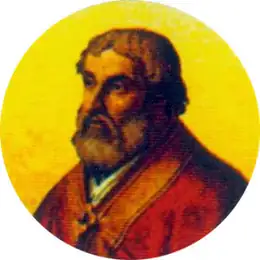
No. 142Sergius IVSERGIVS Quartus31 July 1009 – 12 May 1012
Born Pietro Martino Boccadiporco, O.S.B. in Rome.
His temporal power was eclipsed by the patrician John II Crescentius.
Image: 142-Sergius IV.jpg, Cesare Mariani · Public domain
No. 143Benedict VIIIBENEDICTVS Octavus18 May 1012 – 9 April 1024
Born Teofilatto di Tuscolo.
He was born Theophylact of Tusculum to the noble family of the counts of Tusculum.
Image: Pope_Benedict_VIII_in_miniature.jpg, Unknown author · Public domain
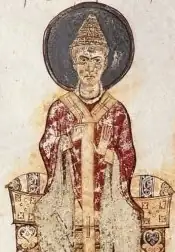
No. 144John XIXIOANNES Undevicesimus14 May 1024 – 6 October 1032
Born Romano di Tuscolo.
He belonged to the family of the powerful Counts of Tusculum, succeeding his brother, Benedict VIII. Papal relations with the Patriarchate of Constantinople soured during John XIX’s pontificate.
Image: Bari_Exultet_roll_1_-_emperors_and_pope_(pope1)… · Public domain
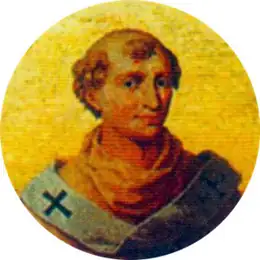
No. 145Benedict IXBENEDICTVS Nonus21 October 1032 – 31 December 1044
Born Teofilatto di Tuscolo.
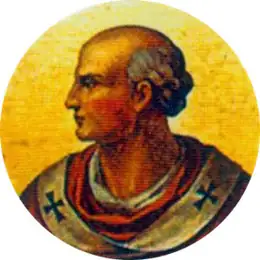
Elected very young, about 20; he would hold the office three separate times.
Benedict IX held the office three separate times; the Vatican numbers each term.
Image: 145、147、150-Benedict IX.jpg, Unknown author · Public domain
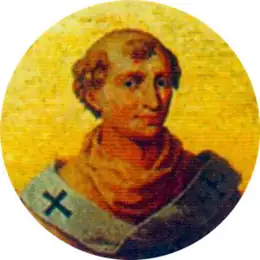
No. 146Sylvester IIISILVESTER Tertius13 January 1045 – 10 March 1045
Born Giovanni dei Crescenzi -Ottaviani in Rome.
He held the office briefly in 1045, during the troubled years of Benedict IX.
Image: 146-Sylvester III.jpg, Unknown author · Public domain
No. 147Benedict IXBENEDICTVS Nonus10 March 1045 – 1 May 1045
Born Teofilatto di Tuscolo.
His second time as pope, after Sylvester III.
Benedict IX, second term.
Image: 145、147、150-Benedict IX.jpg, Unknown author · Public domain
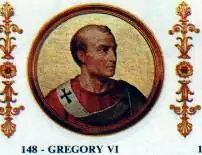
No. 148Gregory VIGREGORIVS Sextus1 May 1045 – 20 December 1046
Born Giovanni Graziano Pierleoni in Rome.
He was removed at the Synod of Sutri in 1046.
Image: 148-Gregory VI.jpg, Unknown author · Public domain
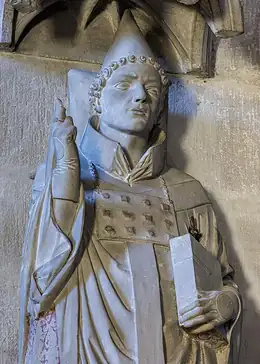
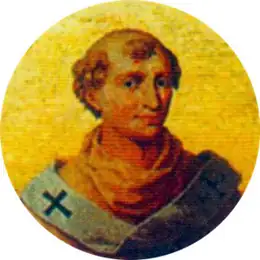
No. 149Clement IICLEMENS Secundus24 December 1046 – 9 October 1047
Born Suidger von Morsleben-Hornburg in Saxony.
He was the first in a series of reform-minded popes from Germany.
Image: Tomb_effigy_Clemens_II._06.09.2025_03.jpg, Nilaxus · CC BY-SA 4.0
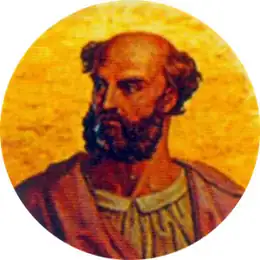
No. 150Benedict IXBENEDICTVS Nonus8 November 1047 – 17 July 1048
Born Teofilatto di Tuscolo.
His third and final time as pope; he was removed in 1048.
Benedict IX, third term.
Image: 145、147、150-Benedict IX.jpg, Unknown author · Public domain
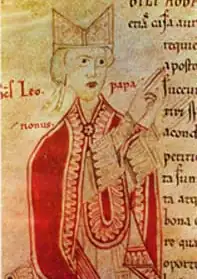
No. 151Damasus IIDAMASVS Secundus17 July 1048 – 9 August 1048
Born Poppo von Brixen in Tyrol.
He was the second of the German pontiffs nominated by Emperor Henry III. A native of Bavaria, he was the third German to become pope and had one of the shortest papal reigns.
Image: 151-Damasus II.jpg, Unknown author · Public domain
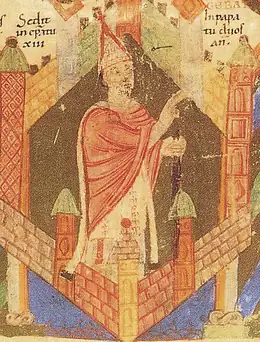
No. 152St. Leo IXSanctus LEO Nonus12 February 1049 – 19 April 1054
Born Bruno von Egisheim-Dagsburg in Alsace.
Leo IX favoured traditional morality in his reformation of the Catholic Church.
Image: Leon_IX_(crop).jpg · Public domain
No. 153Victor IIVICTOR Secundus13 April 1055 – 28 July 1057
Born Gebhard von Dollnstein-Hirschberg in Swabia.
Victor II was one of a series of German-born popes who led the Gregorian Reform.
Image: Gebhard_I_Bischof_von_Eichstätt,_als_Victor_II_…, Unknown author · Public domain
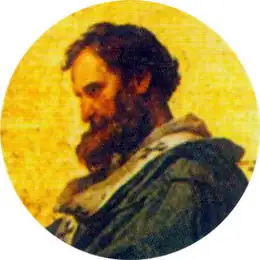
No. 154Stephen IXSTEPHANVS Nonus2 August 1057 – 29 March 1058
Born Friedrich Gozzelon von Lothringen, O.S.B..
He was a member of the Ardenne-Verdun family, who ruled the Duchy of Lorraine, and started his ecclesiastical career as a canon in Liège.
Image: 154-Stephen IX.jpg, Unknown author · Public domain
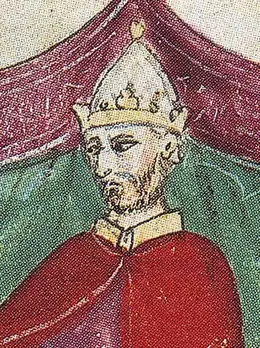
No. 155Nicholas IINICOLAVS Secundus6 December 1058 – 27 July 1061
Born Gerald de Bourgogne in Bourgogne.
At the time of his election, he was bishop of Florence.
Image: Robert_Guiscard_claimed_as_a_Duke_(Detail_of_Ni…, Unknown author · Public domain
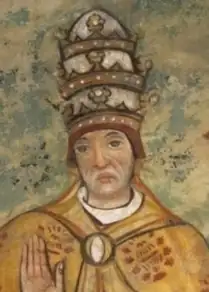
No. 156Alexander IIALEXANDER Secundus30 September 1061 – 21 April 1073
Born Anselmo da Baggio in Baggio (Milano).
Born in Milan, Anselm was deeply involved in the Pataria reform movement.
Image: Alexander_II_detail.jpg, NerdAssembledy · CC0
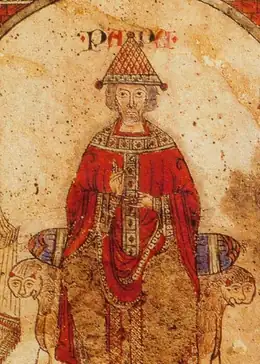
No. 157St. Gregory VIISanctus GREGORIVS Septimus22 April 1073 – 25 May 1085
Born Ildebrando di Soana, O.S.B. in Tuscia.
He is venerated as a saint in the Catholic Church.
Image: Exultet_Rolls_of_Southern_Italy,_detail_of_Pope…, Unknown author · Public domain
No. 158Victor IIIBeatus VICTOR Tertius24 May 1086 – 16 September 1087
Born Desiderio da Montecassino, O.S.B. in Benevento.
Abbot of the great monastery of Monte Cassino, he succeeded Gregory VII.
Image: Victor_III._-_Desiderius_of_Montecassino_(cropp… · Public domain
No. 159Urban IIBeatus VRBANVS Secundus12 March 1088 – 29 July 1099
Born Odon de Lagery, O.S.B. in Châtillon-sur-Marne.
He is best known for convening the Council of Clermont, which ignited the series of Catholic military expeditions known as the Crusades.
Image: Urbano_II_in_consacrazione_de_l’altare_del_mona…, Unknown author · Public domain
No. 160Paschal IIPASCHALIS Secundus13 August 1099 – 21 January 1118
Born Raniero di Bleda, O.S.B. in Bleda or Galeata.
A monk of the Abbey of Cluny, he was created the cardinal-priest of San Clemente by Pope Gregory VII in 1073.
Image: Pope_Paschal-II_1107.jpg, Unknown author · Public domain
No. 161Gelasius IIGELASIVS Secundus24 January 1118 – 29 January 1119
Born Giovanni Caetani , O.S.B. in Gaeta.
A monk of Monte Cassino and chancellor of Pope Paschal II, Caetani was unanimously elected to succeed him.
Image: 161-Gelasius II.jpg, Unknown author · Public domain
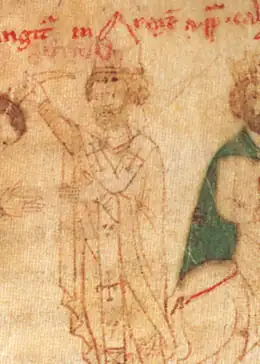
No. 162Callixtus IICALLISTVS Secundus2 February 1119 – 13 December 1124
Born Gui de Bourgogne.
His pontificate was shaped by the Investiture Controversy, which he was able to settle through the Concordat of Worms in 1122.
Image: Calixtus_II.jpg · Public domain
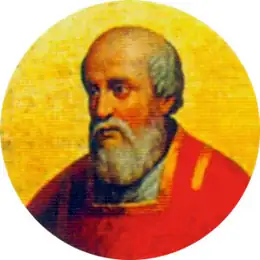
No. 163Honorius IIHONORIVS Secundus21 December 1124 – 13 February 1130
Born Lamberto Scannabecchi da Fiagnano, Can.Reg. in Fiagnano (Imola).
Although from a humble background, his obvious intellect and outstanding abilities saw him promoted up through the ecclesiastical hierarchy.
Image: 163-Honorius II.jpg, Unknown author · Public domain
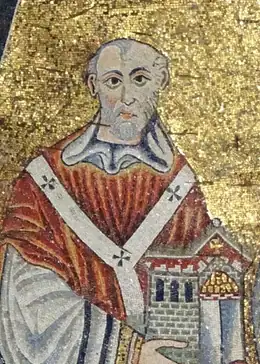
No. 164Innocent IIINNOCENTIVS Secundus14 February 1130 – 24 September 1143
Born Gregorio Papareschi, Can.Reg. in Rome.
Innocent went on to preside over the Second Council of the Lateran.
Image: Pope_Innocent_II_–_Santa_Maria_in_Trastevere.jpg, Hugo DK · CC BY-SA 4.0
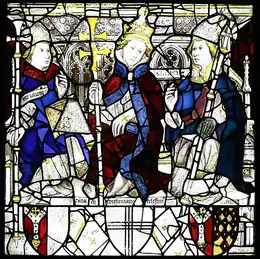
No. 165Celestine IICOELESTINVS Secundus26 September 1143 – 8 March 1144
Born Guido Guelfuccio di Castello in Città di Castello.
Image: Pope_Celestine,_St_William_and_an_unidentified_…, Andrewrabbott · CC BY-SA 4.0
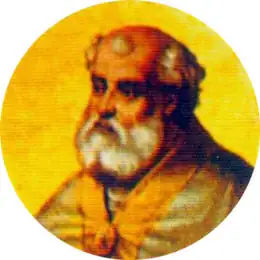
No. 166Lucius IILUCIVS Secundus12 March 1144 – 15 February 1145
Born Gherardo Caccianemici dall’Orso, Can.Reg. in Bologna.
His pontificate was notable for the unrest in Rome associated with the Commune of Rome and its attempts to wrest control of the city from the papacy.
Image: 166-Lucius II.jpg, Unknown author · Public domain
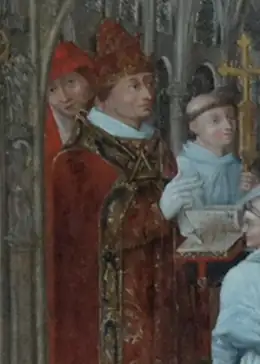
No. 167Eugene IIIBeatus EVGENIVS Tertius15 February 1145 – 8 July 1153
Born Bernardo Pignatelli, O.Cist. in Pisa.
He was the first Cistercian to become pope.
Image: Consécration_par_EUgène_III_(Cropped).jpg, Unknown artist · CC BY-SA 4.0
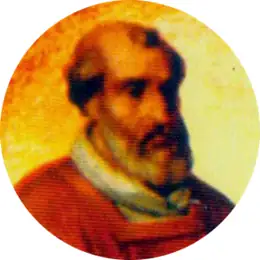
No. 168Anastasius IVANASTASIVS Quartus12 July 1153 – 3 December 1154
Born Corrado Demetri della Suburra in Rome.
He is the most recent pope to take the name “Anastasius” upon his election.
Image: 168-Anastasius IV.jpg, Unknown author · Public domain
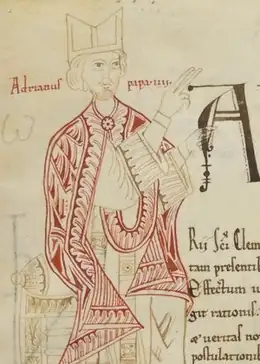
No. 169Adrian IVHADRIANVS Quartus4 December 1154 – 1 September 1159
Born Nicholas Breakspear , Can.Reg. in Abbot’s Lagnley (Hertfordshire).
He is the only pope to have been born in England and one of only two from an English-speaking country, alongside Pope Leo XIV who was elected 871 years later in 2025.
Image: Adrian_IV,_servus_servorum_dei_(cropped).png, Unknown medieval illustrator · Public domain
Nos. 170–205
Gothic
Pointed arches, rose windows, and stained glass
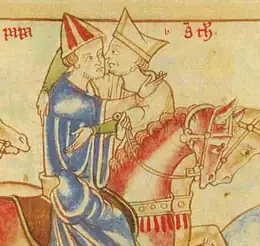
No. 170Alexander IIIALEXANDER Tertius7 September 1159 – 30 August 1181
Born Rolando Bandinelli in Siena.
A native of Siena, Alexander became pope after a contested election, but had to spend much of his pontificate outside Rome while several rivals, supported by Holy Roman Emperor Frederick I Barbarossa, claimed the papacy.
Image: Becket_bids_farewell_to_the_Pope_-_Becket_Leave…, Possibly Matthew Paris · Public domain
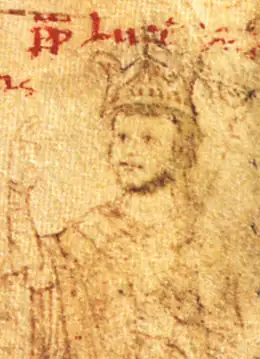
No. 171Lucius IIILUCIVS Tertius1 September 1181 – 25 November 1185
Born Ubaldo Allucignoli in Lucca.
Born in the Holy Roman Empire to an aristocratic family, he emerged as an experienced papal diplomat.
Image: Lucius-III.jpg, Probably Peter of Eboli · Public domain
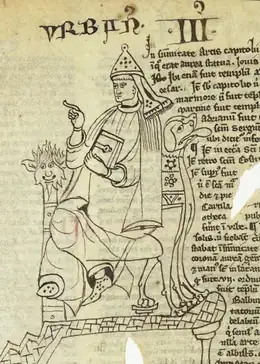
No. 172Urban IIIVRBANVS Tertius25 November 1185 – 20 October 1187
Born Uberto Crivelli in Milan.
A native of Milan, Urban III was elected pope at a time of intense conflict between the papacy and the Holy Roman Empire, particularly with Emperor Frederick Barbarossa.
Image: Urban2_lat.jpg, AnonymousUnknown author · Public domain
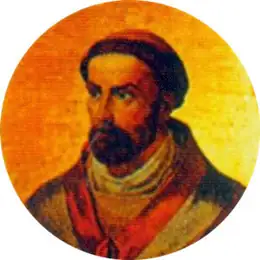
No. 173Gregory VIIIGREGORIVS Octavus21 October 1187 – 17 December 1187
Born Alberto di Morra, O.Praem. in Benevento.
Becoming Pope after a long diplomatic career as Apostolic Chancellor, he was notable in his brief reign for reconciling the Papacy with the estranged Holy Roman Empire and for initiating the Third Crusade.
Image: 173-Gregory VIII.jpg, Unknown author · Public domain
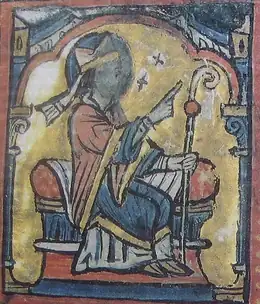
No. 174Clement IIICLEMENS Tertius19 December 1187 – 20 March 1191
Born Paolo Scolari in Rome.
He ended the conflict between the Papacy and the city of Rome, by allowing the election of magistrates, which reinstalled the Papacy back in the city after a six-year exile.
Image: SpeculumGrandmontis_(Pope_Clement_III).jpg, French anonymous · Public domain
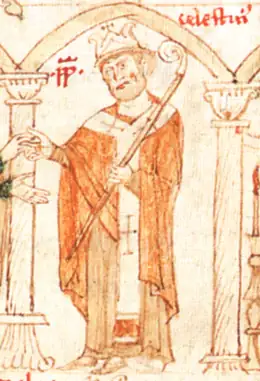
No. 175Celestine IIICOELESTINVS Tertius30 March 1191 – 8 January 1198
Born Giacinto Bobone Orsini in Rome.
He had a tense relationship with several monarchs, including Emperor Henry VI, King Tancred of Sicily, and King Alfonso IX of León.
Motto Perfice gressus meos in semitis Tuis “Going in Thy path”
Image: Coelestin_III_(cropped_2).png, Peter of Eboli · Public domain
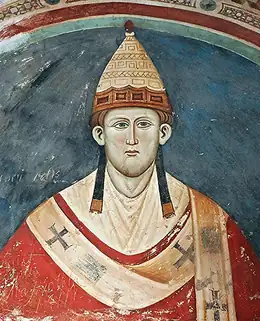
No. 176Innocent IIIINNOCENTIVS Tertius8 January 1198 – 16 July 1216
Born Lotario dei Conti di Segni in Gavignano (Rome).
Pope Innocent was one of the most powerful and influential of the medieval popes.
Image: Pope_Innocent_III_(Monastery_of_Subiaco).jpg, Carlo Raso · Public domain
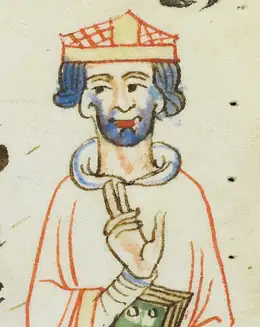
No. 177Honorius IIIHONORIVS Tertius18 July 1216 – 18 March 1227
Born Cencio Savelli in Rome.
A canon at the Basilica di Santa Maria Maggiore, he came to hold a number of important administrative positions, including that of Camerlengo.
Image: Vad-0321_025_Honorius_III_(cropped).jpg, AnonymousUnknown author · Public domain
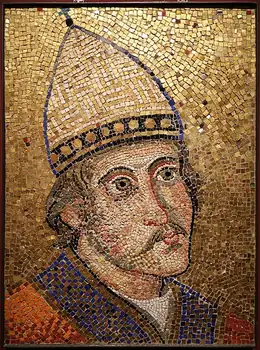
No. 178Gregory IXGREGORIVS Nonus19 March 1227 – 22 August 1241
Born Ugolino dei Conti di Segni in Anagni.
He canonized Francis of Assisi in 1228 and published the Decretals, a major collection of church law, in 1234.
Image: Ritratto_di_gregorio_ix,_dalla_facciata_dell’an…, Francesco Bini · CC BY-SA 4.0
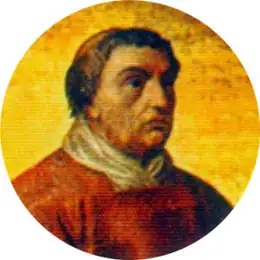
No. 179Celestine IVCOELESTINVS Quartus25 October 1241 – 10 November 1241
Born Goffredo Castiglioni in Milan.
Image: 179-Celestine IV.jpg, Unknown author · Public domain
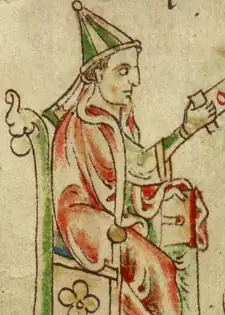
No. 180Innocent IVINNOCENTIVS Quartus25 June 1243 – 7 December 1254
Born Sinibaldo Fieschi in Lavagna (Genoa).
Fieschi was born in Genoa and studied at the universities of Parma and Bologna.
Image: The_Council_of_Lyons_excommunicating_Frederic_I…, AnonymousUnknown author · Public domain
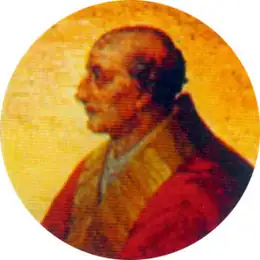
No. 181Alexander IVALEXANDER Quartus12 December 1254 – 25 May 1261
Born Rinaldo dei Conti di Segni in Jenne (Rome).
In 1255, Alexander IV canonized Saint Clare of Assisi, founder of the religious order for women called the Poor Clares.
Image: 181-Alexander IV.jpg, Unknown author · Public domain
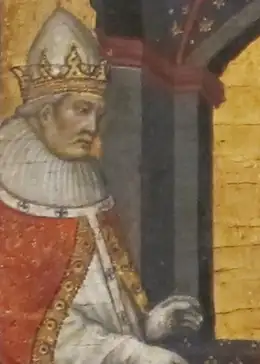
No. 182Urban IVVRBANVS Quartus29 August 1261 – 2 October 1264
Born Jacques Pantaléon in Troyes.
He was elected pope without being a cardinal; he was the first to be elected in such a way, and this would occur for only 5 more popes afterwards.
Image: Taddeo_di_bartolo,_s._tommaso_d’aquino_presenta…, Sailko · CC BY 3.0
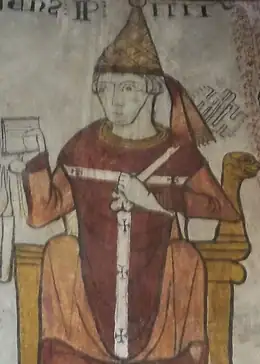
No. 183Clement IVCLEMENS Quartus5 February 1265 – 29 November 1268
Born Gui Foucois in Saint-Gilles (Southern French).
Pope Clement was a patron of Thomas Aquinas and of Roger Bacon, encouraging Bacon in the writing of his Opus Majus, which included important treatises on optics and the scientific method.
Image: Tour_Ferrande_-_Clément_IV_&_Charles_1er_de_Sic…, Véronique PAGNIER · CC BY-SA 3.0
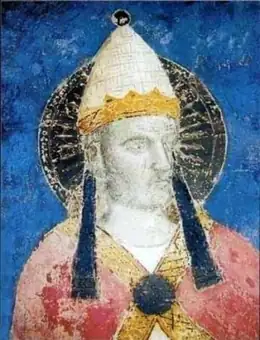
No. 184Gregory XBeatus GREGORIVS Decimus1 September 1271 – 10 January 1276
Born Teobaldo Visconti in Piacenza.
He was elected at the conclusion of a papal election that ran from 1268 to 1271, the longest papal election in the history of the Catholic Church.
Image: Gregory_X,_Buffalmacco,_Arezzo_Cathedral.jpg, Eccekevin (talk) · Public domain
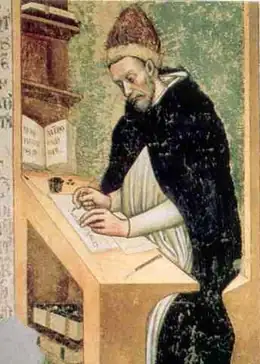
No. 185Innocent VBeatus INNOCENTIVS Quintus21 January 1276 – 22 June 1276
Born Pierre de Tarentaise, O.P. in Savoy.
A member of the Order of Preachers, he acquired a reputation as an effective preacher.
Image: InnocenzoV.jpg, Tommaso da Modena · Public domain
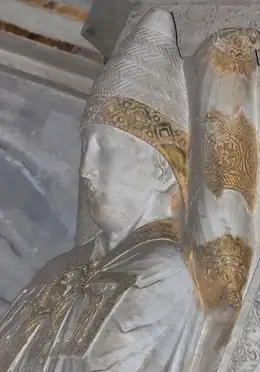
No. 186Adrian VHADRIANVS Quintus11 July 1276 – 18 August 1276
Born Ottobuono Fieschi in Genoa.
He was an envoy of Pope Clement IV sent to England in May 1265 who successfully completed his task of resolving disputes between King Henry III of England and his barons.
Image: Arnolfo_di_cambio,_monumento_di_papa_adriano_V,…, Sailko · CC BY 3.0
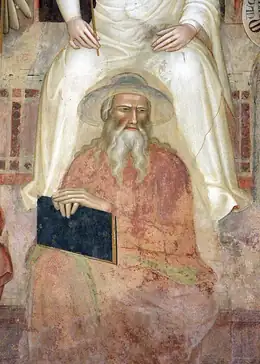
No. 187John XXIIOANNES Vicesimus Primus8 September 1276 – 20 May 1277
Born Pedro Julião in Lisbon.
He is the only Portuguese pope in history.
Image: Andrea_di_bonaiuto,_apoteosi_di_san_tommaso_d’a…, Sailko · CC BY 3.0
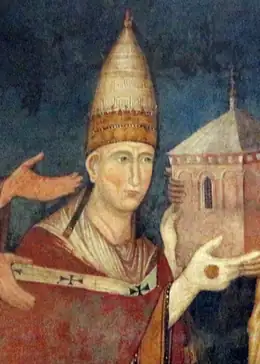
No. 188Nicholas IIINICOLAVS Tertius25 November 1277 – 22 August 1280
Born Giovanni Gaetano Orsini in Rome.
Image: Scuola_romana,_affreschi_del_sancta_sanctorum,_…, Sailko · CC BY 3.0
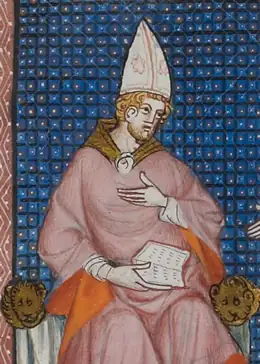
No. 189Martin IVMARTINVS Quartus22 February 1281 – 28 March 1285
Born Simon de Brion in France.
He was the last French pope to hold his court in Rome before the papacy moved to Avignon.
Image: Louis9_Canonization_(cropped).jpg, Unknown author · Public domain
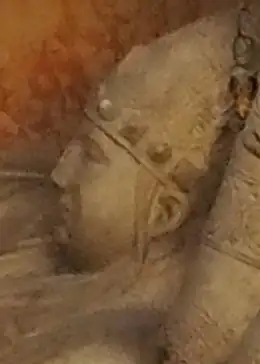
No. 190Honorius IVHONORIVS Quartus2 April 1285 – 3 April 1287
Born Giacomo Savelli in Rome.
His election followed the death of Pope Martin IV and was notable for its speed; he was chosen unanimously on the first ballot.
Image: Santa_Maria_in_Aracoeli;_Grabmal_Giovanna_Aldob…, Peter1936F · CC BY-SA 4.0
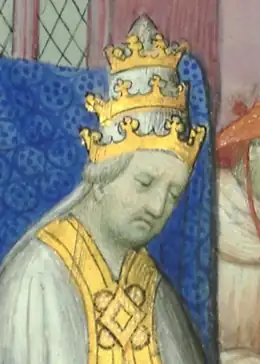
No. 191Nicholas IVNICOLAVS Quartus22 February 1288 – 4 April 1292
Born Girolamo Masci, O.F.M. in Lisciano (Ascoli PIceno).
He was the first Franciscan to be elected pope.
Image: Pope_Nicholas-IV.jpg, Mazarine Master · Public domain
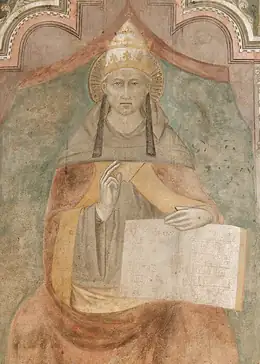
No. 192St. Celestine VSanctus COELESTINVS Quintus5 July 1294 – 13 December 1294
Born Pietro Angelerio da Morrone, O.S.B. in Molise.
He was also a monk and hermit who founded the order of the Celestines as a branch of the Benedictine order.
Image: Celestine_V_Castel_Nuovo_Napoli_n02.jpg, Niccolò di Tommaso · Public domain
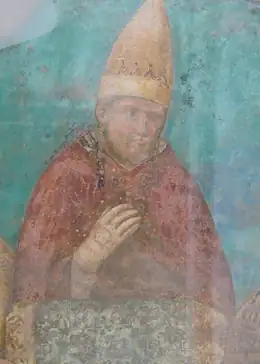
No. 193Boniface VIIIBONIFATIVS Octavus24 December 1294 – 11 October 1303
Born Benedetto Caetani in Anagni.
The Caetani family was of baronial origin with connections to the papacy.
Image: Bonifacius_VIII_-_Fresco_in_Lateran_(cropped).j…, Giotto · Public domain
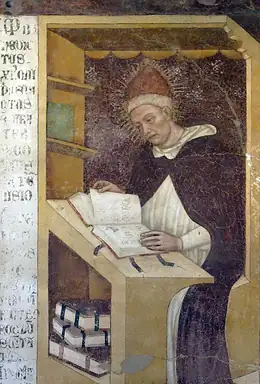
No. 194Benedict XIBeatus BENEDICTVS Undecimus22 October 1303 – 7 July 1304
Born Niccolò Boccasini, O.P. in Treviso.
Boccasini entered the Order of Preachers in his native Treviso.
Motto Illustra faciem Tuam super servum Tuum “Let Your face shine upon Your servant”
Image: 39_Benedetto_XI_(cropped).jpg, Tommaso da Modena · Public domain
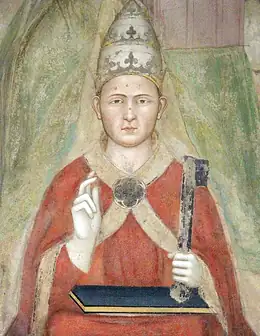
No. 195Clement VCLEMENS Quintus5 June 1305 – 20 April 1314
Born Raymond Bertrand de Got (or Goth) in Villandraut (Gironde).
He is remembered for suppressing the order of the Knights Templar and allowing the execution of many of its members.
Image: Clemente_V_cappellone_degli_Spagnoli_(cropped).…, Sailko · CC BY 3.0
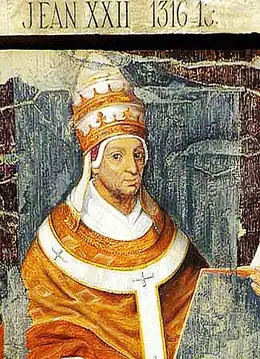
No. 196John XXIIIOANNES Vicesimus Secundus7 August 1316 – 4 December 1334
Born Jacques Duèze (or d’Euse) in Cahors.
He was the second and longest-reigning Avignon Pope, elected by the Conclave of Cardinals, which was assembled in Lyon.
Image: Jean_XXII_1316.JPG, Unknown century 14th · Public domain
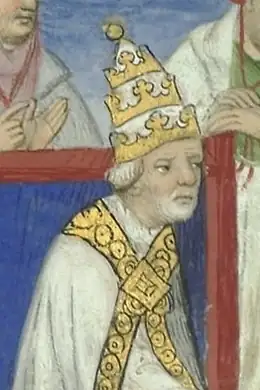
No. 197Benedict XIIBENEDICTVS Duodecimus20 December 1334 – 25 April 1342
Born Jacques Fournier, O.Cist. in Saverdun (Southern France).
He was the third Avignon pope and reformed monastic orders and opposed nepotism.
Image: Français_2810,_fol._134v,_Benoît_XII_et_message…, Unknown author · Public domain
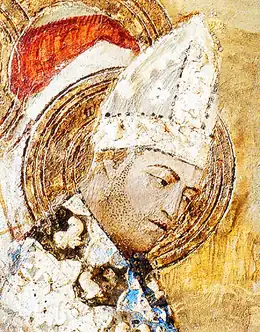
No. 198Clement VICLEMENS Sextus7 May 1342 – 6 December 1352
Born Pierre Roger, O.S.B. in Maumont (Limousin).
Clement reigned during the first visitation of the Black Death, during which he granted remission of sins to all who died of the plague.
Image: 01_Clément_VI_(Fresque_de_la_chapelle_Saint-Mar…, Matteo Giovanetti · Public domain
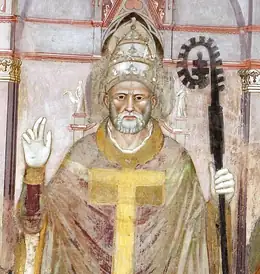
No. 199Innocent VIINNOCENTIVS Sextus18 December 1352 – 12 September 1362
Born Étienne Aubert in Monts (Limousin).
As pope, he revoked an agreement asserting the college of cardinals’ superiority over the pope and introduced important reforms in church administration.
Image: Innocent_VI.JPG, Sailko · Public domain
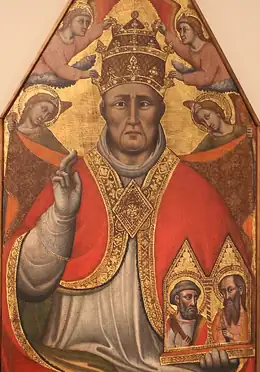
No. 200Urban VBeatus VRBANVS Quintus28 September 1362 – 19 December 1370
Born Guillaume de Grimoard, O.S.B. in Grizac (Southern France).
He was a member of the Order of Saint Benedict and the only Avignon pope to be beatified.
Image: Simone_dei_crocifissi,_urbano_V,_1375_ca.,_fors…, Sailko · Public domain
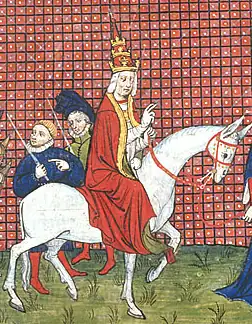
No. 201Gregory XIGREGORIVS Undecimus30 December 1370 – 27 March 1378
Born Pierre Roger de Beaufort in Rosiers d’Egletons (Limousin).
He was the seventh and last Avignon pope and the most recent French pope.
Image: Duke_of_Anjou_leading_Pope_Gregory_XI_to_the_pa…, Virgil Master and his atelier · Public domain
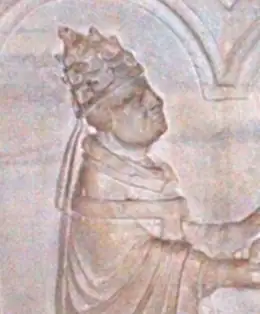
No. 202Urban VIVRBANVS Sextus8 April 1378 – 15 October 1389
Born Bartolomeo Prignano in Naples.
He was the last pope elected from outside the College of Cardinals.
Image: Pope_Urban_6.jpg, it:Utente:Riccardov · Public domain
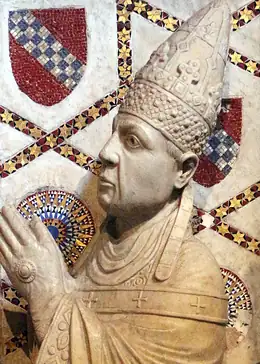
No. 203Boniface IXBONIFATIVS Nonus2 November 1389 – 1 October 1404
Born Pietro Cybo Tomacelli in Naples.
He was the second Roman pope during the Western Schism.
Image: Cosmati,_bonifacio_IX_inginocchiato,_1390-1410_…, Sailko · Public domain
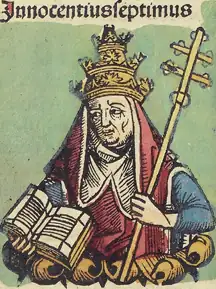
No. 204Innocent VIIINNOCENTIVS Septimus17 October 1404 – 6 November 1406
Born Cosimo Gentile Migliorati in Sulmona.
Image: Nuremberg_Chronicle_f_235v_1_Innocentius_VII.jpg, Michel Wolgemut, Wilhelm Pleydenwurff (… · Public domain
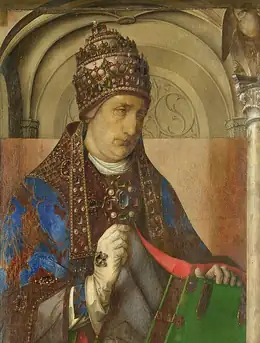
No. 205Gregory XIIGREGORIVS Duodecimus30 November 1406 – 4 July 1415
Born Angelo Correr in Venice.
He resigned in 1415 to help end the Western Schism.
Image: Joos_Van_Wassenhove_e_Pedro_Berruguete_–_San_Gr…, Justus van Gent / Pedro Berruguete · Public domain
Nos. 206–232
Renaissance
The age of the new St. Peter’s
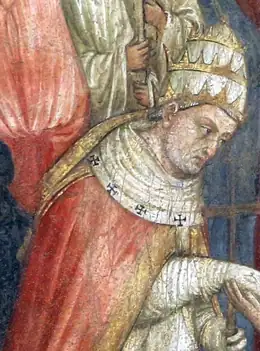
No. 206Martin VMARTINVS Quintus11 November 1417 – 20 February 1431
Born Oddone Colonna in Genazzano.
His election effectively ended the Western Schism of 1378–1417.
Image: Bicci_di_lorenzo,_Papa_Martino_V_consacra_la_ch…, Sailko (photographer); Lorenzo di Bicci… · CC BY 3.0
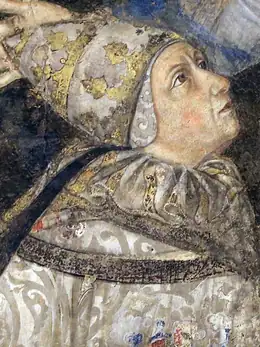
No. 207Eugene IVEVGENIVS Quartus3 March 1431 – 23 February 1447
Born Gabriele Condulmer , Can.Reg. in Venice.
Condulmer was a Venetian and a nephew of Pope Gregory XII. In 1431, he was elected pope.
Image: Domenico_di_Bartolo,_madonna_della_misericordia…, Sailko · CC BY 3.0
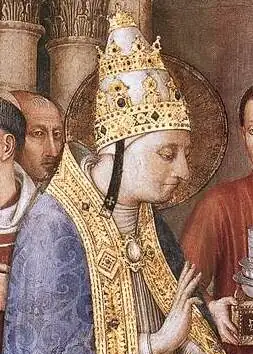
No. 208Nicholas VNICOLAVS Quintus6 March 1447 – 24 March 1455
Born Tommaso Parentucelli in Sarzana.
Pope Eugene IV made him a cardinal in 1446 after successful trips to Italy and Germany, and when Eugene died the next year, Parentucelli was elected in his place.
Image: Angelico,_niccolina_14_(cropped).jpg, Fra Angelico · Public domain
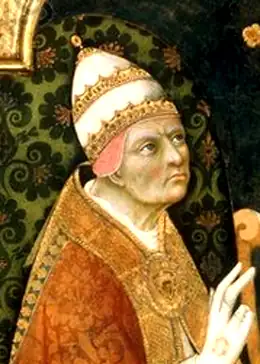
No. 209Callixtus IIICALLISTVS Tertius8 April 1455 – 6 August 1458
Born Alfons de Borja in Torre de Canals, Játiva (Valencia).
Borgia spent his early career as a professor of law at the University of Lleida; he later served as a diplomat for the kings of Aragon.
Image: Calixtus_III.jpg, Sano di Pietro · Public domain
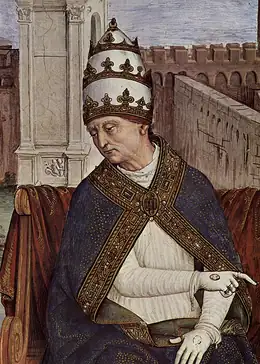
No. 210Pius IIPIVS Secundus19 August 1458 – 15 August 1464
Born Enea Silvio Bartolomeo Piccolomini in Corsignano (Siena).
He became Bishop of Trieste in 1447, Bishop of Siena in 1450, and a cardinal in 1456.
Image: Pintoricchio_014.jpg, Pinturicchio · Public domain
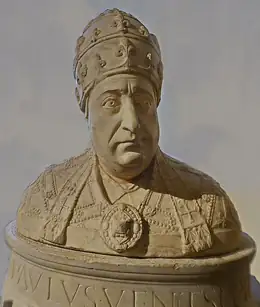
No. 211Paul IIPAVLVS Secundus30 August 1464 – 26 July 1471
Born Pietro Barbo in Venice.
When his maternal uncle became Pope Eugene IV, Barbo switched from training to be a merchant to religious studies.
Image: Portraitbüste_Papst_Paul_II.jpg, Peter1936F · CC BY-SA 4.0
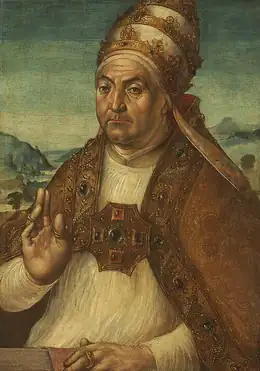
No. 212Sixtus IVXYSTVS Quartus9 August 1471 – 12 August 1484
Born Francesco della Rovere , O.F.M. in Celle (Savona).
Sixtus IV’s accomplishments as pope included the construction of the Sistine Chapel and the creation of the Vatican Library.
Image: Pedro_Berruguete,_Portrait_of_Pope_Sixtus_IV_de…, Pedro Berruguete · Public domain
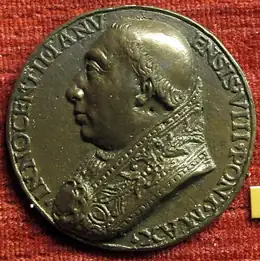
No. 213Innocent VIIIINNOCENTIVS Octavus29 August 1484 – 25 July 1492
Born Giovanni Battista Cybo in Genoa.
Son of the viceroy of Naples, Cybo spent his early years at the Neapolitan court.
Image: Niccolò_di_forzore_spinelli,_medaglia_di_innoce…, Niccolò di Forzore Spinelli · CC BY-SA 3.0
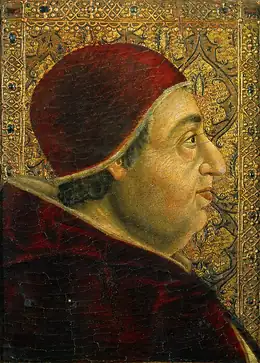
No. 214Alexander VIALEXANDER Sextus11 August 1492 – 18 August 1503
Born Roderic Llançol i de Borja in Játiva (Valencia).
A member of the Borgia family from Valencia, he divided the newly reached lands of the Americas between Spain and Portugal in 1493.
Image: Portrait_of_Pope_Alexander_VI_Borgia_(Vatican_M…, Attributed to Pedro Berruguete · Public domain
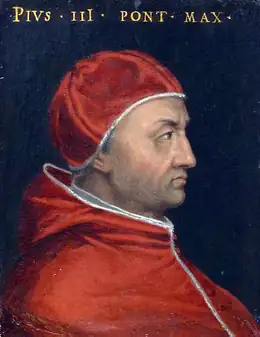
No. 215Pius IIIPIVS Tertius22 September 1503 – 18 October 1503
Born Francesco Todeschini- Piccolomini in Siena.
At just twenty-six days, he had one of the shortest pontificates in papal history.
Image: PiusIII.jpg, Unknown author · Public domain
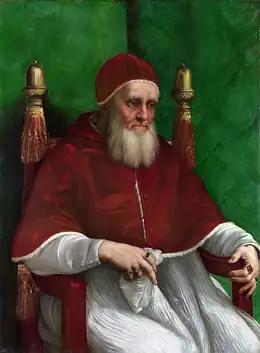
No. 216Julius IIIVLIVS Secundus31 October 1503 – 21 February 1513
Born Giuliano della Rovere , O.F.M. in Albisola (Savona).
Nicknamed the Warrior Pope, the Battle Pope or the Fearsome Pope, it is often speculated that he had chosen his papal name not in honour of Pope Julius I but in emulation of Julius Caesar.
Image: Pope_Julius_II.jpg, Raphael · Public domain
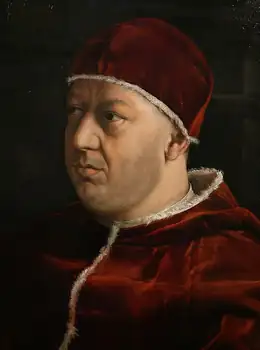
No. 217Leo XLEO Decimus9 March 1513 – 1 December 1521
Born Giovanni di Lorenzo de’ Medici in Florence.
Born into the prominent political and banking Medici family of Florence, Giovanni was the second son of Lorenzo de’ Medici, the de-facto ruler of the Florentine Republic, and was elevated to the cardinalate in 1489.
Image: Raffaello,_ritratto_di_papa_leone_X_tra_i_cardi…, Francesco Bini · Public domain
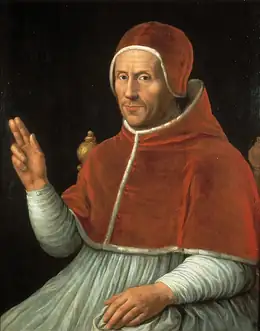
No. 218Adrian VIHADRIANVS Sextus9 January 1522 – 14 September 1523
Born Adriaan Floriszoon Boeyens in Utrecht.
The only Dutchman to become pope, he was the last non-Italian pope until the Polish John Paul II 455 years later.
Motto Patere et sustine “Respect and wait”
Image: Portrait_of_Pope_Adrian_VI_(after_Jan_van_Score…, After Jan van Scorel · Public domain
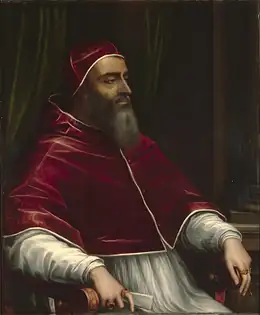
No. 219Clement VIICLEMENS Septimus26 November 1523 – 25 September 1534
Born Giulio di Giuliano de’ Medici in Florence.
Elected in 1523 at the end of the Italian Renaissance, Clement came to the papacy with a high reputation as a statesman.
Motto Candor illaesus “Unharmed candor”
Image: El_papa_Clemente_VII,_por_Sebastiano_del_Piombo…, Sebastiano del Piombo · Public domain
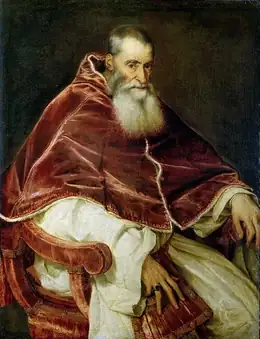
No. 220Paul IIIPAVLVS Tertius13 October 1534 – 10 November 1549
Born Alessandro Farnese in Canino (Viterbo).
His pontificate also initiated the Catholic Reformation with the Council of Trent in 1545, and witnessed wars of religion in which Charles V launched military campaigns against the Protestants in Germany.
Image: Portrait_of_Pope_Paul_III_Farnese_(by_Titian)_-…, Titian · Public domain
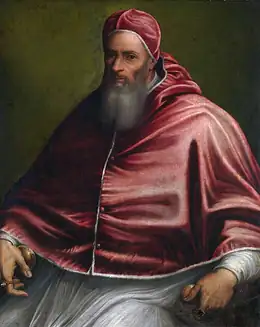
No. 221Julius IIIIVLIVS Tertius7 February 1550 – 29 March 1555
Born Giovanni Maria Ciocchi del Monte in Rome.
He reopened the Council of Trent in 1551 and was a patron of the architect Vignola.
Image: Girolamo_Sicciolante_-_Paus_Julius_III.jpg, Circle of Girolamo Siciolante da Sermon… · Public domain
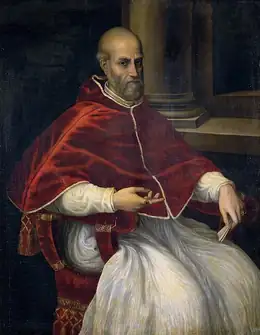
No. 222Marcellus IIMARCELLVS Secundus9 April 1555 – 1 May 1555
Born Marcello Cervini degli Spannochi in Montefano.
Marcellus succeeded Pope Julius III. Before his accession as pope he had been Cardinal-Priest of Santa Croce in Gerusalemme.
Image: Portrait_of_Pope_Marcellus_II_Cervini_(Vatican_…, Workshop of Italian art schools of the … · Public domain
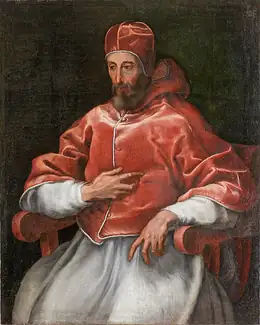
No. 223Paul IVPAVLVS Quartus23 May 1555 – 18 August 1559
Born Gian Pietro Carafa , C.R. in Capriglia (Avellino).
While serving as papal nuncio in Spain, he developed an anti-Spanish outlook that later coloured his papacy.
Motto Dominus mihi adjutor “The Lord is my helper”
Image: Pope_Paul_IV_–_Jacopino_Conte_(Manner),_ca._156…, Manner of Jacopino del Conte · Public domain
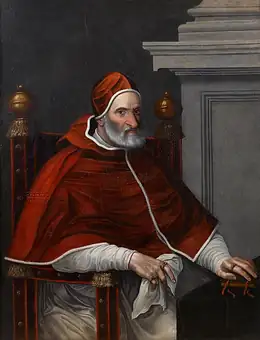
No. 224Pius IVPIVS Quartus26 December 1559 – 9 December 1565
Born Giovanni Angelo Medici in Milan.
Pope Paul III appointed Medici Archbishop of Ragusa, and sent him on diplomatic missions to the Holy Roman Empire and Hungary.
Image: Portrait_of_Pope_Pius_IV,_three-quarter-length,…, Circle of Scipione Pulzone · Public domain
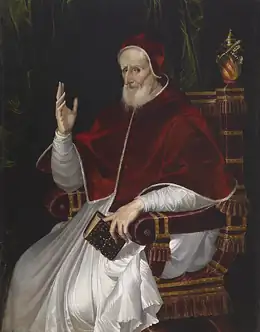
No. 225St. Pius VSanctus PIVS Quintus7 January 1566 – 1 May 1572
Born Antonio Ghislieri, O.P. in Bosco (Alessandria).
He was an inquisitor and is venerated as a saint of the Catholic Church.
Motto Utinam dirigantur viae meae ad custodiendas “O that my ways may be steadfast in keeping Thy statutes”
Image: Bartolomeo_Passarotti_-_Pius_V.jpg, Bartolomeo Passarotti and workshop · Public domain
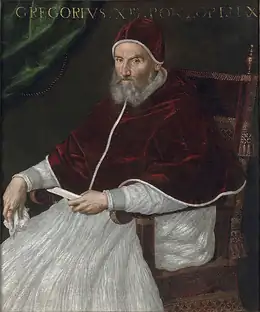
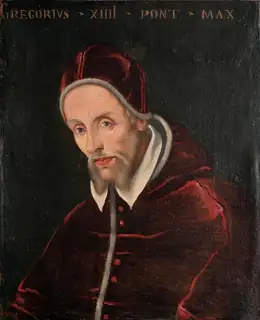
No. 226Gregory XIIIGREGORIVS Tertius Decimus13 May 1572 – 10 April 1585
Born Ugo Boncompagni in Bologna.
He is best known for commissioning and being the namesake for the Gregorian calendar, which remains the internationally accepted civil calendar to this day.
Motto Aperuit et clausit “Opened and closed”
Image: Lavinia_Fontana_-_Portrait_of_Pope_Gregory_XIII…, Lavinia Fontana · Public domain
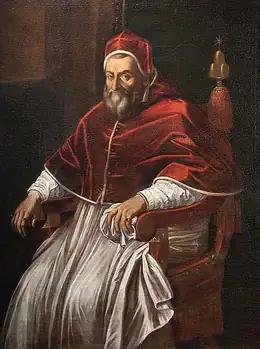
No. 227Sixtus VXYSTVS Quintus24 April 1585 – 27 August 1590
Born Felice Piergentile, O.F.M. Conv. in Grottammare (Ascoli Piceno).
As a youth, he joined the Franciscan order, where he displayed talents as a scholar and preacher, and enjoyed the patronage of Pius V, who made him a cardinal.
Motto Aqua et panis, vita canis “Water and bread are a dog’s life”
Image: Portrait_of_Pope_Sixtus_V.jpg, Original uploader was Utente:Ganetto at… · Public domain
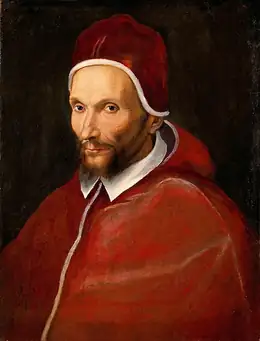
No. 228Urban VIIVRBANVS Septimus15 September 1590 – 27 September 1590
Born Giovanni Battista Castagna in Rome.
His papacy is the shortest recognized in history.
Image: Portrait_of_Pope_Urban_VII_Castagna_(Jacopo_del…, Jacopino del Conte · Public domain
No. 229Gregory XIVGREGORIVS Quartus Decimus5 December 1590 – 16 October 1591
Born Niccolò Sfondrati in Somma Lombarda.
His reign lasted less than a year.
Image: Roman_School_–_Portrait_of_Pope_Gregory_XIV_(16…, Scuola romana/ Roman School · Public domain
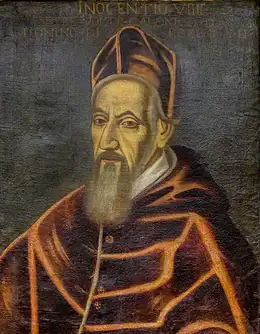
No. 230Innocent IXINNOCENTIVS Nonus29 October 1591 – 30 December 1591
Born Giovanni Antonio Facchinetti in Bologna.
Prior to his short papacy, he had been a canon lawyer, diplomat, and chief administrator during the reign of Pope Gregory XIV. He entered the service of the influential Cardinal Alessandro Farnese.
Image: Portrait_of_Pope_Innocent_IX_(Fidenza_Cathedral…, anonymous / After Hieronymus Wierix · Public domain
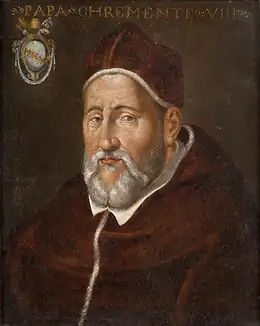
No. 231Clement VIIICLEMENS Octavus30 January 1592 – 3 March 1605
Born Ippolito Aldobrandini in Fano.
Born in Fano, Papal States to a prominent Florentine family, he initially came to prominence as a canon lawyer before being made a Cardinal-Priest in 1585.
Image: Papst_Clemens_VIII_Italian_17th_century.jpg, Unidentified painter · Public domain
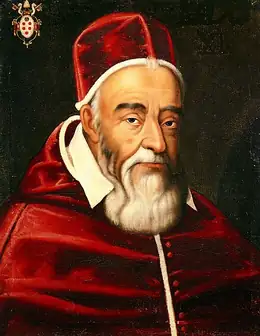
No. 232Leo XILEO Undecimus1 April 1605 – 27 April 1605
Born Alessandro Ottaviano de’ Medici in Florence.
His pontificate is one of the briefest in history, lasting under a month.
Image: Pope_Leo_XI_-_Portrait.jpg, anonymous · Public domain
Nos. 233–250
Baroque
Domes, gilt, and Bernini’s colonnade
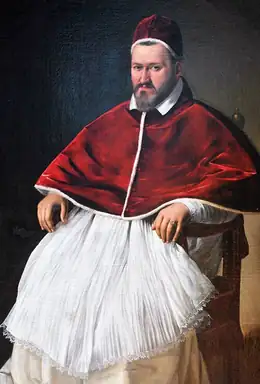
No. 233Paul VPAVLVS Quintus16 May 1605 – 28 January 1621
Born Camillo Borghese in Rome.
In 1611, he made Galileo Galilei a member of the papal Accademia dei Lincei.
Motto Absit nisi in Te gloriari “May it be absent, except to glory in You”
Image: Pope_Paul_V_(cropped_2).jpg, Attributed to Caravaggio · Public domain
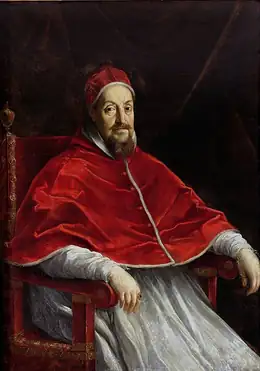
No. 234Gregory XVGREGORIVS Quintus Decimus9 February 1621 – 8 July 1623
Born Alessandro Ludovisi in Bologna.
He is notable for founding the Congregation for the Propagation of the Faith, an organization tasked with overseeing the spread of Catholicism and missionary work.
Image: Pope_Gregory_XV.jpg, Guido Reni · Public domain
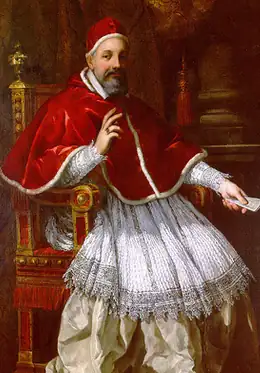
No. 235Urban VIIIVRBANVS Octavus6 August 1623 – 29 July 1644
Born Maffeo Vincenzo Barberini in Florence.
His papacy also covered 21 years of the Thirty Years’ War.
Image: Urban_VIII_(cropped).jpg, Pietro da Cortona · Public domain
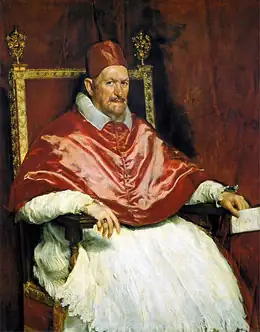
No. 236Innocent XINNOCENTIVS Decimus15 September 1644 – 7 January 1655
Born Giovanni Battista Pamphili in Rome.
Born in Rome of a family from Gubbio in Umbria who had come to Rome during the pontificate of Pope Innocent IX, Pamphili was trained as a lawyer and graduated from the Collegio Romano.
Motto Alleviatae sunt aquae super terram “The waters are lifted above the earth”
Image: Retrato_del_Papa_Inocencio_X._Roma,_by_Diego_Ve…, Diego Velázquez · Public domain
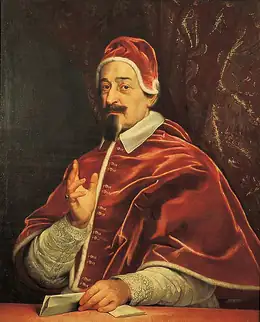
No. 237Alexander VIIALEXANDER Septimus7 April 1655 – 22 May 1667
Born Fabio Chigi in Siena.
He began his career as a vice-papal legate, and he held various diplomatic positions in the Holy See.
Image: Alexander_VII.jpg, Giovanni Battista Gaulli · Public domain
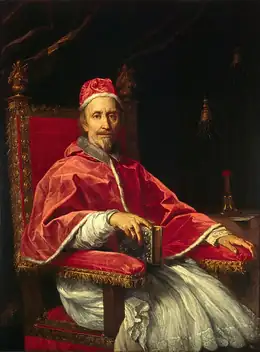
No. 238Clement IXCLEMENS Nonus20 June 1667 – 9 December 1669
Born Giulio Rospigliosi in Pistoia.
Giulio Rospigliosi was born into the noble Rospigliosi family in 1600 and studied at the Seminario Romano and the University of Pisa.
Motto Aliis non sibi clemens “Clement to others, not to himself”
Image: Portrait_of_Pope_Clement_IX,_by_Carlo_Maratti_(…, Carlo Maratta · Public domain
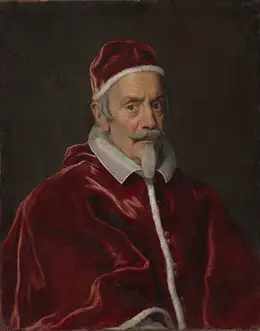
No. 239Clement XCLEMENS Decimus29 April 1670 – 22 July 1676
Born Emilio Bonaventura Altieri in Rome.
Emilio Bonaventura Altieri, born in Rome in 1590, belonged to the Papal nobility.
Motto Bonum auget malum minuit “He increases good and diminishes evil”
Image: Portrait_of_Pope_Clement_X,_by_Giovanni_Battist…, Giovanni Battista Gaulli · Public domain
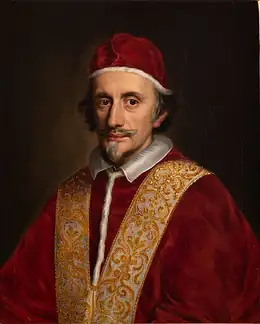
No. 240Innocent XIBeatus INNOCENTIVS Undecimus21 September 1676 – 12 August 1689
Born Benedetto Odescalchi in Como.
Once he was elected to the papacy, he applied himself to moral and administrative reform of the Roman Curia.
Motto Avarus non implebitur “The covetous man is not satisfied”
Image: Jacob_Ferdinand_Voet_-_Portrait_of_Innocenzo_XI…, Jacob Ferdinand Voet · Public domain
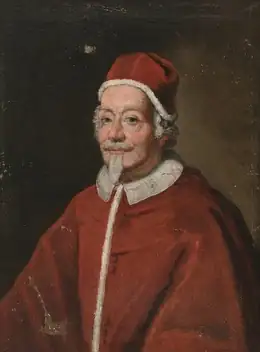
No. 241Alexander VIIIALEXANDER Octavus6 October 1689 – 1 February 1691
Born Pietro Vito Ottoboni in Venice.
He is the most recent pope to take the pontifical name “Alexander”.
Image: Portrait_of_Pope_Alexander_VIII_–_Roman_School_…, Unidentified painter · Public domain
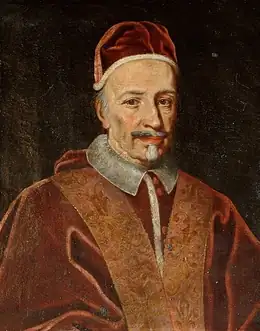
No. 242Innocent XIIINNOCENTIVS Duodecimus12 July 1691 – 27 September 1700
Born Antonio Pignatelli in Spinazzola.
In 1692 he issued a bull forbidding popes to enrich their relatives.
Image: Antonio_Zanchi_–_Papa_Innocenzo_XII_(cropped).j…, Antonio Zanchi · Public domain
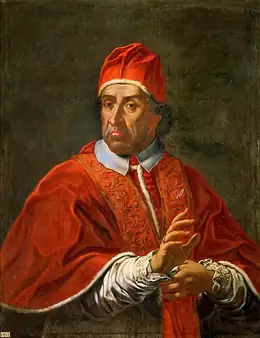
No. 243Clement XICLEMENS Undecimus23 November 1700 – 19 March 1721
Born Giovanni Francesco Albani in Urbino.
Clement XI was a patron of the arts and of science.
Image: Portrait_of_Pope_Clement_XI_Albani_(Vatican_Mus…, After Pier Leone Ghezzi · Public domain
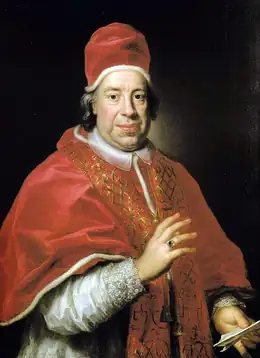
No. 244Innocent XIIIINNOCENTIVS Tertius Decimus8 May 1721 – 7 March 1724
Born Michelangelo dei Conti in Poli.
He remains the most recent pope to take the pontifical name “Innocent”.
Image: InnocientXIII.jpg, Possibly Agostino Masucci · Public domain
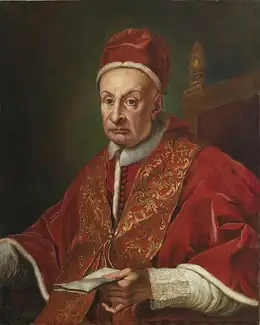
No. 245Benedict XIIIBENEDICTVS Tertius Decimus29 May 1724 – 21 February 1730
Born Pierfrancesco Orsini , O.P. in Gravina.
A Dominican friar, he had served for many years as archbishop of Benevento.
Image: Benedetto_XIII.jpg, Unidentified painter · Public domain
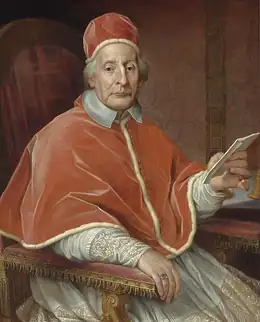
No. 246Clement XIICLEMENS Duodecimus12 July 1730 – 6 February 1740
Born Lorenzo Corsini in Florence.
Clement presided over the growth of a surplus in the papal finances.
Motto Dabis discernere inter malum et bonum “You shall deign to distinguish between good and evil”
Image: Agostino_Masucci_–_Portrait_of_Pope_Clement_XII…, Agostino Masucci · Public domain
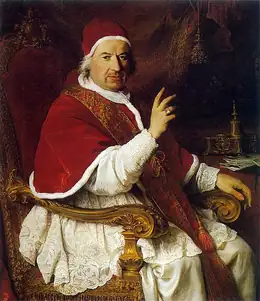
No. 247Benedict XIVBENEDICTVS Quartus Decimus17 August 1740 – 3 May 1758
Born Prospero Lorenzo Lambertini in Bologna.
His intellectualism and advocacy of science education earned him the nickname “the Enlightenment Pope”.
Motto Curabuntur omnes “All will be healed”
Image: Benoit_XIV.jpg, Pierre Subleyras · Public domain
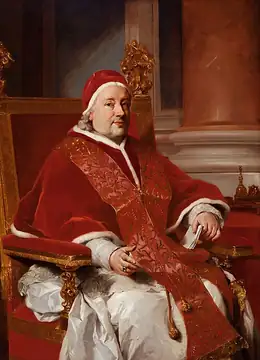
No. 248Clement XIIICLEMENS Tertius Decimus6 July 1758 – 2 February 1769
Born Carlo della Torre di Rezzonico in Venice.
His pontificate was overshadowed by the constant pressure to suppress the Society of Jesus but despite this, he championed their order and also proved to be their greatest defender at that time.
Image: Anton_Raphael_Mengs_-_Portrait_of_pope_Clement_…, Anton Raphael Mengs · Public domain
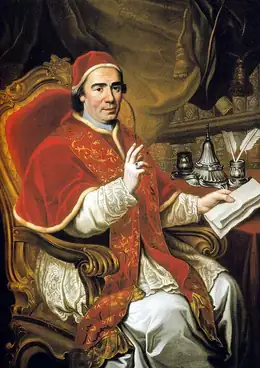
No. 249Clement XIVCLEMENS Quartus Decimus19 May 1769 – 22 September 1774
Born Giovanni Vincenzo Antonio Ganganelli, O.F.M. Conv. in Sant’Arcangelo di Romagna.
At the time of his election, he was the only Franciscan friar in the College of Cardinals, having been a member of the Order of Friars Minor Conventual.
Image: Vincenzo_Milione_-_Portrait_of_Pope_Clement_XIV…, Vincenzo Milione · Public domain
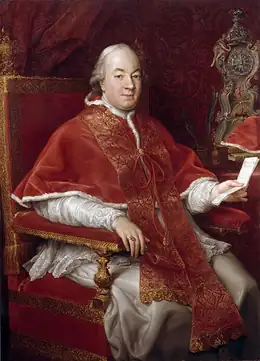
No. 250Pius VIPIVS Sextus15 February 1775 – 29 August 1799
Born Angelo Onofrio Melchiorre Natale Giovanni Antonio Braschi in Cesena.
Born in Cesena, he was elected Pope in the 1774–1775 conclave.
Motto Floret in Domo Domini “It blossoms in the House of God”
Image: Pompeo_Batoni_-_Ritratto_di_Papa_Pio_VI_(Nation…, Pompeo Batoni · Public domain
Nos. 251–260
19th & 20th Century
Revolutions, the Vatican Councils, and world wars
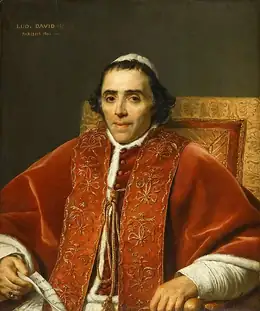
No. 251Pius VIIBENEDICTVS Tertius Decimus14 March 1800 – 20 August 1823
Born Barnaba Niccolò Maria Luigi Chiaramonti, O.S.B. in Cesena.
He was held prisoner by Napoleon from 1809 to 1814, and in 1814 he restored the Jesuits.
Image: Jacques-Louis_David_018.jpg, Jacques-Louis David · Public domain
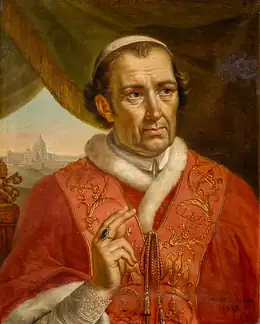
No. 252Leo XIILEO Duodecimus28 September 1823 – 10 February 1829
Born Annibale Francesco Clemente Melchiorre Girolamo Nicola della Genga in Monticelli di Genga (Fabriano).
Leo XII was in ill health from the time of his election to the papacy to his death less than six years later, though he was noted for enduring pain well.
Image: Charles_Picqué_–_Portrait_de_Léon_XII_(1828).jpg, Charles Picqué · Public domain
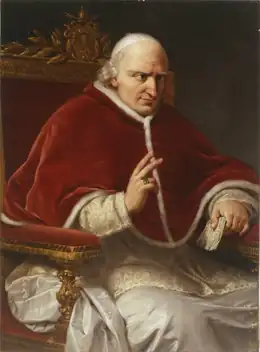
No. 253Pius VIIIPIVS Octavus31 March 1829 – 30 November 1830
Born Francesco Saverio Maria Felice Castiglioni in Cingoli.
His brief papacy witnessed the Catholic Emancipation in the United Kingdom in 1829, which he welcomed, and the July Revolution in France in 1830, which he accepted with reluctance.
Image: Ritratto_di_Papa_Pio_VIII,_by_Clemente_Alberi.j…, Clemente Alberi · Public domain
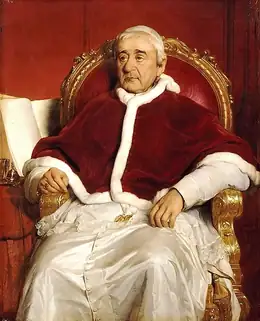
No. 254Gregory XVIGREGORIVS Sextus Decimus2 February 1831 – 1 June 1846
Born Bartolomeo Alberto Cappellari, O.S.B. Cam. in Belluno.
He had adopted the name Mauro upon entering the religious order of the Camaldolese.
Image: Gregory_XVI.jpg, Paul Delaroche · Public domain
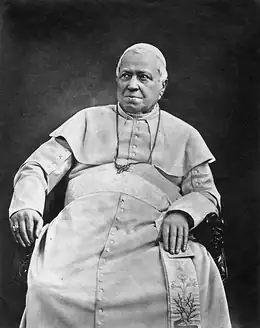
No. 255Pius IXBeatus PIVS Nonus16 June 1846 – 7 February 1878
Born Giovanni Maria Battista Pietro Pellegrino Isidoro Mastai -Ferretti in Senigallia.
His reign of nearly 32 years is the longest verified of any pope in history and second only to Saint Peter according to Catholic tradition.
Image: Pius_IX,_by_Adolphe_Braun,_1875.jpg · Public domain
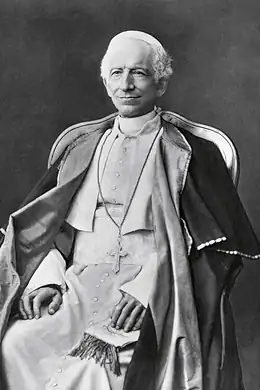
No. 256Leo XIIILEO Tertius Decimus20 February 1878 – 20 July 1903
Born Gioacchino Vincenzo Raffaele Luigi Pecci in Carpineto Romano.
Pope Leo XIII wrote a total of 86 encyclicals during his papacy from 1878 to 1903.
Image: Papa_Leone_XIII.jpeg, Braun et Compagnie · Public domain
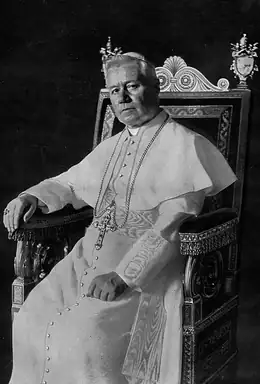
No. 257St. Pius XSanctus PIVS Decimus4 August 1903 – 20 August 1914
Born Giuseppe Melchiorre Sarto in Riese (Treviso).
He opposed modernist interpretations of Catholic doctrine, and promoted liturgical reforms and Thomist scholastic theology.
Motto Instaurare omnia in Christo “To restore all things in Christ”
Image: Pius_X,_by_Francesco_De_Federicis,_1903_(croppe…, Francesco De Federicis · Public domain
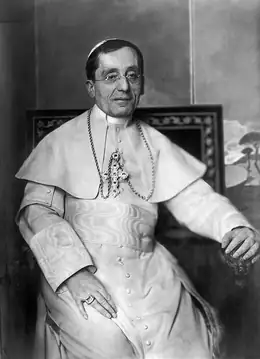
No. 258Benedict XVBENEDICTVS Quintus Decimus3 September 1914 – 22 January 1922
Born Giacomo Paolo Giovanni Battista della Chiesa.
His pontificate was largely focused on World War I and its political, social, and humanitarian consequences in Europe.
Motto In Te, Domine, speravi; non confundar in aeternum “In Thee, o Lord, have I trusted; let me not be confounded for evermore”
Image: Benedictus_XV,_by_Nicola_Perscheid,_1915_(retou…, Nicola Perscheid · Public domain
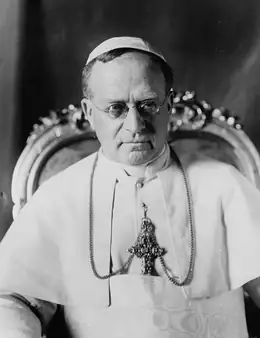
No. 259Pius XIPIVS Undecimus6 February 1922 – 10 February 1939
Born Ambrogio Damiano Achille Ratti in Desio (Milan).
He was also the first sovereign of Vatican City upon its creation on 11 February 1929.
Motto Pax Christi in Regno Christi “The Peace of Christ in the Kingdom of Christ”
Image: Pius_PP._XI_Achille_Ratti_1938_(cropped).jpg, Associated Press · Public domain
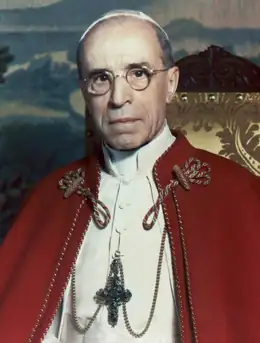
No. 260Pius XIIVenerabilis PIVS Duodecimus2 March 1939 – 9 October 1958
Born Eugenio Maria Giuseppe Giovanni Pacelli in Rome.
He led the Church through the Second World War and in 1950 defined the dogma of the Assumption of Mary.
Motto Opus justitiae pax “The work of justice [shall be] peace”
Image: Pius_XII,_by_Michael_Pitcairn,_1951_(cropped).j…, Michael Pitcairn · Public domain
Nos. 261–267
Modern Era
Vatican II to today
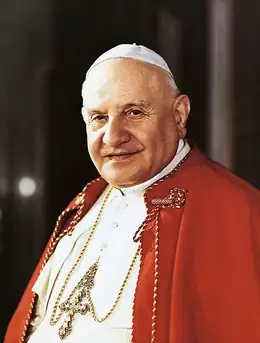
No. 261St. John XXIIISanctus IOANNES Vicesimus Tertius28 October 1958 – 3 June 1963
Born Angelo Giuseppe Roncalli in Sotto il Monte (Bergamo).
Roncalli was among 13 children born to Marianna Mazzola and Giovanni Battista Roncalli in a family of sharecroppers who lived in Sotto il Monte, a village in the province of Bergamo, Lombardy.
Motto Obedientia et pax “Obedience and peace”
Image: Ioannes_XXIII,_by_De_Agostini,_1958–1963.jpg, De Agostini Editore · Public domain
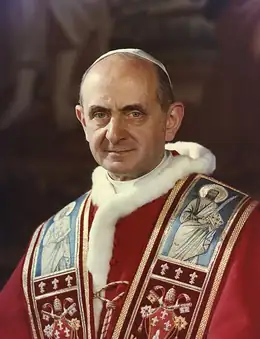
No. 262St. Paul VISanctus PAVLVS Sextus21 June 1963 – 6 August 1978
Born Giovanni Battista Enrico Antonio Maria Montini in Concesio (Brescia).
Succeeding John XXIII, he continued the Second Vatican Council, which he closed in 1965, implementing its numerous reforms.
Motto Cum Ipso in monte “With Him on the [holy] mountain”
Image: Paulus_VI,_by_Fotografia_Felici,_1969.jpg, Fotografia Felici · Public domain
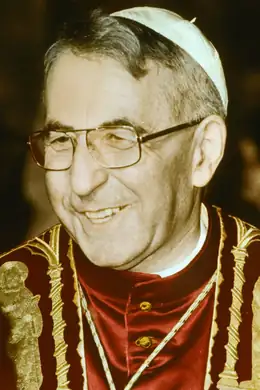
No. 263John Paul IBeatus IOANNES PAVLVS Primus26 August 1978 – 28 September 1978
Born Albino Luciani in Forno di Canale (Belluno).
His reign is among the shortest in papal history, giving rise to the first year of three popes since 1605.
Motto Humilitas “Humility”
Image: Paus_Johannes_Paulus_I_(Bestanddeelnr_929-9074)…, Anefo · CC0
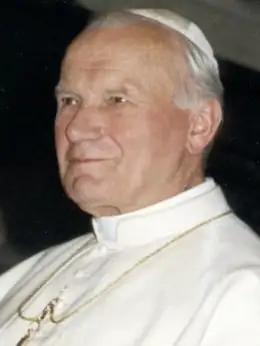
No. 264St. John Paul IISanctus IOANNES PAVLVS Secundus16 October 1978 – 2 April 2005
Born Karol Józef Wojtyła in Wadowice (Kraków).
In his youth, Wojtyła worked occasionally as a stage actor.
Motto Totus tuus “Totally yours”
Image: Pope_John_Paul_II_1991_(cropped).jpg, Photo by White House · Public domain
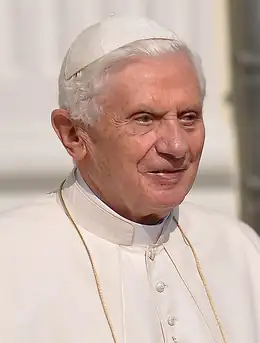
No. 265Benedict XVIBENEDICTVS Sextus Decimus19 April 2005 – 28 February 2013
Born Joseph Alois Ratzinger in Marktl am Inn (Bavaria).
Following his resignation, he chose to be known as “pope emeritus”, a title he held until his death on 31 December 2022.
Motto Cooperatores veritatis “Cooperators of the truth”
Image: Pope_Benedict_XVI,_Berlin_–_2011_cropped.jpg, WDKrause Derivate work: Художник992 (ta… · CC BY-SA 3.0
No. 266FrancisFRANCISCVS13 March 2013 – 21 April 2025
Born Jorge Mario Bergoglio, S.J. in Buenos Aires (Argentina).
He was ordained a Catholic priest in 1969, and from 1973 to 1979 he was the Jesuit provincial superior in Argentina.
Motto Miserando atque eligendo “By having mercy and by choosing”
Image: Canonization_2014-_The_Canonization_of_Saint_Jo…, Jeffrey Bruno from New York City, Unite… · CC BY-SA 2.0
No. 267Leo XIVLEO Quartus Decimus8 May 2025 – present
Born Robert Francis Prevost in Chicago, 14 September 1955.
The first pope from the United States. He joined the Order of Saint Augustine in 1977 and served for many years as a missionary in Peru.
Motto In illo Uno unum “In the One, we are one”
Image: Leo_XIV_(13_October_2025)_(cropped).jpg, Ricardo Stuckert · CC BY-SA 4.0