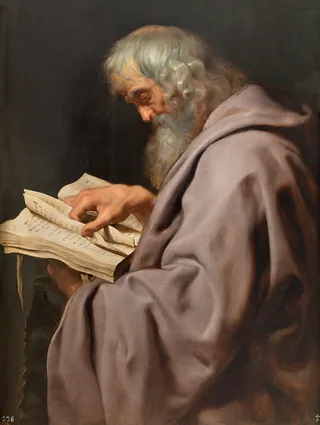
Five old doors and a candlelit hall of saints. Behind the first door, Deep Healing Prayer: the Church’s traditional prayers for healing, prayer and meditation. Behind the second door, the Holy Rosary and the Divine Mercy Chaplet: pray them bead by bead with a calm voice. Next, the Hall of Saints. Behind the third door, Spiritual Warfare: the ancient prayers for protection and healing. Behind the fourth door, The Cathedral: walk up the aisle to the altar and learn what everything in a Catholic church means. Behind the last door, the Hall of Popes: every pope from St. Peter to today. Open to everyone. Free.
“We fly to thy patronage, O holy Mother of God; despise not our petitions in our necessities, but deliver us always from all dangers, O glorious and blessed Virgin.”
Sub tuum praesidium, the oldest known prayer to Our Lady (about the 3rd century)
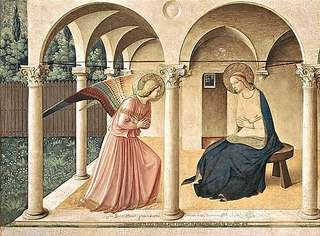
The AnnunciationFra Angelico, about 1438–1450, San Marco, FlorenceTap to read
“And the angel being come in, said unto her: Hail, full of grace, the Lord is with thee: blessed art thou among women.”
Luke 1:28 (Douay-Rheims)
Psalm 22A scroll on the wallTap to read
“For though I should walk in the midst of the shadow of death, I will fear no evils, for thou art with me.”
Psalm 22:4 (Douay-Rheims; Psalm 23:4 in newer Bibles)
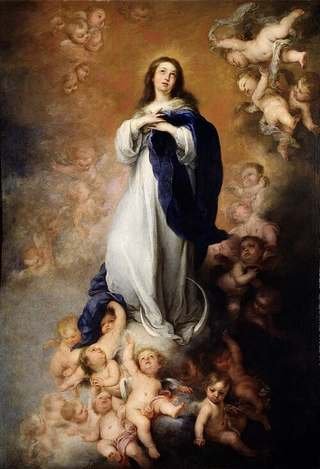
The Immaculate ConceptionBartolomé Esteban Murillo, Museo del Prado, MadridTap to read
“And a great sign appeared in heaven: A woman clothed with the sun, and the moon under her feet, and on her head a crown of twelve stars.”
Apocalypse 12:1 (Douay-Rheims)
St. JosephIte ad IosephTap to read
“Go to Joseph: and do all that he shall say to you.”
Genesis 41:55 (Douay-Rheims; Vulgate: Ite ad Ioseph)
Saints of the Old Covenant
Holy figures of the Old Testament. The Church honours them in the Roman Martyrology, but they were never formally canonized; they lived before Christ and waited in hope for Him.
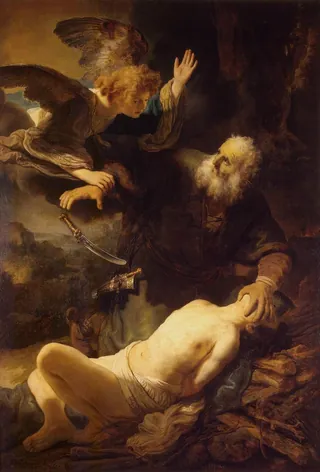
Abraham, Our Father in FaithAbrahamRemembered 9 October
God called Abraham out of Ur to a land He would show him, and he went, not knowing where. God promised him descendants as many as the stars. When God tested him on Mount Moria, he did not hold back even his son Isaac, and God provided the ram.
Jews, Christians and Muslims all look to him. St. Paul calls him the father of all who believe.
“Abram believed God, and it was reputed to him unto justice.”
Genesis 15:6
Picture: Rembrandt, The Sacrifice of Isaac, 1635
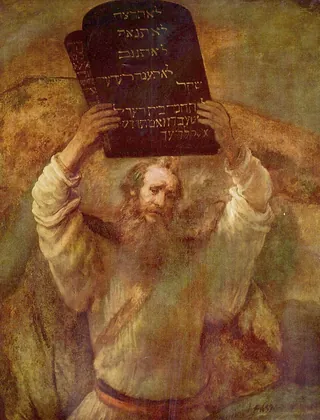
Moses, Lawgiver and ProphetMoysesRemembered 4 September
Saved as a baby from the Nile and raised in Pharaoh’s house, Moses met God in the burning bush. He led Israel out of slavery in Egypt, through the Red Sea, and received the Ten Commandments on Mount Sinai.
For forty years he led the people through the desert and died on Mount Nebo within sight of the Promised Land. He appeared with Elias beside Christ at the Transfiguration.
“God said to Moses: I AM WHO AM.”
Exodus 3:14
Picture: Rembrandt, Moses with the Tablets of the Law, 1659
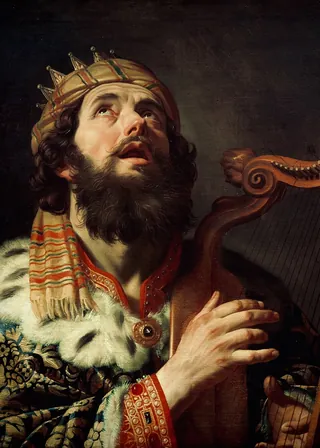
David, King and PsalmistDavidRemembered 29 December
The youngest son of Jesse, a shepherd of Bethlehem, David was anointed by the prophet Samuel. As a youth he faced Goliath with a sling and trust in God. As king he made Jerusalem his city and brought the Ark of the Covenant there.
He sinned gravely and repented with all his heart, and many of the Psalms carry his name. Christ is called the Son of David.
“I have found David, the son of Jesse, a man according to my own heart, who shall do all my wills.”
Acts 13:22
Picture: Gerard van Honthorst, King David Playing the Harp, 1622
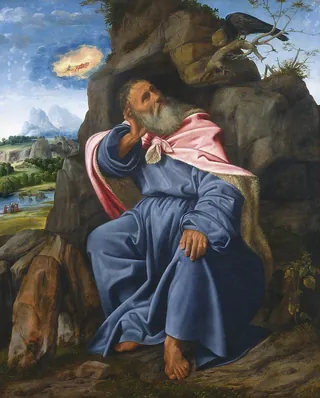
Elias the ProphetEliasRemembered 20 July
Elias (Elijah) stood for the one true God when King Achab and Queen Jezabel led Israel into the worship of Baal. Ravens fed him in the wilderness. On Mount Carmel he called down fire from heaven, and on Horeb he heard the Lord in a gentle whisper of air.
He was taken up in a fiery chariot, and he stood with Moses beside Christ at the Transfiguration. The Carmelites honour him as their spiritual father.
“Elias was a man passible like unto us: and with prayer he prayed that it might not rain upon the earth, and it rained not for three years and six months.”
James 5:17
Picture: Giovanni Girolamo Savoldo, Elijah Fed by the Raven, about 1510 (National Gallery of Art, CC0)
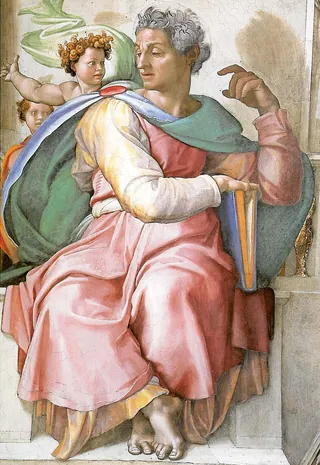
Isaias the ProphetIsaiasRemembered 9 May (6 July in the older Martyrology)
Isaias (Isaiah) preached in Jerusalem some seven hundred years before Christ. In the Temple he saw the Lord enthroned, with seraphim crying “Holy, holy, holy”, the words we still sing at every Mass.
He foretold that a virgin would bear a son called Emmanuel, and he described the Suffering Servant wounded for our sins. He is often called the “fifth evangelist”. Tradition holds that he died a martyr.
“And I heard the voice of the Lord, saying: Whom shall I send? and who shall go for us? And I said: Lo, here am I, send me.”
Isaias 6:8
Picture: Michelangelo, The Prophet Isaiah, Sistine Chapel ceiling, 1508–12
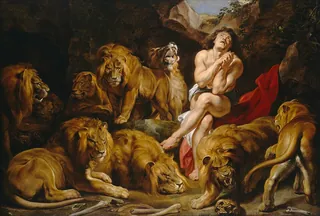
Daniel the ProphetDanielRemembered 21 July
Taken as a young captive to Babylon, Daniel would not eat the king’s unclean food. God gave him wisdom to read the king’s dreams and the writing on the wall.
When a royal decree forbade prayer to anyone but the king, he kept praying three times a day toward Jerusalem, was thrown to the lions, and God shut their mouths. He saw in a vision one “like the Son of man” coming on the clouds of heaven.
“My God hath sent his angel, and hath shut up the mouths of the lions, and they have not hurt me.”
Daniel 6:22
Picture: Peter Paul Rubens, Daniel in the Lions’ Den, about 1614–16
The Family of Our Lord, the Forerunner and the Archangels
Our Lord’s grandparents, His herald, and the three archangels named in Scripture. The archangels are angels, not human saints; the Church keeps their feast together on 29 September. Raphael’s painting of St. Michael also guards the end of this Hall.
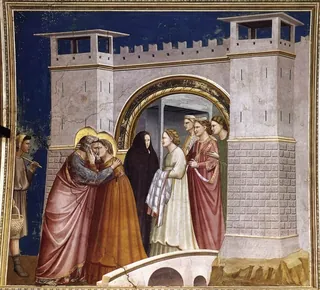
Sts. Joachim and AnneIoachim et AnnaFeast 26 July
The parents of the Virgin Mary and the grandparents of Jesus. The Bible does not give their names; they come from a very old Christian tradition (the second-century Protoevangelium of James).
The tradition tells of a holy couple who waited many years for a child, prayed with tears, and received Mary as God’s gift. They are patrons of grandparents and of married couples who long for children.
Picture: Giotto, The Meeting at the Golden Gate, Scrovegni Chapel, Padua, 1303–05
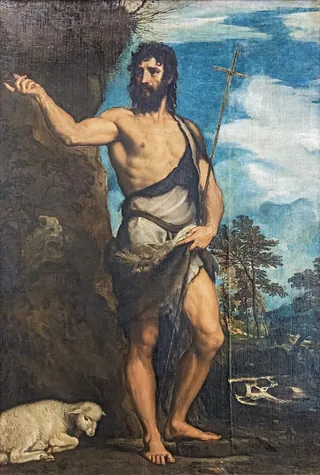
St. John the BaptistIoannes BaptistaFeasts 24 June (birth) and 29 August (martyrdom)
Son of Zachary and Elizabeth, John leapt for joy in his mother’s womb when Mary came to visit. He preached repentance in the desert by the Jordan, clothed in camel hair, and baptized Jesus.
He pointed to Christ and said, “Behold the Lamb of God”, words the priest still says at every Mass. He was beheaded for telling King Herod the truth. Besides Our Lady, he is the only saint whose birthday is a solemnity.
“He must increase, but I must decrease.”
John 3:30
Picture: Titian, St. John the Baptist, about 1540 (Accademia, Venice)
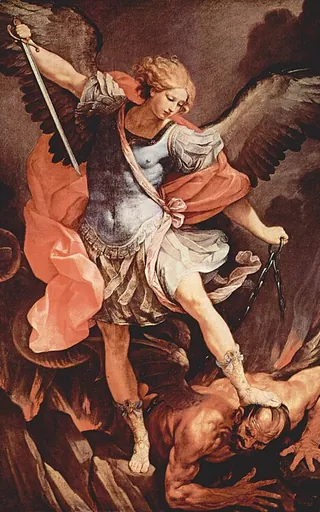
St. Michael the ArchangelSanctus Michael ArchangelusFeast 29 September (with Sts. Gabriel and Raphael)
Michael’s name is a question: “Who is like God?” In the Book of Daniel he is the great prince who stands guard over God’s people. In the Apocalypse (Revelation) he leads the angels of God in the battle in heaven and casts out the dragon, “that old serpent, who is called the devil and Satan”.
The Letter of Jude calls him “Michael the archangel”. He is the protector of the Church and the defender of souls at the hour of death, and the St. Michael prayer asks him to “defend us in battle”. He is an angel, a pure spirit, not a human saint; the Church honours him with the title “Saint”.
“But at that time shall Michael rise up, the great prince, who standeth for the children of thy people.”
Daniel 12:1
Picture: Guido Reni, The Archangel Michael Defeating Satan, about 1636 (Santa Maria della Concezione, Rome)
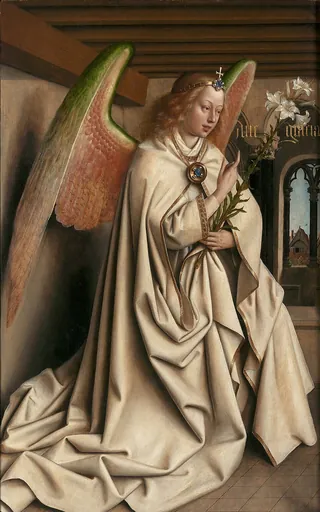
St. Gabriel the ArchangelGabrielFeast 29 September (with Sts. Michael and Raphael)
Gabriel’s name means “strength of God”. He explained visions to the prophet Daniel, announced to Zachary the birth of John the Baptist, and was sent to Nazareth to tell Mary she would be the Mother of God’s Son.
His greeting, “Hail, full of grace”, begins the Hail Mary. He is an angel, a pure spirit, not a human saint; the Church honours him with the title “Saint”.
“I am Gabriel, who stand before God: and am sent to speak to thee, and to bring thee these good tidings.”
Luke 1:19
Picture: Jan van Eyck, Angel of the Annunciation, Ghent Altarpiece, 1432
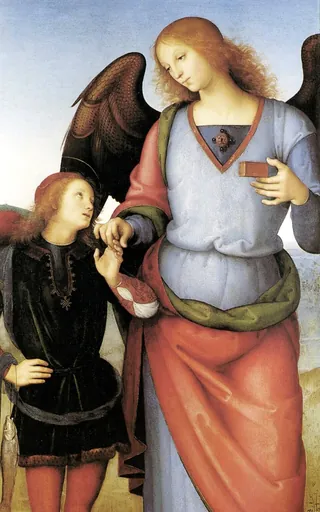
St. Raphael the ArchangelRaphaelFeast 29 September (with Sts. Michael and Gabriel)
Raphael’s name means “God heals”. In the Book of Tobias (Tobit) he travels in disguise with young Tobias, keeps him safe, drives away the demon troubling Sara, and heals the blindness of old Tobias.
He is the patron of travellers, of the sick, and of those seeking a good husband or wife. He is an angel, not a human saint.
“I am the angel Raphael, one of the seven, who stand before the Lord.”
Tobias 12:15
Picture: Pietro Perugino, The Archangel Raphael with Tobias, about 1496–1500
The Apostles and Evangelists
The Twelve whom Christ chose, St. Paul the Apostle of the Gentiles, and the Gospel writers Mark and Luke. (St. Matthew and St. John are among the Twelve.)
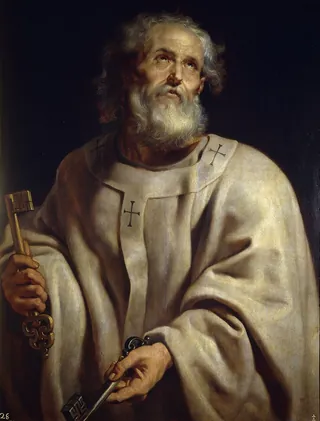
St. Peter, Prince of the ApostlesPetrusFeast 29 June
Simon was a fisherman of Galilee. Jesus named him Peter, “the Rock”, and gave him the keys of the Kingdom. He denied his Lord three times, wept, and was forgiven; three times the risen Christ asked him, “Lovest thou me?”
He preached at Pentecost, led the Church, and was crucified in Rome under Nero. His tomb lies beneath St. Peter’s Basilica. He was the first pope (see the Hall of Popes).
“Lord, thou knowest all things: thou knowest that I love thee.”
John 21:17
Picture: Peter Paul Rubens, St. Peter, 1610–12 (Prado)
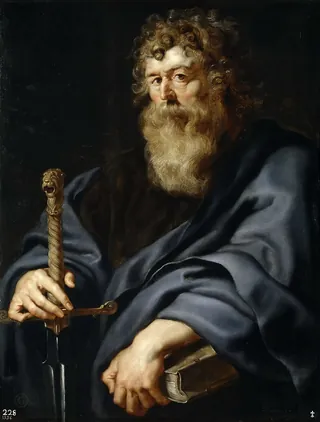
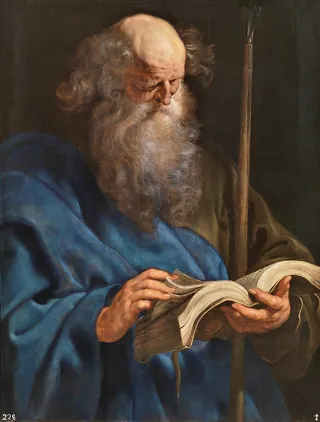
St. Paul, Apostle of the GentilesPaulusFeasts 29 June, and 25 January (his conversion)
Saul of Tarsus was a zealous Pharisee who hunted Christians, until the risen Christ struck him blind on the road to Damascus. Baptized, he became Paul, the great missionary to the Gentiles.
On long journeys by land and sea he founded churches across the Roman world, and thirteen letters in the New Testament bear his name. He was beheaded in Rome under Nero.
“And I live, now not I; but Christ liveth in me.”
Galatians 2:20
Picture: Peter Paul Rubens, St. Paul, about 1611 (Prado)
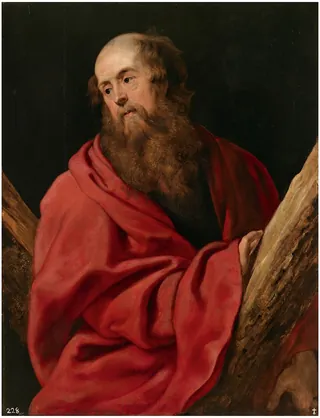
St. Andrew the ApostleAndreasFeast 30 November
A fisherman and a disciple of John the Baptist, Andrew was the first called of the Apostles. The first thing he did was bring his brother Simon Peter to Jesus. At the feeding of the five thousand he found the boy with five loaves and two fishes.
Tradition says he preached in Greece and around the Black Sea and was crucified at Patras on an X-shaped cross. He is patron of Scotland, Greece and Russia.
“We have found the Messias, which is, being interpreted, the Christ.”
John 1:41
Picture: Peter Paul Rubens, St. Andrew, about 1611 (Prado)
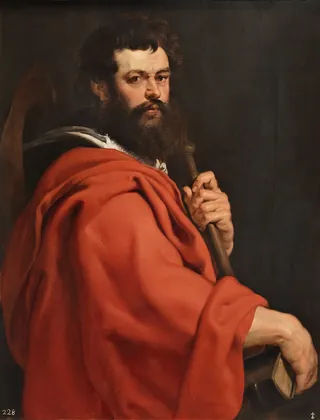
St. James the GreaterIacobus MaiorFeast 25 July
Son of Zebedee and brother of St. John, James left his nets to follow Jesus. Jesus called the two brothers “Sons of Thunder”. With Peter and John he saw the Transfiguration and watched with the Lord in Gethsemane.
He was the first of the Twelve to die for Christ, put to the sword by King Herod Agrippa. Tradition holds that his relics rest at Santiago de Compostela in Spain, goal of the great pilgrimage, the Camino.
“And he killed James, the brother of John, with the sword.”
Acts 12:2
Picture: Peter Paul Rubens, St. James the Apostle, 1612–13 (Prado)
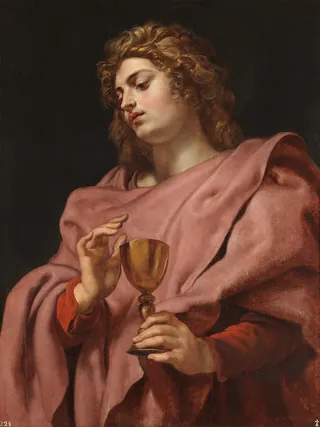
St. John, Apostle and EvangelistIoannesFeast 27 December
“The disciple whom Jesus loved” rested on the Lord’s breast at the Last Supper. He alone of the Twelve stood at the foot of the Cross, where Jesus gave him Mary as his mother, and he was first to believe at the empty tomb.
The Church gives us his Gospel, three letters and the Apocalypse, written on the island of Patmos. Tradition says he died in old age at Ephesus, the only Apostle not martyred. His symbol is the eagle.
“He that loveth not, knoweth not God: for God is charity.”
1 John 4:8
Picture: Peter Paul Rubens, St. John the Evangelist, 1610–12 (Prado)
St. Thomas the ApostleThomasFeast 3 July
Called Didymus, “the Twin”. When Jesus went toward danger he said, “Let us also go, that we may die with him.” He would not believe the Resurrection until he touched the wounds, and then made the greatest confession in the Gospels.
Tradition says he carried the Gospel as far as India and was martyred there. The St. Thomas Christians of India trace their faith to him.
“My Lord, and my God.”
John 20:28
Picture: Peter Paul Rubens, St. Thomas, 1610–12 (Prado)
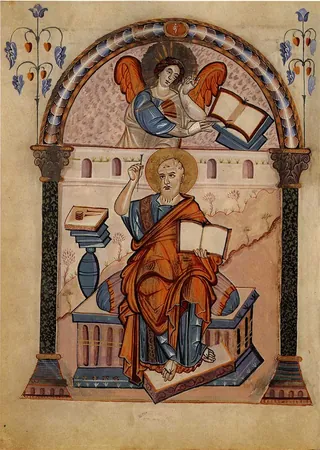
St. Matthew, Apostle and EvangelistMatthaeusFeast 21 September
Matthew, also called Levi, collected taxes for Rome at Capharnaum, a job people despised. Jesus said “Follow me”, and he rose and left everything. At the feast in his house Jesus said He came to call sinners, not the just.
His Gospel, written first for Jewish believers, shows Jesus fulfilling the prophets and gives us the Sermon on the Mount. His symbol is an angel.
“He saith to him: Follow me. And he rose up and followed him.”
Matthew 9:9
Picture: Codex Aureus of Lorsch, about 810
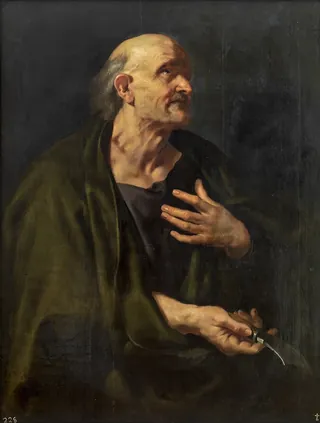
St. Bartholomew the ApostleBartholomaeusFeast 24 August
Usually identified with Nathanael of Cana, whom Philip brought to Jesus. At first he asked, “Can any thing of good come from Nazareth?” But when Jesus told him He had seen him under the fig tree, he cried, “Rabbi, thou art the Son of God.”
Tradition says he preached in India and Armenia and was martyred by being flayed, which is why he is shown with a knife.
“Behold an Israelite indeed, in whom there is no guile.”
John 1:47
Picture: Peter Paul Rubens, St. Bartholomew, about 1611 (Prado)
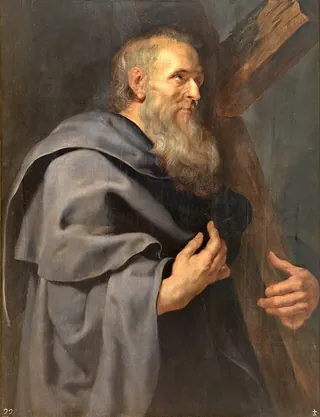
St. Philip the ApostlePhilippusFeast 3 May (with St. James the Less)
From Bethsaida, the town of Andrew and Peter. Jesus called him with two words, “Follow me”, and Philip at once brought Nathanael. At the Last Supper he asked to see the Father and heard, “He that seeth me seeth the Father also.”
Tradition says he preached in Asia Minor and was martyred at Hierapolis.
“Lord, shew us the Father, and it is enough for us.”
John 14:8
Picture: Peter Paul Rubens, St. Philip, about 1611 (Prado)
St. James the LessIacobus MinorFeast 3 May (with St. Philip)
The son of Alphaeus. The Latin tradition identifies him with James “the brother of the Lord”, a close kinsman of Jesus, who led the Church in Jerusalem and spoke at the Council of Jerusalem.
The Letter of James, with its plain teaching that faith must show itself in deeds, is traditionally his. He was martyred in Jerusalem around the year 62.
“For even as the body without the spirit is dead; so also faith without works is dead.”
James 2:26
Picture: Peter Paul Rubens, St. James the Less, 1612–13 (Prado)
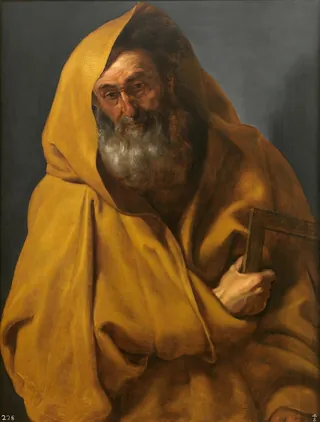
St. Simon the ZealotSimon ZelotesFeast 28 October (with St. Jude)
The Gospels tell us almost nothing of Simon except his name, “the Zealot”, perhaps for his burning zeal for God’s law. He shows that the Lord chooses quiet, hidden souls as well as famous ones.
Tradition says he preached with St. Jude in Persia and died a martyr. He is often shown holding a saw.
“Matthew and Thomas, James the son of Alpheus, and Simon who is called Zelotes.”
Luke 6:15
Picture: Peter Paul Rubens, St. Simon, about 1611 (Prado)
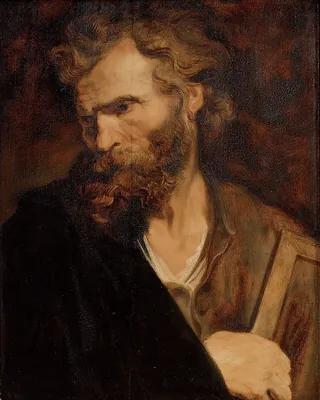
St. Jude ThaddeusIudas ThaddaeusFeast 28 October (with St. Simon)
Also called Thaddeus, and not to be confused with Judas the traitor. At the Last Supper he asked Jesus why He would show Himself to them and not to the world. The short Letter of Jude bears his name.
Tradition says he was martyred in Persia with St. Simon. He is beloved as patron of hopeless and desperate causes.
“Keep yourselves in the love of God, waiting for the mercy of our Lord Jesus Christ, unto life everlasting.”
Jude 1:21
Picture: Anthony van Dyck, St. Jude Thaddeus, about 1619–21 (Kunsthistorisches Museum, Vienna)
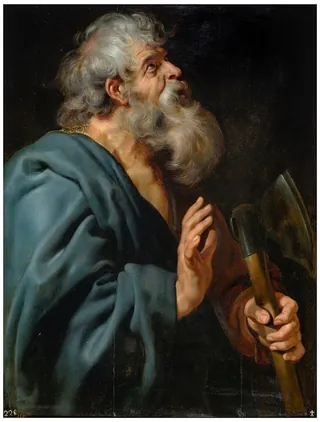
St. Matthias the ApostleMatthiasFeast 14 May
After the Ascension the Apostles chose a disciple who had been with Jesus from His baptism to take the place of Judas. After prayer they cast lots, and the lot fell on Matthias.
Little else is known for certain. Tradition says he preached faithfully and died a martyr.
“And the lot fell upon Matthias, and he was numbered with the eleven apostles.”
Acts 1:26
Picture: Peter Paul Rubens, St. Matthias, about 1611 (Prado)
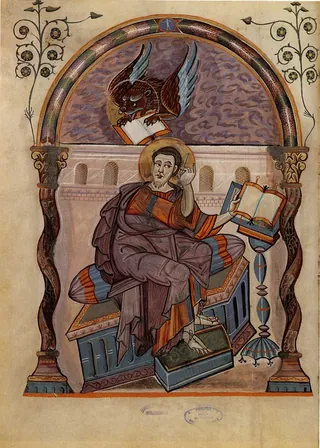
St. Mark the EvangelistMarcusFeast 25 April
John Mark’s mother opened her house in Jerusalem to the first Christians. He travelled with Paul and with his cousin Barnabas, and later stayed with Peter in Rome, who called him “my son”.
His Gospel, the shortest, is held to preserve Peter’s preaching. Tradition says he founded the Church of Alexandria. His relics are in Venice, and his symbol is the lion.
“The beginning of the gospel of Jesus Christ, the Son of God.”
Mark 1:1
Picture: Codex Aureus of Lorsch, about 810
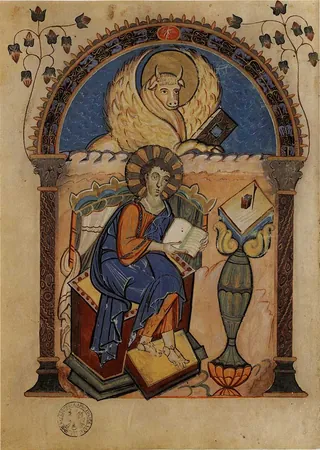
St. Luke the EvangelistLucasFeast 18 October
“Luke, the most dear physician”, was St. Paul’s faithful companion. He wrote both a Gospel and the Acts of the Apostles.
Only Luke gives us the Annunciation, the Visitation, the Magnificat, the shepherds at Bethlehem, the Prodigal Son and the Good Samaritan. Tradition calls him a painter of Our Lady. He is patron of doctors and artists, and his symbol is the ox.
“Because no word shall be impossible with God.”
Luke 1:37
Picture: Codex Aureus of Lorsch, about 810
Disciples and First Martyrs
Friends of the Lord in the Gospels, and the first to give their lives for Him in the Acts of the Apostles.
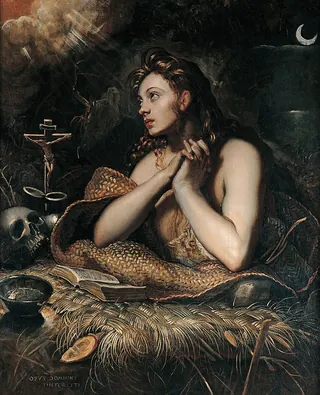
St. Mary MagdaleneMaria MagdalenaFeast 22 July
Jesus freed Mary of Magdala from seven devils, and she followed Him and served Him from then on. She stood by the Cross when most had fled.
On Easter morning she was the first to see the risen Lord, and He sent her to tell the Apostles. That is why the Church calls her “apostle to the Apostles”.
“I have seen the Lord.”
John 20:18
Picture: Domenico Tintoretto, The Penitent Magdalene, 1598–1602 (Musei Capitolini, Rome)
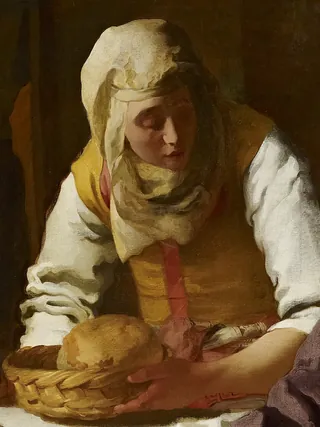
St. Martha of BethanyMarthaFeast 29 July (with Sts. Mary and Lazarus)
Sister of Mary and Lazarus, Martha welcomed Jesus into her home in Bethany. Busy with serving, she heard Him say gently, “Martha, Martha… one thing is necessary.”
When Lazarus died, her faith held firm, and she made one of the great confessions of the Gospel before Jesus raised her brother. She is patron of cooks, homemakers and all who serve.
“Yea, Lord, I have believed that thou art Christ the Son of the living God.”
John 11:27
Picture: Johannes Vermeer, Christ in the House of Martha and Mary, about 1654–55
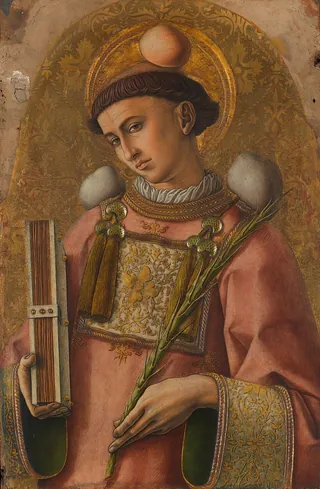
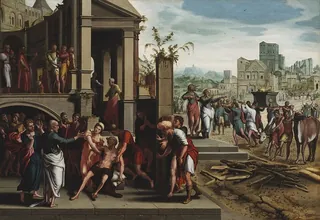
St. Stephen, First MartyrStephanusFeast 26 December
One of the first seven deacons, chosen to care for the poor of the Church in Jerusalem, Stephen was “full of grace and fortitude” and preached Christ boldly.
Stoned outside the city, he saw heaven opened and prayed for those who killed him. A young Pharisee named Saul stood by, the future St. Paul. Stephen is the Church’s first martyr.
“Lord, lay not this sin to their charge.”
Acts 7:59
Picture: Carlo Crivelli, St. Stephen, 1476
St. Barnabas the ApostleBarnabasFeast 11 June
Joseph, a Levite from Cyprus, sold his field and laid the money at the Apostles’ feet. They named him Barnabas, “son of consolation”. When others feared the newly converted Saul, Barnabas stood by him.
At Antioch, where the disciples were first called Christians, he and Paul set out on the first great missionary journey. He is called an apostle, though not one of the Twelve. Tradition says he was martyred on Cyprus.
“Joseph, who, by the apostles, was surnamed Barnabas, (which is, by interpretation, The son of consolation).”
Acts 4:36
Picture: Circle of the Master of Paulus and Barnabas, Saints Paul and Barnabas at Lystra, 16th century
Great Saints of the Church
Doctors, founders, mystics and martyrs from the early Church to our own day.
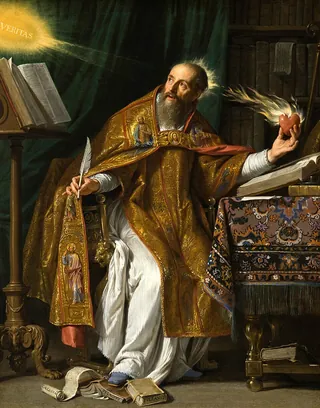
St. Augustine of HippoAugustinus HipponensisFeast 28 August
Born in North Africa in 354, Augustine was brilliant and restless and lived far from God for years, while his mother Monica prayed for him. In a garden in Milan he heard “Take up and read”, opened St. Paul, and was converted. St. Ambrose baptized him at Easter 387.
As bishop of Hippo for 35 years he wrote the Confessions and The City of God. He is a Doctor of the Church.
“Thou hast made us for Thyself, and our heart is restless, until it repose in Thee.”
Confessions, Book I
Picture: Philippe de Champaigne, St. Augustine, about 1645
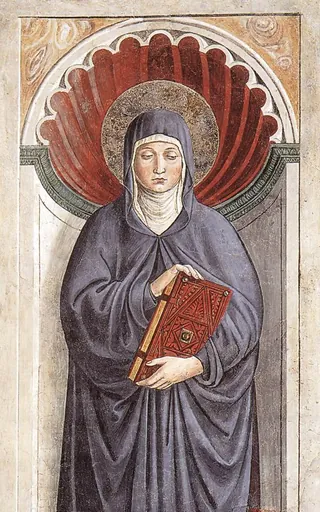
St. MonicaMonicaFeast 27 August
A Christian wife in North Africa, Monica bore a hard marriage with patience, and her husband was baptized before he died. For many years she wept and prayed for her wayward son Augustine.
A bishop comforted her: the child of so many tears could not be lost. She lived to see Augustine baptized, and died at Ostia in 387. She is patron of mothers and of all who pray for a child far from God.
Picture: Benozzo Gozzoli, St. Monica, 1464–65
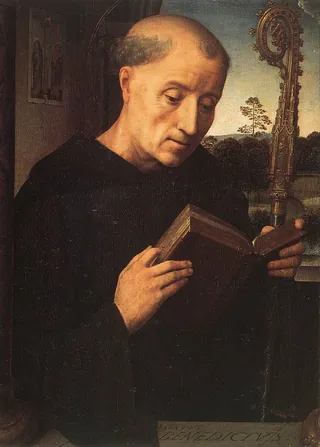
St. Benedict of NursiaBenedictus de NursiaFeast 11 July
Around the year 500 young Benedict left the schools of Rome to seek God alone in a cave at Subiaco. Others gathered around him, and he founded the abbey of Monte Cassino.
His Rule, a wise and gentle guide to prayer, work, obedience and peace, shaped monastic life in the West for fifteen centuries. Its motto is “that in all things God may be glorified”. He is patron of Europe.
“Ut in omnibus glorificetur Deus: that in all things God may be glorified.”
Rule of St. Benedict, ch. 57 (after 1 Peter 4:11)
Picture: Hans Memling, St. Benedict (Portinari Triptych), 1487
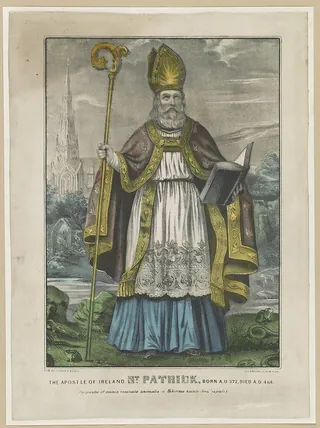
St. Patrick, Apostle of IrelandPatriciusFeast 17 March
Born in Roman Britain in the 400s, Patrick was seized by raiders at sixteen and made a slave in Ireland, where he tended flocks and learned to pray day and night. After six years he escaped home.
In a dream he heard the Irish begging him to return. He came back as a bishop and spent his life bringing the Faith to Ireland. His own Confession still survives.
Picture: Currier & Ives, The Apostle of Ireland, St. Patrick, 1857–72 (Library of Congress)
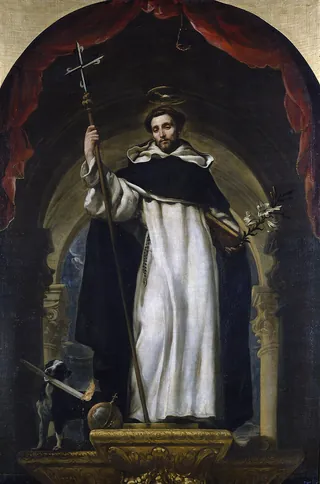
St. DominicDominicusFeast 8 August
A Spanish priest born in 1170, Dominic saw that people in southern France had been led away by false teaching. He answered with prayer, poverty and patient preaching.
He founded the Order of Preachers, the Dominicans, approved in 1216, to study and teach the truth. Tradition links him with spreading the Rosary. He died at Bologna in 1221.
Picture: Claudio Coello, St. Dominic, 1685
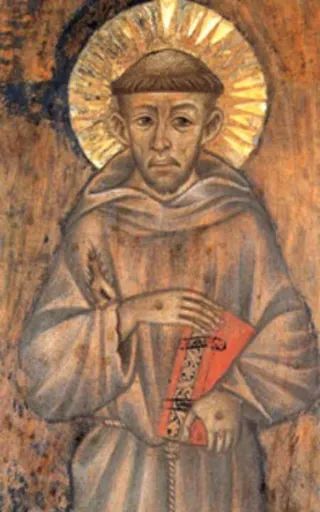
St. Francis of AssisiFranciscus AssisiensisFeast 4 October
The merchant’s son of Assisi heard Christ speak from the crucifix of San Damiano: “Go, repair my house.” He gave up everything, embraced Lady Poverty, and founded the Friars Minor; with St. Clare he began the Poor Clares.
He made the first Christmas crib at Greccio and received the wounds of Christ on La Verna. He died in 1226, singing his Canticle of the Creatures.
“Praised be You, my Lord, with all Your creatures.”
Canticle of the Creatures
Picture: Cimabue, St. Francis, Lower Basilica of Assisi, about 1277–80
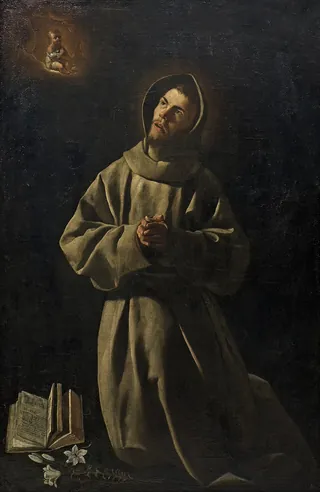
St. Anthony of PaduaAntonius PatavinusFeast 13 June
Born in Lisbon in 1195, Anthony became a Franciscan after seeing the relics of friars martyred in Morocco. A storm carried his ship to Italy, where an unplanned sermon revealed his great gift for preaching.
He preached across Italy and France, died at Padua aged about 36, and was canonized within a year. He is a Doctor of the Church and the patron to call on for lost things.
Picture: Francisco de Zurbarán, St. Anthony of Padua, about 1627–30
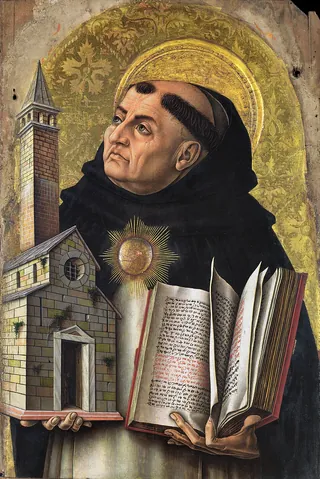
St. Thomas AquinasThomas de AquinoFeast 28 January
Born in 1225, Thomas joined the Dominicans though his family locked him up for a year to stop him. His classmates called him “the dumb ox”; his teacher St. Albert said his bellowing would be heard around the world.
His Summa Theologiae is the Church’s great work of theology, and he wrote the Corpus Christi hymns, including the Tantum Ergo. He is the “Angelic Doctor”, patron of students.
Picture: Carlo Crivelli, St. Thomas Aquinas, 1476
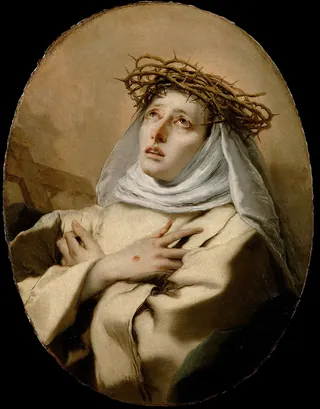
St. Catherine of SienaCatharina SenensisFeast 29 April
One of the youngest of a very large family, Catherine gave herself to God as a Dominican tertiary. She nursed the sick and the plague-stricken and made peace between quarrelling cities.
She wrote boldly to popes and kings and urged Pope Gregory XI to return from Avignon to Rome. She died in 1380 at 33. She is a Doctor of the Church and a patron of Italy and of Europe.
Picture: Giovanni Battista Tiepolo, St. Catherine of Siena, about 1746 (Kunsthistorisches Museum, Vienna)
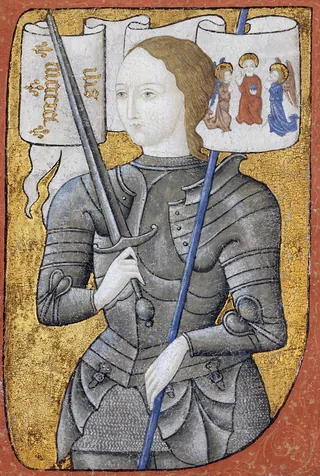
St. Joan of ArcJeanne d’ArcFeast 30 May
A farm girl from Domrémy, Joan heard the voices of St. Michael, St. Catherine and St. Margaret. At seventeen she led the French army, raised the siege of Orléans in 1429, and saw her king crowned at Reims.
Captured and condemned by an unjust court, she was burned at Rouen in 1431 at about nineteen, calling on the name of Jesus. A later trial declared her innocent, and she was canonized in 1920. She is a patron of France.
Picture: French miniature, 15th century
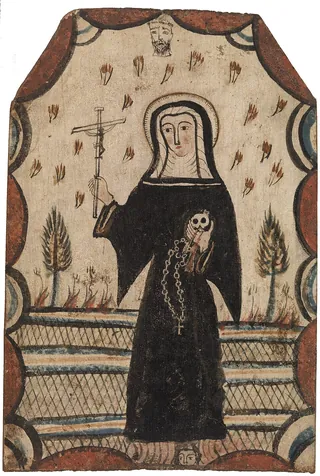
St. Rita of CasciaRita a CasciaFeast 22 May
Married young to a violent husband, Rita won him over by patience and prayer. After he was murdered and both her sons died, she entered the Augustinian convent at Cascia.
There she received a wound on her forehead like a thorn from Christ’s crown, which she bore for years. She died in 1457. She is a patron of impossible causes and of troubled marriages, and her sign is the rose.
Picture: Pedro Antonio Fresquís, St. Rita of Cascia, New Mexican santo (Barnes Foundation)
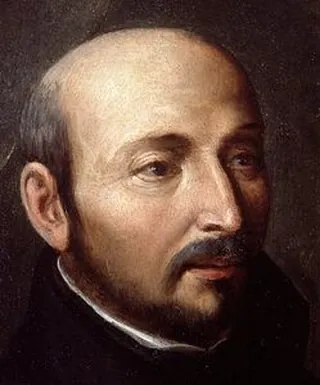
St. Ignatius of LoyolaIgnatius de LoyolaFeast 31 July
A Basque soldier, Ignatius was wounded by a cannonball at Pamplona in 1521. Bored while healing, he read the life of Christ and the lives of the saints, and his heart was changed.
He wrote the Spiritual Exercises and, with St. Francis Xavier and other companions, founded the Society of Jesus (the Jesuits) in 1540. His motto was “for the greater glory of God”.
“Take, Lord, and receive all my liberty, my memory, my understanding, and my entire will.”
Spiritual Exercises, 234 (the Suscipe)
Picture: Unknown artist, St. Ignatius of Loyola, 16th century
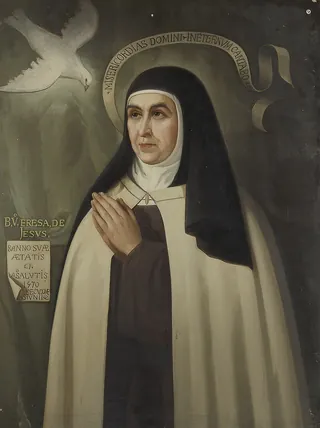
St. Teresa of ÁvilaTeresia a IesuFeast 15 October
A lively Carmelite nun of Ávila, Teresa prayed half-heartedly for years until, in her late thirties, an image of the wounded Christ changed her for good.
With St. John of the Cross she renewed the Carmelite Order, founded seventeen convents, and wrote The Interior Castle and The Way of Perfection. In 1970 she became the first woman named a Doctor of the Church.
“Let nothing disturb you, let nothing frighten you. All things pass; God never changes. Patience obtains all. Whoever has God lacks nothing. God alone suffices.”
St. Teresa’s bookmark prayer (Nada te turbe)
Picture: Eduardo Balaca, St. Teresa of Jesus, about 1877 (Prado)
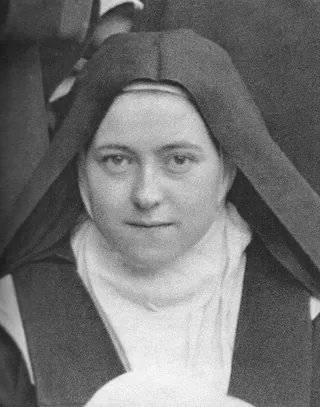
St. Thérèse of LisieuxTeresia a Iesu InfanteFeast 1 October
Thérèse entered the Carmel of Lisieux at fifteen and died of tuberculosis at twenty-four. Her “Little Way” is to do small, hidden things with great love and to trust God like a child.
Her autobiography, Story of a Soul, has gone around the world. She promised to spend her heaven doing good on earth. She is a Doctor of the Church and a patron of the missions.
“My vocation is Love!”
Story of a Soul
Picture: Photograph by her sister Céline Martin, 1895
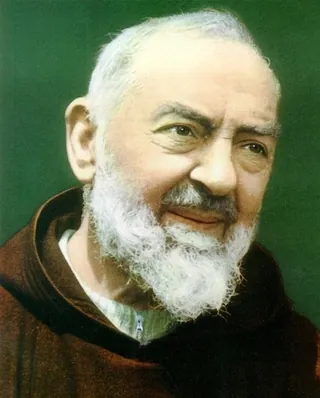
St. Pio of Pietrelcina (Padre Pio)Pius a PietrelcinaFeast 23 September
A Capuchin friar of southern Italy, Padre Pio bore the wounds of Christ in his body for fifty years. At San Giovanni Rotondo he heard confessions for hours each day and said Mass with deep devotion.
He founded a great hospital, the Home for the Relief of Suffering, and prayer groups across the world. He died in 1968 and was canonized by St. John Paul II in 2002.
“Pray, hope, and don’t worry.”
His well-known counsel
Picture: Photograph, about 1947
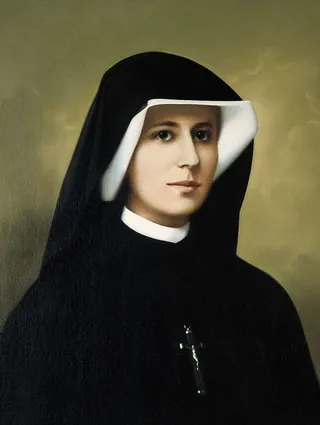
St. Faustina KowalskaFaustina KowalskaFeast 5 October
A humble Polish sister who worked in convent kitchens and gardens, Faustina received messages from Jesus about His Divine Mercy. He asked for the image signed “Jesus, I trust in You”.
Her Diary gave the Church the Chaplet of Divine Mercy. She died in 1938 at 33. St. John Paul II canonized her in 2000 and set Divine Mercy Sunday for the whole Church.
✠ Pray the Chaplet of Divine Mercy
Prayed on ordinary rosary beads, as Jesus taught St. Faustina. It takes about seven minutes. Many pray it at 3 o’clock, the Hour of Mercy.
1. Begin
Make the Sign of the Cross: In the name of the Father, and of the Son, and of the Holy Spirit. Amen.
2. Opening prayers (optional)
You expired, Jesus, but the source of life gushed forth for souls, and the ocean of mercy opened up for the whole world. O Fount of Life, unfathomable Divine Mercy, envelop the whole world and empty Yourself out upon us.
Three times: O Blood and Water, which gushed forth from the Heart of Jesus as a fountain of Mercy for us, I trust in You!
3. Our Father
Our Father, who art in heaven, hallowed be Thy name; Thy kingdom come; Thy will be done on earth as it is in heaven. Give us this day our daily bread; and forgive us our trespasses, as we forgive those who trespass against us; and lead us not into temptation, but deliver us from evil. Amen.
4. Hail Mary
Hail Mary, full of grace, the Lord is with thee. Blessed art thou among women, and blessed is the fruit of thy womb, Jesus. Holy Mary, Mother of God, pray for us sinners, now and at the hour of our death. Amen.
5. The Apostles’ Creed
I believe in God, the Father almighty, Creator of heaven and earth, and in Jesus Christ, His only Son, our Lord, who was conceived by the Holy Spirit, born of the Virgin Mary, suffered under Pontius Pilate, was crucified, died and was buried; He descended into hell; on the third day He rose again from the dead; He ascended into heaven, and is seated at the right hand of God the Father almighty; from there He will come to judge the living and the dead. I believe in the Holy Spirit, the holy catholic Church, the communion of saints, the forgiveness of sins, the resurrection of the body, and life everlasting. Amen.
6. The Eternal Father
On the large bead before each decade: Eternal Father, I offer You the Body and Blood, Soul and Divinity of Your dearly beloved Son, Our Lord Jesus Christ, in atonement for our sins and those of the whole world.
7. On the ten small beads
Ten times: For the sake of His sorrowful Passion, have mercy on us and on the whole world.
8. Five decades
Repeat steps 6 and 7 for all five decades.
9. Holy God
Three times, to conclude: Holy God, Holy Mighty One, Holy Immortal One, have mercy on us and on the whole world.
10. Closing prayer (optional)
Eternal God, in whom mercy is endless and the treasury of compassion inexhaustible, look kindly upon us and increase Your mercy in us, that in difficult moments we might not despair nor become despondent, but with great confidence submit ourselves to Your holy will, which is Love and Mercy itself. Amen.
Jesus, I trust in You.
Diary of St. Faustina, 476, 84, 1319, 950
“Jesus, I trust in You.”
Diary of St. Faustina, 47
Picture: Photograph, 1930s
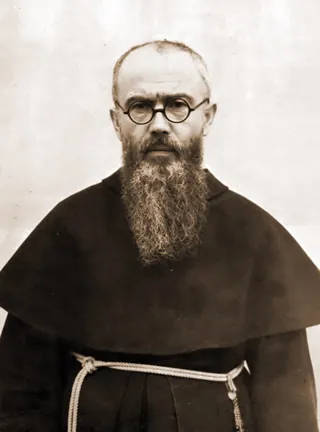
St. Maximilian KolbeMaximilianus Maria KolbeFeast 14 August
A Polish Franciscan devoted to the Immaculate, Kolbe used the printing press to spread the Faith in Poland and in Japan. Arrested by the Nazis, he was sent to Auschwitz in 1941.
When ten prisoners were picked to starve, he offered his life in place of a husband and father, Franciszek Gajowniczek, who survived the war. He died on 14 August 1941 and was canonized in 1982 as a martyr of charity.
Picture: Photograph, 1936
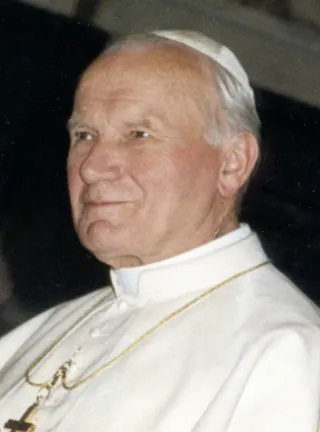
St. John Paul IIIoannes Paulus IIFeast 22 October
Karol Wojtyła worked in a quarry and studied for the priesthood in secret under Nazi occupation. As pope from 1978 to 2005 he travelled the world, helped bring down communism without violence, began World Youth Day, and forgave the man who shot him.
He died on 2 April 2005 and was canonized in 2014. His feast falls on the day of his inauguration Mass.
“Do not be afraid! Open wide the doors for Christ!”
Homily at his inauguration, 22 October 1978
Picture: White House photograph, 1991 (public domain)
Ephesians 6A scroll by the last doorTap to read
“Put you on the armour of God, that you may be able to stand against the deceits of the devil.”
Ephesians 6:11 (Douay-Rheims)
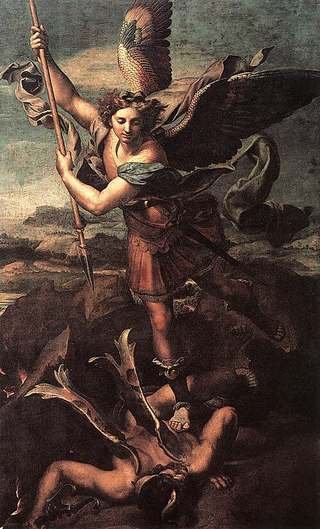
St. Michael Vanquishing SatanRaphael, about 1504–1505, Musée du Louvre, ParisTap to read
“And there was a great battle in heaven, Michael and his angels fought with the dragon.”
Paintings and photographs: Fra Angelico, Murillo, Raphael, Rembrandt, Rubens, Van Dyck, Titian, Michelangelo, Giotto, Jan van Eyck, Perugino, Guido Reni, Savoldo, Van Honthorst, Vermeer, Crivelli, Domenico Tintoretto, Philippe de Champaigne, Gozzoli, Memling, Cimabue, Zurbarán, Claudio Coello, Tiepolo, Balaca, Fresquís, Currier & Ives, the Codex Aureus of Lorsch and early photographs. All public domain (one CC0), via Wikimedia Commons; each saint’s card names its picture.
Know the enemy
The Seven Deadly Sins
The Church calls them the seven capital sins: pride, avarice, envy, wrath, lust, gluttony, and sloth or acedia (Catechism 1866). “Capital” means they are heads, the roots that other sins grow from. Name each one honestly, then fight it with its opposite virtue. Tap a sin to read.
IPrideSuperbiacure: Humility
In plain words. Putting myself at the centre, where only God belongs. Pride wants to be first, wants the praise, and will not be corrected. The Church counts it the root of the other sins.
In everyday life. Never admitting I was wrong. Looking down on others. Needing to win every argument. Getting angry when not noticed. Thinking I don’t need God, Confession or anyone’s help.
The opposite virtue: Humility. seeing myself as God sees me, no bigger and no smaller. Thank Him for every gift, take correction gracefully, and gladly let others go first.
“Where pride is, there also shall be reproach: but where humility is, there also is wisdom.”
Proverbs 11:2 · Catechism 1866, 2094
IIGreedAvaritiacure: Generosity
In plain words. A disordered love of money and things. Greed is never satisfied and treats possessions as if they could make us safe or happy.
In everyday life. Always wanting the next thing. Hoarding. Cutting corners or cheating to get ahead. Ignoring the poor. Measuring people, and myself, by what they own.
The opposite virtue: Generosity. hold things with an open hand. Give regularly to the Church and the poor, be content, and trust God to provide.
“For the desire of money is the root of all evils.”
1 Timothy 6:10 · Catechism 2536
IIILustLuxuriacure: Chastity
In plain words. Desire for sexual pleasure torn away from love, marriage and life. Lust turns a person, made in God’s image, into an object to be used.
In everyday life. Pornography. Feeding impure thoughts and fantasies. Crude talk and jokes. Flirting that betrays a spouse. Treating dating or marriage as a means to pleasure only.
The opposite virtue: Chastity. the strength to love rightly, whether married or single. Guard the eyes and the imagination, flee the near occasion of sin, and go to Confession often.
“Blessed are the clean of heart: for they shall see God.”
Matthew 5:8 · Catechism 2351
IVEnvyInvidiacure: Kindness (charity)
In plain words. Sadness at someone else’s good: their gifts, success or happiness. Envy wishes they did not have it, and it can turn into hatred.
In everyday life. Resenting a co-worker’s promotion. Comparing my life to others’ online. Secret pleasure when someone fails. Gossip that pulls another person down.
The opposite virtue: Kindness (charity). rejoice in other people’s blessings, pray for them, praise them sincerely, and thank God for your own gifts.
“Charity is patient, is kind: charity envieth not.”
1 Corinthians 13:4 · Catechism 2539
VGluttonyGulacure: Temperance
In plain words. Letting appetite rule: eating or drinking more than we need, or making food and drink the centre of life.
In everyday life. Overeating, or drinking too much. Constant snacking out of boredom. Being fussy and demanding about food. Never able to fast or keep Friday abstinence.
The opposite virtue: Temperance. enjoy God’s gifts with moderation and thanks. Say grace, keep the Church’s fasts, and offer small sacrifices.
“Take heed to yourselves, lest perhaps your hearts be overcharged with surfeiting and drunkenness, and the cares of this life.”
Luke 21:34 · Catechism 2290
VIWrathIracure: Patience
In plain words. Anger that gets out of hand and seeks revenge. Not every anger is sin; anger at injustice can be right. Wrath wants to hurt and keeps the wound open.
In everyday life. Road rage. Shouting at family. Harsh words online. Holding grudges, the silent treatment, refusing to forgive, plotting to get even.
The opposite virtue: Patience. stop before you speak, forgive as you have been forgiven, and pray for the person who wronged you.
“Be angry, and sin not. Let not the sun go down upon your anger.”
Ephesians 4:26 · Catechism 2302
VIISlothAcediacure: Diligence
In plain words. More than ordinary laziness: a spiritual heaviness that cannot be bothered with God and the good. It refuses the joy that comes from God.
In everyday life. Skipping prayer and Sunday Mass. Endless scrolling and distraction. Putting off duties to family and work. Shrugging, “What’s the point?”
The opposite virtue: Diligence. do the next right thing now. Keep a fixed time for prayer, finish what you start, and serve with a willing heart.
“In carefulness not slothful. In spirit fervent. Serving the Lord.”
Romans 12:11 · Catechism 2094, 2733
No sin is greater than God’s mercy. If you see yourself here, go to Confession and begin again.